Topics: Accounts Receivable Process, Finance & Accounting
Posted on July 21, 2026
Written By Pratik Bhatt




A company can hit its revenue target and still weaken EBITDA. That sounds counterintuitive until you look at what happens after the sale. Revenue is recognized, the invoice goes out but the cash doesn’t arrive.
The longer that gap exists, the more expensive it becomes. Working capital gets trapped in receivables that should already have been converted into cash.
Poor accounts receivable management rarely shows up as a single problem. It shows up as dozens of small delays that gradually become a financial drag on the business. That is why Days Sales Outstanding (DSO) matters. Every additional day an invoice remains unpaid is cash the business has already earned but cannot use. The result is more pressure on liquidity, more pressure on collections, and ultimately, more pressure on profitability.
For CFOs, the challenge lies in understanding how weaknesses across the accounts receivable process quietly works their way into EBITDA long before they appear in a financial review.
Most discussions about EBITDA start after the sale. The real story starts much earlier.
It starts when credit terms are extended. When billing requirements are unclear, invoice accuracy is treated as an administrative task rather than financial control and when customer disputes are allowed to age without ownership. Individually, none of these decisions look significant. Together, they determine how efficiently revenue converts into cash.
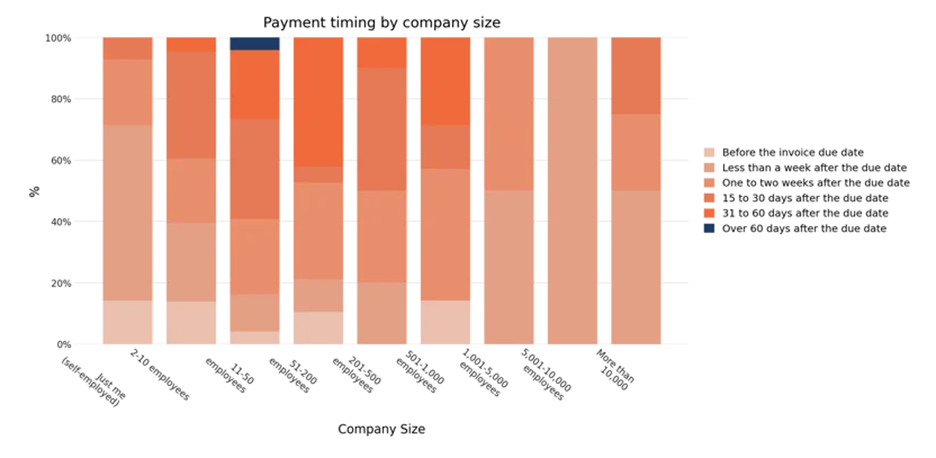
This is where strong working capital management begins to separate high-performing businesses from the rest. Companies with disciplined AR processes understand that revenue quality matters just as much as revenue growth. A sale that turns into cash in 30 days is fundamentally different from one that sits unresolved for 90.
The impact eventually reaches EBITDA in several ways. Collection effort increases, disputes require more intervention and bad debt rises. The result is that EBITDA starts absorbing costs that have little to do with serving customers and everything to do with inefficient receivables management. In other words, businesses do not usually lose EBITDA because they failed to make the sale. They lose it because they failed to convert the sale into cash efficiently.
The relationship between AR and EBITDA is rarely obvious on the surface. Most businesses lose EBITDA through the accumulation of small inefficiencies that grow more expensive over time.
1. Delayed customer payments increase the cost of collections
The longer invoices remain outstanding, the more effort it takes to collect them. Finance teams spend more time on follow-ups, escalations, dispute resolution, and payment tracking. As volumes grow, businesses often respond by adding more AR resources to manage overdue balances. The result is higher collection costs without any corresponding increase in revenue.
2. Bad debt turns revenue into an expense
Not every delayed payment becomes bad debt. However, the longer invoices remain unresolved, the higher the probability that some of that revenue will never be collected.
When receivables are ultimately written off, the business absorbs the loss despite having already recognized the revenue. Weak accounts receivable management makes this problem worse because collection issues are identified later and acted on slower.
3. Disputes consume margin long before they reach write-off stage
Many overdue invoices are not simply waiting for payment. They are sitting in dispute.
Pricing discrepancies, missing documentation, billing errors, and customer queries often remain unresolved for weeks or months because ownership is unclear. During that time, finance, sales, operations, and customer service teams all spend time managing the issue. The cost of that effort rarely appears in AR reporting but still impacts profitability.
4. High DSO weakens working capital efficiency
Every additional day of Days Sales Outstanding (DSO) is another day that cash remains trapped in receivables instead of supporting the business. That affects hiring decisions, investment plans, inventory purchases, and growth initiatives. Businesses with weaker collections often find themselves solving cash constraints despite reporting healthy revenue growth.
RELATED BLOG: Why Your DSO Is Increasing — And What It’s Costing Your Business? (And How Accounts Receivable Services Can Help)
5. Poor cash conversion creates pressure across the finance function
When cash arrives later than expected, forecasting becomes harder, planning becomes more reactive, and management spends more time responding to short-term pressures. This is why strong cash flow management and strong AR performance are so closely connected. The issue is not simply collecting invoices faster. It is creating a finance function that can operate from a position of predictability rather than constant catch-up.
High-EBITDA businesses do not necessarily have better customers. They usually have better habits. The difference often appears long before an invoice becomes overdue.
Strong businesses understand that every extension of payment terms carries a cost. Revenue growth remains important, but not at the expense of collection quality.
Many collection problems start with avoidable invoicing delays or billing errors. High-performing businesses recognize that invoicing is not administrative work. It is the point where revenue begins converting into cash.
The longer a dispute sits unresolved, the harder it becomes to collect. Strong AR teams identify ownership quickly and keep issues moving before aging starts to work against them.
Rather than treating Days Sales Outstanding (DSO) as a month-end metric, they use it as an early warning signal. A rising DSO often highlights collection issues long before they appear in financial results.
Businesses that consistently convert revenue into cash usually convert more of that revenue into EBITDA as well.
Most AR improvement initiatives start at the wrong end of the problem. The focus is usually on sending more reminders, increasing collection activity, or pushing teams to reduce Days Sales Outstanding (DSO). While these actions can improve collections temporarily, they rarely address the reasons invoices became overdue in the first place. Many collection issues start much earlier:
When these gaps persist, collection teams spend their time chasing symptoms rather than fixing causes.
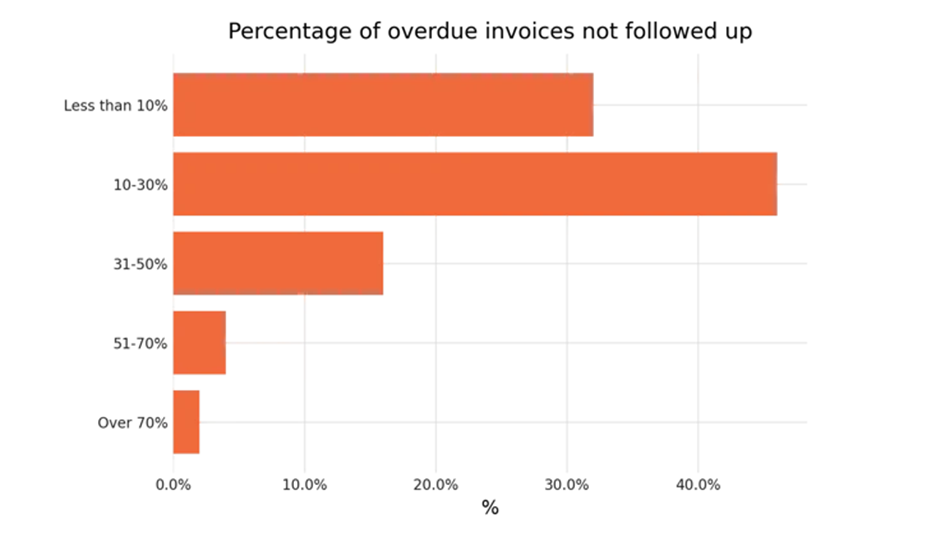
Automation can create a similar problem. Many businesses invest in new collection tools expecting faster results. However, if the underlying accounts receivable process is weak, automation simply accelerates a broken workflow.
The strongest AR functions focus on accounts receivable optimization across the entire cycle — from credit approval through invoice delivery, dispute resolution, and cash application. That is usually where sustainable EBITDA improvement starts.
RELATED CASE STUDY: QX ProAR: Optimising Receivables for UK Healthcare Recruiter
For CFOs, the goal is not simply to collect faster. The goal is to create a receivables function that protects cash, improves working capital, and supports profitability. That starts with a few fundamentals:
Strong AR management best practices are often surprisingly consistent. The businesses that perform best usually invoice accurately, follow up consistently, and identify collection risks before balances become overdue. Most importantly, they treat cash flow management as an ongoing operational discipline rather than a month-end finance activity.
When that happens, accounts receivable management stops being viewed as a collections function and starts becoming a driver of stronger margins, healthier working capital, and more predictable financial performance.
For businesses focused on growth, that shift matters. EBITDA is not just influenced by what gets sold. It is influenced by how efficiently those sales turn into cash.
Many businesses recognize the symptoms of weak AR — rising DSO, growing overdue balances, recurring disputes, and inconsistent collections. The challenge is fixing them without continuously adding headcount. A structured AR partner typically brings:
More importantly, outsourced teams introduce discipline into areas that often become reactive in-house. Follow-ups happen on schedule, ageing is monitored closely, and overdue balances receive attention before they become bad debt.
The result is stronger cash conversion, improved predictability, and a more structured approach to accounts receivable optimization. For businesses focused on EBITDA, that matters because every improvement in collection efficiency strengthens the quality of revenue being generated.
RELATED BLOG: Top Accounts Receivable Outsourcing Companies in USA
QX Global Group helps businesses strengthen accounts receivable management by bringing consistency and control to the processes that influence cash conversion. Rather than focusing only on overdue collections, the approach addresses the broader accounts receivable process — from invoice delivery and dispute management through collections and reporting.
Support typically includes:
This helps finance teams improve collection outcomes while reducing the operational effort required to manage receivables internally. As a result, businesses gain stronger cash flow visibility, healthier working capital positions, and a finance function that spends less time chasing payments and more time driving performance.
Outsource accounts receivable services to QX Global Group to improve cash conversion, strengthen working capital, and support long-term EBITDA improvement. Book a free, no-obligation call now!
The most closely watched metrics are Days Sales Outstanding (DSO), ageing of receivables, bad debt levels, dispute volumes, and collection effectiveness. Together, they show how efficiently revenue is being converted into cash and how well the business is managing working capital.
Delayed customer payments keep cash locked in receivables for longer, reducing liquidity and increasing pressure on working capital. As overdue balances grow, businesses often spend more on collection efforts, dispute resolution, and financing arrangements needed to bridge cash flow gaps.
Strong accounts receivable management is one of the most effective levers for improving working capital management. The faster receivables convert into cash, the more flexibility a business has to fund operations, invest in growth, and reduce reliance on external financing.
Businesses improve EBITDA by reducing bad debt, lowering collection costs, resolving disputes faster, and converting revenue into cash more efficiently. A disciplined accounts receivable process helps protect margin by reducing the operational costs that arise when invoices remain unpaid for too long.
The obvious risk is slower cash collection. The less obvious risks include rising bad debt, higher collection costs, weaker forecasting accuracy, trapped working capital, and reduced financial flexibility. Over time, poor accounts receivable management can impact both profitability and long-term growth capacity.
Accounts receivable outsourcing brings consistency to invoicing, collections, dispute management, and reporting. By improving collection discipline and visibility, businesses often see stronger cash conversion, lower overdue balances, and more predictable financial performance. Effective accounts receivable services help finance teams focus less on payment chasing and more on strategic priorities.
PE-backed businesses typically look for providers with strong process expertise, scalable delivery models, and a proven ability to improve operational efficiency. The strongest partners focus on cash conversion, reporting discipline, and process standardization across finance functions, rather than simply reducing cost. Providers offering integrated accounts receivable services alongside broader F&A support are often well positioned to deliver measurable EBITDA improvements.
QX Global Group helps businesses strengthen accounts receivable management through structured collections, dispute resolution support, receivables reporting, and DSO monitoring. By bringing consistency into the accounts receivable process, QX helps businesses improve cash flow visibility, support working capital management, and create a stronger foundation for long-term profitability and growth.

Education:
Diploma in Electronics & Telecommunication

With over 10 years of experience in payroll and finance operations, Pratik Bhatt specialises in multi-cycle UK payroll, compliance, accounts receivable, and accounts payable. At QX, he combines strategic planning with hands-on execution to deliver consistent results across client engagements. Known for his collaborative approach and stakeholder focus, Pratik brings a strong track record in project delivery, team leadership, and client relationship management.
Expertise: UK Payroll & Compliance, AR & AP Operations, Client & Stakeholder Management, Project Delivery, Strategic Execution
Originally published Jul 21, 2026 05:07:58, updated Jul 21 2026
Topics: Accounts Receivable Process, Finance & Accounting
09 Sep 2026
A business can post record sales and still feel the squeeze. Orders are strong, revenue looks health...
Read More02 Sep 2026
Hospitality has become one of the most data-rich industries in the world. Every reservation, room sa...
Read More27 Aug 2026
In June 2026, Morgan Stanley and Ridgeback paid £1.045 billion for Metra Living, L&Q’s re...
Read More20 Aug 2026
On a June morning this year, retirement housing found itself in the one room operators would rather ...
Read More