Topics: BTR, Finance & Accounting
Posted on August 27, 2026
Written By Nishant Kumar




In June 2026, Morgan Stanley and Ridgeback paid £1.045 billion for Metra Living, L&Q’s rental business in London. It was the largest purchase of operational build to rent stock the UK has ever seen. Around 3,200 homes changed hands. But read the announcement closely and one detail stands out. The buyers did not just want the flats. They paid for the “fully integrated operating platform, team and £300 million of external debt facilities” too. The bricks were only part of the deal. The engine that runs them was the rest.
That is worth pausing on. We like to think a rental block is won in the lobby, with its concierge, its co-working space and its rooftop terrace. Yet the smart money is no longer paying a premium for the marble. It is paying for the machinery.
And the part of that machinery nobody puts in the brochure, the reconciliations, the ledgers, the month-end close, is quietly becoming the thing that decides whether a portfolio makes money or merely looks like it should.
The timing is no accident. Rent growth, the lever operators have leaned on for a decade, is running out of road. Savills expects cumulative UK rent growth of only around 12% across 2026 to 2030, which works out at barely 2.4% a year. Income can no longer be conjured from the market. At the same time, operating costs are climbing faster than rents.
When you cannot grow the top line, the only margin left to fight for is the bit you keep. And what you keep is decided in the back office.
So here is the uncomfortable question for anyone running a BTR platform today. When did you last interrogate a bank reconciliation with the same energy you bring to a leasing review? The front line has shifted. It is no longer at the front desk.
It sits in the finance function, where the margins are quietly won or lost, and where almost nobody is looking.
Over the next few minutes, we will show you why the numbers now favour operators who treat the back office as a source of value rather than a cost. You will see where the margin actually leaks, why buyers pay more for a portfolio they can trust, and what the sharpest teams are doing differently.
Start with the paradox that sets up everything else. On paper, the sector has never looked healthier. Money is pouring in. Yet the economics of actually running a building are getting harder, not easier. Both things are true at once, and the gap between them is where this story lives.
The capital is real and it is record breaking. But look past the headline and the picture is more sober. Rents are cooling, costs are climbing, and new supply is drying up. Here is the split, side by side.
| What is rising ↑ | What is flat or falling ↓ |
| Investment into the sector, with more than £2 billion deployed in Q2 2026, the strongest second quarter on record. | Rent growth, forecast at only around 12% in total across the whole of 2026 to 2030. |
| Operating cost inflation, which is now outrunning rental income and has become the defining constraint on returns. | New delivery, with annual starts down 79% to just 3,455 homes. |
| Concentration of capital, with just two deals accounting for £1.5 billion of that quarter’s spend. | Margin headroom, as record volumes should not be mistaken for a broad based recovery. |
So the money and the maths are pulling in opposite directions. When you cannot lean on rising rents and you cannot outrun your own cost base, the comfortable options run out. What is left is a harder, quieter discipline, and it lives in the part of the business most operators have spent years trying not to think about.
Picture two buildings on the same road. Same age, same number of flats, same rents, same near full occupancy. On any spreadsheet a buyer would call them twins. Yet when they come to market, one fetches a keener price than the other. Why?
Because one of them can prove it.
The first operator hands over clean, timely numbers. Rent roll reconciled to the bank. Service charge fully accounted for. A month-end close that lands on the same date every month, without drama. The buyer looks at the income and believes it. The second operator has the same income on paper, but the story is murkier.
Reconciliations run weeks behind. Nobody can say with confidence how much service charge went unrecovered last year. The numbers might be perfectly fine, but the buyer cannot be sure, so they do what any sensible buyer does. They assume the worst and price it in.
This is the quiet repricing happening across the sector right now, and the money is already voting. In the first quarter of 2026, operational stock accounted for 61% of all investment. Buyers are choosing finished, income producing assets over the promise of a building not yet built. And the reason they give is telling. As one market commentary put it, operational stock gives investors “visibility on occupancy, rent levels, cost leakage and tenant demand.”
Read that list again. Occupancy and rent levels come from your leasing team. But cost leakage and clean numbers come from your finance function. Three of the four things a buyer now looks for are decided in the back office, not the front desk.
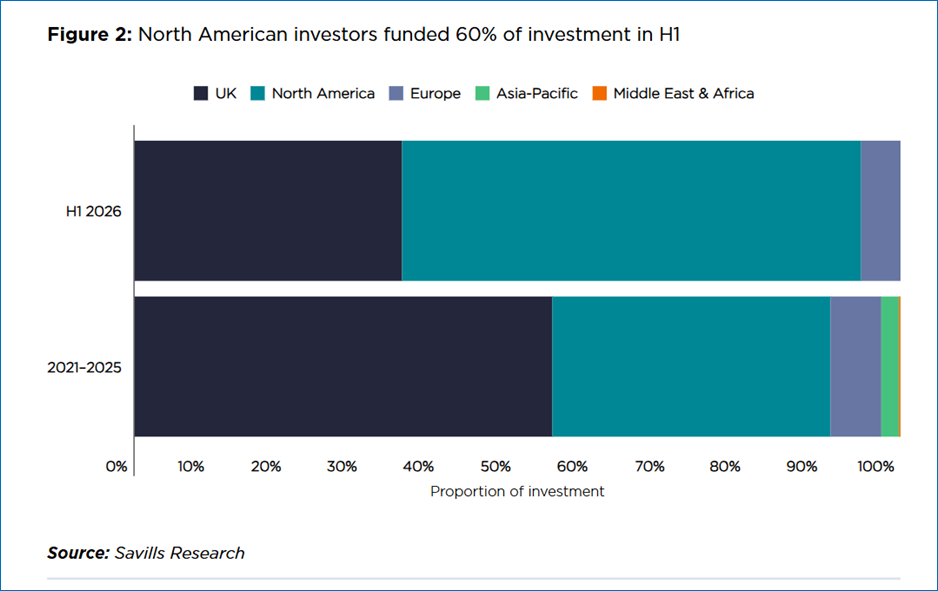
It matters more because of who is writing the cheques. In the first half of 2026, North American capital was responsible for 60% of UK BTR investment, a near reversal of the years when domestic money led. Institutional buyers of that scale do not fall for a nice lobby. They underwrite the numbers, line by line, and they pay for the ones they can trust.
So the building is only half of what changes hands. The other half is the evidence.
So where does the money actually leak? One place more than any other. It has a dull name: gross to net leakage. Stick with it. It is the one number your team can move on its own.
Here is the idea in plain terms. Gross rent is what you bill. Net income is what is left at the end. In between, small losses pile up.
What causes the leak? Voids. Bad debt. Service charge you never fully recover. Utility recharges priced wrong. Accruals booked too late. Each one looks tiny. Together, they set your margin.
Now watch a small leak turn into a big number. Start with a £10 million rent roll. A 3% leak sounds harmless. It is not.
| Step | The number |
| A 3% leak on £10m | £300,000 lost, every year |
| Income is priced at a yield, not face value | — |
| At a 4.6% London yield, that £300k is worth | ~£6.5 million in asset value |
Read that again. A quiet reconciliation, wiping out millions.
And here is the best part. This lever is yours.
There is a bigger clue here as well. Look at how far yields now spread. A London flat yields about 4.6%. In the North East, the same money buys 7.6%. Some spots touch 9%.
So the postcode is not the whole story. When rents are flat everywhere, the winner is not the one with the best address. It is the one who keeps the most of what they collect.
Even Grainger, the UK’s largest listed residential landlord, tells this story. Its growth pitch leans on margin and operational leverage. Not rising rents. A tighter reconciliation will never make the brochure. But it just might make the valuation.
So clean books protect your value. But they do more than that. Tidy reporting buys you three things the board cares about. Here they are, in order.
One. It guards your valuation. A buyer trusts income they can check. Income they cannot check, they price down. That is a lower cheque. So clean numbers are not admin. They are a shield.
Two. It shows control. Speed is the tell here. There have now been more completions than starts for eight quarters straight. Firms are scaling faster than their finance teams can keep up. So a slow month end reads as a red flag. A fast, clean close says the opposite. It says you are on top of things.
Three. It keeps lenders calm. Debt markets are still jumpy. And in a jumpy market, lenders pay for certainty. Clean numbers make covenant talks easier. They make a refinance smoother too.
Here is the blunt version. Nobody ever won a deal with a lovely reconciliation. But plenty have lost value with a messy one.
So what do the sharp operators do that the rest do not? They stop treating finance as a back room chore. They run it as a live discipline. Here is what that looks like day to day.
The leaders tend to do these things well:
None of it is glamorous. But together, it is a moat.
Here is the shift in mindset. The old view saw finance as a cost to trim. The new view sees it as an engine to tune. Same team. Very different value.
It is why many now buy in specialist build to rent accounting services. Doing it in house does not scale. Spreadsheets and heroics only get you so far. A good finance transformation partner helps. You get trained property accountants. Clean process. Smart automation. That rigour once sat only inside the big players. Now the rest can reach it too.
The point is simple. Treat the back office as an afterthought and it will cost you. Treat it as a weapon and it pays you back.
So, back to that lobby. The concierge, the rooftop, the nice bit you show investors round. It still matters; it still helps you let a flat; and it is just not where the money is made or lost anymore.
That has moved. It is in the ledger now, and in the month-end close, and in all the dull jobs that never make it into the marketing photos.
Which is a slightly odd thing to get your head around. For years the back office was just a cost you tried to keep down. Now it is closer to being part of what the asset is actually worth. Same work, same team, but it counts for a lot more than it used to.
So it is probably worth a proper look. Not a glamorous one. Just an honest one.
And if the margins really are made in the back office now, there is a fair question to ask yourself. If a buyer went through your numbers tomorrow, would they hold up?
If any of this has struck a chord, it might be worth a proper chat. Book a no-strings consultation call and we can take an honest look at where your numbers stand.

Education:

Nishant Kumar is a senior commercial leader with 20+ years of experience supporting hospitality and accommodation businesses through technology-enabled outsourcing and operational transformation. At QX Global Group, he works with property owners, asset managers, and hospitality leaders across the UK and Europe to improve profitability, modernise back-office operations, and build scalable operating models. His expertise spans finance and accounting, payroll, and digital enablement for multi-property and franchise-led hospitality organisations, with a strong focus on cost optimisation, standardisation, and automation-led efficiencies.
Expertise: Hospitality and accommodation outsourcing, Multi-entity finance transformation, Shared services and global delivery models, Automation-led cost optimisation, Strategic commercial advisory
Originally published Aug 27, 2026 11:08:14, updated Sep 17 2026
Topics: BTR, Finance & Accounting
24 Sep 2026
Think about the biggest BtR deal of the year. Morgan Stanley and Ridgeback bought L&Q’s re...
Read More02 Sep 2026
Hospitality has become one of the most data-rich industries in the world. Every reservation, room sa...
Read More20 Aug 2026
On a June morning this year, retirement housing found itself in the one room operators would rather ...
Read More13 Aug 2026
When John Lewis walks away from something, the rest of the sector tends to sit up and take notice.&n...
Read More