Topics: BTR, Finance & Accounting Outsourcing
Posted on September 24, 2026
Written By Nishant Kumar




Think about the biggest BtR deal of the year. Morgan Stanley and Ridgeback bought L&Q’s rental arm. Nearly 3,200 homes. Just over a billion pounds. It completed in June.
It also spent about a year in due diligence.
A year! And this was one of the most established residential landlords in the country. Good advisers on both sides. Clean, operational stock. Nobody did anything wrong. So ask yourself the obvious follow-up. If that deal needed twelve months, what happens to yours?
The headline from Q2 looked brilliant. £2.2 billion deployed, the strongest second quarter on record. But count the deals and the picture changes. Only 14 transactions completed. Two of them made up £1.5 billion of the total. The money moved. The market didn’t.
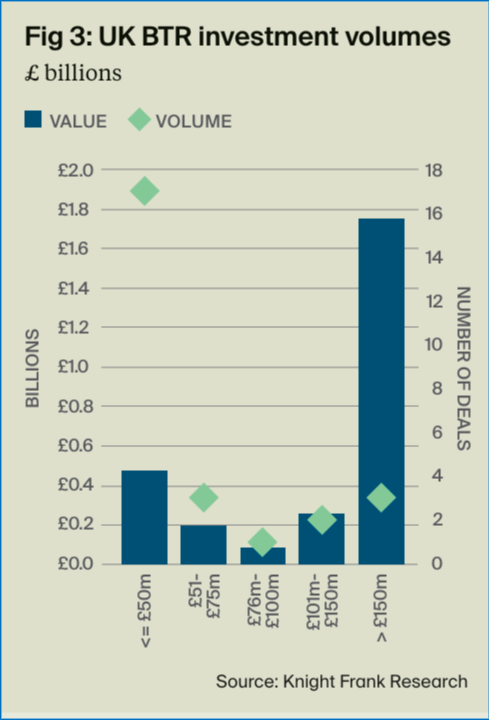
Most of the commentary has put this down to caution, or pricing, or American capital getting bolder. There’s something more useful going on. Buyers have stopped buying buildings. They’re buying operating businesses now. And that shifts diligence away from title and safety, onto the income evidence.
Rent roll. Arrears. Gross-to-net. Service charge reconciliations across every scheme you own.
Those are finance questions, not property ones. Very few sellers can answer them at speed. That’s why the big, well-documented platforms are the ones getting through, and everyone else is stuck in legals.
Diligence readiness has quietly become a pricing variable. Almost nobody is treating it like one.
The Q2 figures were reported everywhere. Fewer people read the second line. Here’s what sat underneath.
| The headline | What sat underneath it |
| £2.2 billion deployed in Q2 2026, the strongest Q2 on record. | 14 deals completed, broadly in line with long-term averages. |
| Largest individual quarter on record for spend. | Two of those 14 deals made up £1.5 billion of it. |
| 2026 already ahead of the full end-of-Q3 totals for 2023, 2024 and 2025. | H1 came in at £2.76 billion, so most of the year landed in three months. |
| Record volumes, record confidence, or so it read | Q1 was the slowest first quarter since 2018, at £679 million across 12 deals. |
Strip out the two big ones and you get roughly £700 million across 12 deals. That’s a normal quarter. A quiet one, even.
So the sector didn’t speed up. Two buyers wrote very large cheques.
It wasn’t a lack of appetite. Knight Frank were clear that capital is queuing up for this sector. The money is there. What’s changed is what a buyer needs to see before it parts with any of it.
For years, a BtR deal was underwritten on where the yield was going. You bought the building, took a view on the exit, and the numbers worked. That view has gone. With yield compression off the table, the return has to come out of the income, which means the buyer is no longer just checking the asset. They’re checking whether the income is real, whether it repeats, and whether anyone can prove it.
That’s a harder ask than it sounds. Most sellers can produce a rent roll. Fewer can reconcile it to what was actually collected. Fewer still can do it across a dozen schemes, with different managing agents, on a fortnight’s notice. So the buyer asks, waits, asks again slightly differently, and the weeks go by.
Then the pricing problem starts. Knight Frank put it plainly: gaps between buyer and seller expectations are extending transaction timelines. But look at where those gaps come from. A buyer who can’t verify the income discounts it. That’s just prudence. A seller who knows their numbers are sound refuses the discount, and they’re right to. Neither side is being difficult. They’re arguing about a number that nobody can settle quickly, which is exactly why the deal sits in legals for months.
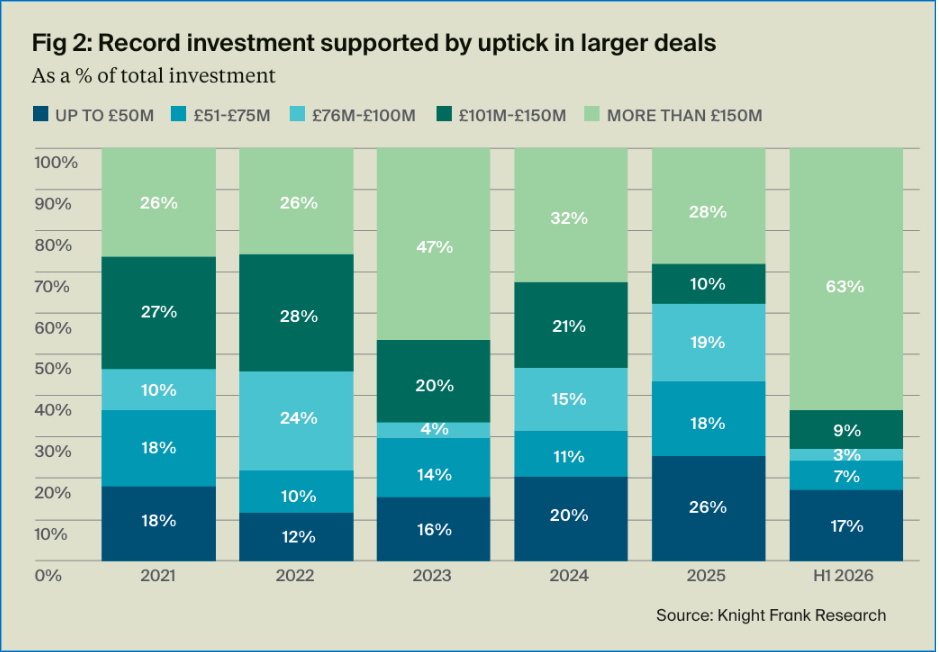
Now think about which deals survive that. Big platforms with proper finance functions and a data room that already exists. L&Q took a year, and they’re among the most established residential landlords in the country. A single-scheme seller with a part-time finance resource doesn’t get twelve months of buyer patience. They get an offer that reflects the uncertainty, or they get nothing.
So the concentration in Q2 isn’t really a story about American capital or investor confidence. It’s a story about who could answer the questions.
Buyers aren’t really buying a building anymore. They’re buying an income stream and the operation behind it. Here’s what that means in practice.
The first five decide your price. The last one decides your timeline.
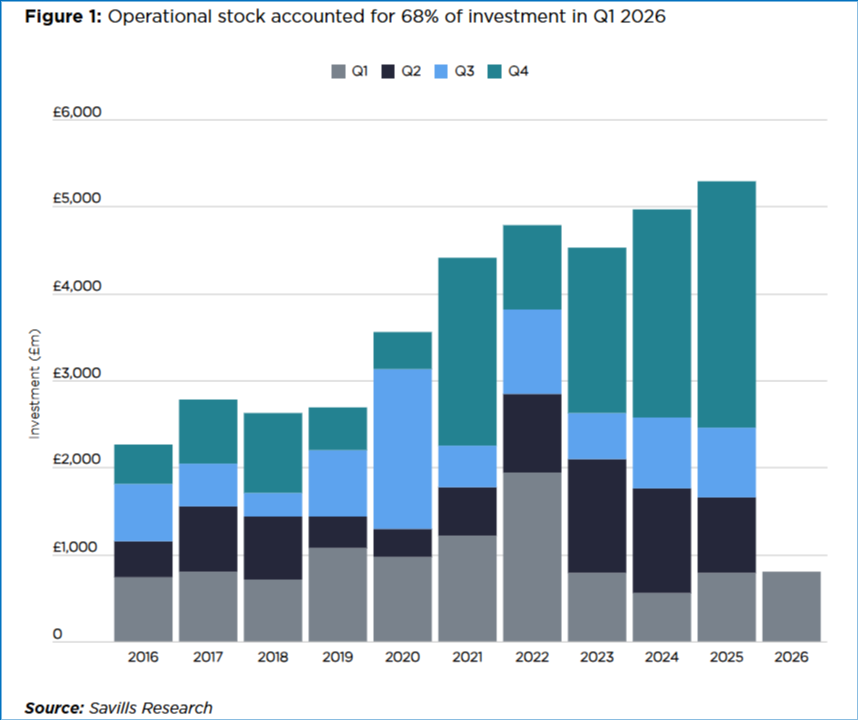
And that’s the bit most sellers underestimate. Buyers want operational stock. Savills put it at 68% of Q1 investment, so this isn’t a niche preference. But operational stock comes with an operational history, and someone has to be able to evidence it. Well-run buildings still lose months in diligence because the numbers live in four places and nobody owns them.
Worth noting too: the gross-to-net figure is slipperier than it looks. Allsop’s 2026 work shows typical ratios of around 17 to 18% for single family, against sub-28% targets for multifamily. Different models, different maths. If your own definition wobbles between reporting packs, a buyer will spot it, and they’ll price it.
None of this happened overnight. But if you’ve sold an asset in the last eighteen months, you’ll have felt the shift.
| Diligence when yields were compressing | Diligence now |
| Title, planning, building safety | All of that, plus the income evidence |
| Value led by the exit assumption | Value led by net income you can prove |
| Finance hands over a pack | Finance defends a position for months |
| Monthly reporting cycle, perfectly fine | Buyer wants portfolio answers in days |
| Managing agent data taken on trust | Managing agent data reconciled line by line |
| Property team runs the deal | Finance team sets the pace |
That last row is the one to sit with. The deal now moves at the speed of your finance function.
A buyer will ask these eventually. Better you get there first.
None of these are trick questions. They’re just hard to answer quickly if nobody has been asked them before.
There’s a temptation to treat a slow deal as an inconvenience rather than a loss. You get there in the end, the argument goes, so what’s a few extra months between friends? That logic held when there was always another asset behind this one. It holds less well now. Across the UK’s 12 Core Cities, the number of BtR units under construction fell by 11% in the year to Q1 2026, because completions are outpacing new starts. The pipeline is being drained faster than it’s being refilled.
The number of units under construction across the Core Cities fell by 11% between Q1 2025 and Q1 2026. Savills, Q1 2026
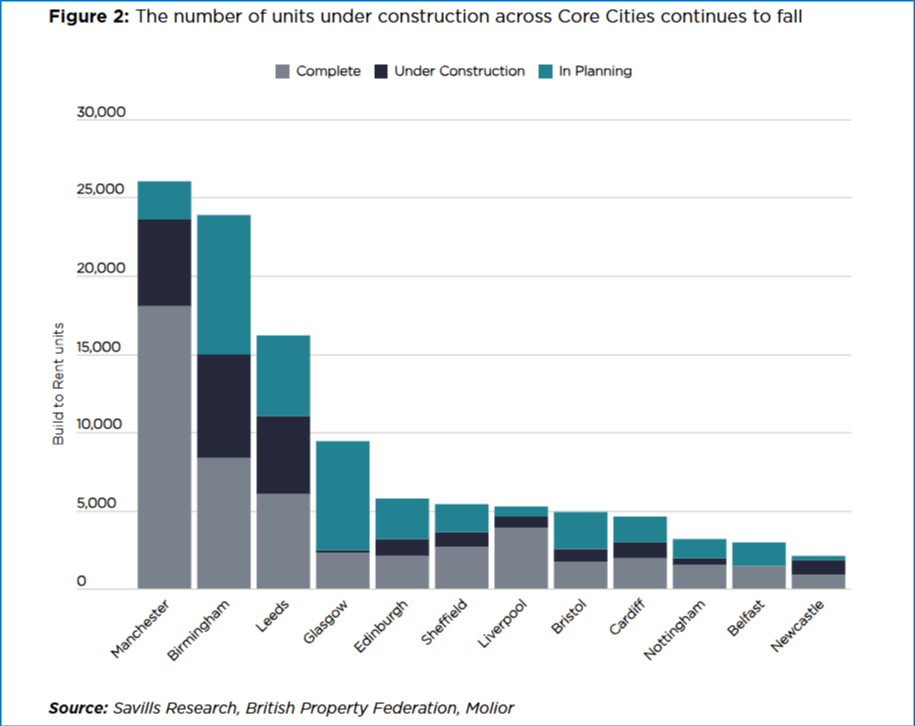
So a year in diligence isn’t neutral. It’s a year in which your replacement asset gets scarcer and dearer, and Savills expect the trend to continue, with urban multifamily funding deals staying muted as planning, building safety and construction cost inflation all bite. Add the debt backdrop to that. Knight Frank describe macro conditions as better but not benign, with debt markets still volatile on inflation and fiscal uncertainty. Every extra month is another month of rate risk sitting on an unsigned deal. Ask what a delay actually costs and the answer isn’t legal fees. It’s the deal you couldn’t do next.
The platform seller L&Q sold nearly 3,200 homes across 52 developments to Morgan Stanley and Ridgeback. A housing association with real finance resource behind it, selling operational stock to a serious buyer. Largest acquisition of operational BtR stock to date. It still took about a year in diligence. Scale and good records bought them the buyer’s patience. The deal got done.
The single-scheme seller Now picture the same questions landing on a 200-unit scheme. No dedicated finance function. Half the data sits with a managing agent. The buyer wants three years of reconciled service charge history and a rent roll that ties to collections. Nobody is waiting twelve months for that. The offer gets discounted, or it quietly goes away.
That’s the gap. L&Q’s year in diligence looks like a problem until you notice how many sellers never get offered one.
Back to where we started. A billion-pound deal, one of the most established residential landlords in the country, a year in diligence. Nobody was being slow. The questions have simply got harder, and answering them takes as long as your records allow.
That’s the part worth sitting with. The market didn’t get busier in Q2. Fourteen deals, two of which carried most of the money. Everything else moved at the pace of the evidence behind it. Capital is plentiful, appetite is real, and neither of those things will shorten your timeline by a single week. What shortens it is being able to show, quickly and consistently, that the income is what you say it is.
So the useful question isn’t whether your asset is sound. It’s how long it would take you to prove it. That’s a build to rent accounting question before it’s a property one. If the honest answer is longer than you’d like, that’s a far better thing to look at now than with a buyer’s advisers waiting on an email.
Happy to talk it through if it’s useful. Book a call and we’ll compare notes.
Because two very large deals landed in the same three months. £2.2 billion was deployed, the strongest Q2 on record, but only 14 transactions completed. Two of them accounted for £1.5 billion. Volume hit a record. Deal activity stayed broadly average.
Morgan Stanley Real Estate Investing, with Ridgeback, bought L&Q’s London PRS platform for £1.045 billion, covering nearly 3,200 homes. Greystar then bought 904 homes at Elephant Park for around £500 million. Both rank among the three largest BTR transactions ever completed in London.
It varies widely, and scale is no protection. The L&Q portfolio sale completed in June 2026 after roughly a year in due diligence, despite being operational stock sold by an established landlord. Smaller sellers with thinner finance resource rarely get that much buyer patience.
Buyers are underwriting income rather than yield growth, so diligence now centres on rent roll accuracy, arrears, gross-to-net and service charge reconciliations. Knight Frank also point to gaps between buyer and seller pricing expectations extending timelines. Most delays trace back to how quickly a seller can evidence income.
It is the share of gross rent lost to operating costs before net income. Allsop put typical single family ratios at around 17 to 18%, against sub-28% targets for multifamily. With returns now driven by income, an inconsistent gross-to-net figure gets priced against you.
Not broadly. Knight Frank state directly that record volumes should not be mistaken for a broad-based recovery. Transaction numbers remain near long-term averages, and Core Cities construction fell 11% in the year to Q1 2026 as completions outpaced new starts.
Agree one definition of net income across leasing and finance, reconcile tenancy to collections monthly, standardise service charge reporting across managing agents, and maintain a live data room. Diligence readiness is now a pricing variable, so evidence that already exists is worth more than evidence you assemble later.

Education:

Nishant Kumar is a senior commercial leader with 20+ years of experience supporting hospitality and accommodation businesses through technology-enabled outsourcing and operational transformation. At QX Global Group, he works with property owners, asset managers, and hospitality leaders across the UK and Europe to improve profitability, modernise back-office operations, and build scalable operating models. His expertise spans finance and accounting, payroll, and digital enablement for multi-property and franchise-led hospitality organisations, with a strong focus on cost optimisation, standardisation, and automation-led efficiencies.
Expertise: Hospitality and accommodation outsourcing, Multi-entity finance transformation, Shared services and global delivery models, Automation-led cost optimisation, Strategic commercial advisory
Originally published Sep 24, 2026 01:09:25, updated Sep 24 2026
Topics: BTR, Finance & Accounting Outsourcing
25 Sep 2026
Hospitality is one of the few industries where finance never really slows down. Room revenue posts o...
Read More15 Sep 2026
Every compliance obligation a finance team meets requires data. Be it tax filings, statutory reporti...
Read More14 Sep 2026
A control failure doesn’t announce itself. It hides in the one routine a single trusted person own...
Read More11 Sep 2026
Picture a 90-unit association collecting around $290 a month per home. The books live in a spreadshe...
Read More