Topics: Finance & Accounting, Senior Living
Posted on August 20, 2026
Written By Nishant Kumar




On a June morning this year, retirement housing found itself in the one room operators would rather avoid: the House of Commons. On 15 June 2026, MPs pressed the Government on exit fees, service charges and families left unable to wind up an estate because a flat wouldn’t sell.
Now here’s the part that rarely gets said plainly.
A resident signs for one thing, a home. One fee. One direct debit. One tidy number they can plan their later years around. It’s exactly what people want. Research by ARCO and the HomeOwners Alliance found barely 6% of homeowners said variable service charges made retirement housing more appealing.
But sitting quietly underneath that single figure is a small crowd of very different promises:
And that’s where it turns awkward. One price, five revenue streams, and they simply aren’t the same problem. One is a sales pitch. The other is an accounting headache your property-trained finance team was never built to solve.
This blog looks at why that gap exists, what the 2026 accounting changes have quietly done to it, and where specialist finance support fits in for operators who’d rather get ahead of it than explain it later.
We’ve said residents want one simple fee. Before we get into the accounting, it’s worth pausing on why that single number has become the sector’s strongest selling point.
Sell a retirement flat and you’re not really selling bricks. You’re selling the promise of not having to worry. No surprise bills, no chasing tradesmen, no maths at the kitchen table on a Sunday. That promise has a shape, and the shape is a single, predictable number.
It’s why operators have leaned so hard into the fixed monthly fee. It sells. And the research backs it: when ARCO and the HomeOwners Alliance asked what would make later-life housing more appealing, the answers were strikingly consistent.
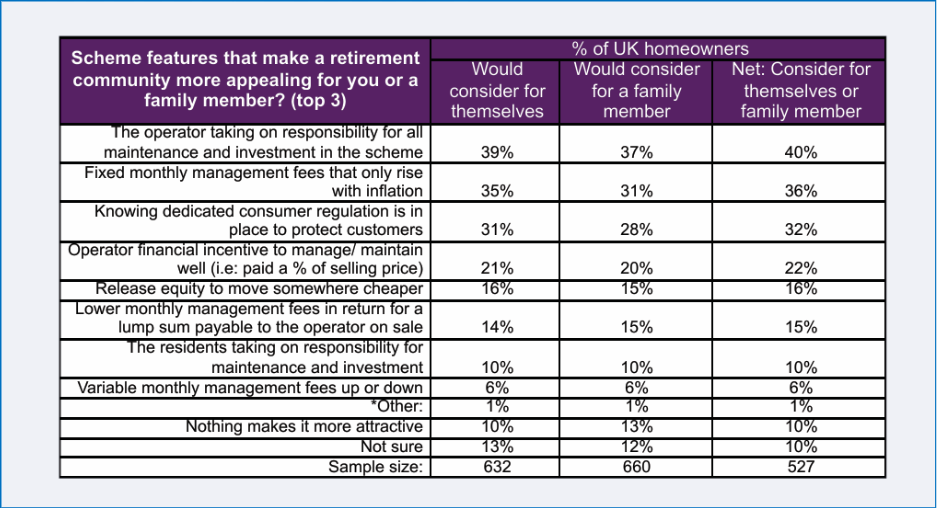
Here’s what buyers actually want:
So the commercial logic is sound. One clean number wins the sale, calms the family, and sets you apart from ordinary leasehold. But that same number, so reassuring on the brochure, is doing an awful lot of quiet work once it reaches the ledger.
So that one tidy number is quietly doing the work of several. The obvious next question is what, exactly, it’s hiding.
So let’s look properly at that one tidy number. Once you break it apart, it stops being a single payment and becomes five different income streams sitting together. Each one arrives on its own terms. Each is taxed differently, recognised differently, and follows a different set of rules. Here’s how they behave once they reach the books:
Five lines, five sets of rules, one direct debit. Rent reconciliations and void periods were the old job. This asks something quite different of a finance team, and it is work that property training alone was never designed to cover.
Splitting the fee into five lines has always been fiddly. This year, it stopped being a matter of good practice and became a matter of the rules. Here’s the part most operators haven’t fully clocked yet: the rules for counting all this quietly changed this year.
Because for the majority of operators, the first reporting year under these rules is the one ending 31 March 2027, with a transition date of 1 April 2026. That means the opening balances are being built right now. This is not a disclosure tweak to worry about later.
It forces operators to formally separate that single fee into its component promises and then justify how each one has been recognised. A finance team built for lease reconciliations and void periods is now being asked to allocate a transaction price across five obligations and defend the judgement. Those are two very different jobs.
New rules are one thing. What they do to the numbers your board actually watches is quite another. None of this would matter much if the stakes were small. They aren’t.
When revenue is misstated or costs land in the wrong category, the damage doesn’t stay in the accounts. It shows up in the numbers the board actually watches. Net operating income drifts. Unit economics blur. And the picture you’re reporting stops matching the business you’re running.
Then there’s the covenant question. The 2026 lease changes pull most agreements onto the balance sheet, and that feeds straight into EBITDA and interest cover. For any operator with lender agreements in place, that is a conversation worth having early rather than late.
Now put it against the margins. Across the elderly care market, average weekly fees held at around £1,440 in early 2026, with operator profit margins sitting at roughly 30.1%. That is a respectable margin, but not a forgiving one. At that level, a categorisation error isn’t a rounding issue. It’s a margin event.
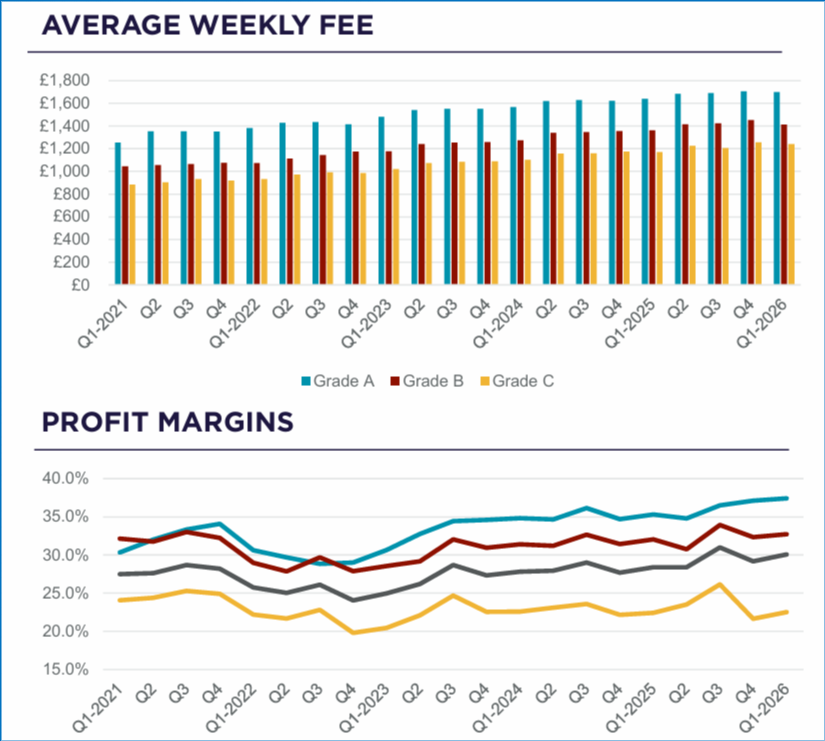
And this is happening at scale. If the sector hits its ambition of 250,000 people in housing with care by 2030, it points to over £70bn of turnover. That is a great deal of revenue about to be recognised under rules built for something far simpler than senior living.
So what actually closes the gap? Not more hours from the same team. A different capability.
The work that senior living now demands is fairly specific. Revenue recognition mapped obligation by obligation, so each of those five lines is counted on its own terms. Community and tenancy accounting that holds up under scrutiny.
Tenancy-to-income reconciliation that ties what a resident is billed back to what has actually been earned. This is not a stretch assignment for a property-trained team. It is a separate discipline, done by people who have built these frameworks before.
It is also where the right support quietly pays for itself. Working with QX, senior housing providers typically see:
If any of this feels close to home, it might be worth a quiet conversation. We’re happy to talk it through whenever the timing suits, no strings attached.
So where does all this leave an operator weighing it up?
The fixed monthly fee isn’t going anywhere. Residents want it, families trust it, and it will keep winning sales for good reason. That part of the story is settled.
What has changed is everything sitting behind it. Quietly, over the course of 2026, the rules for counting that single fee have been rewritten. The number on the brochure stays simple. The accounting underneath it no longer does.
For most operators, that reckoning arrives with the accounts for the year ending 31 March 2027. Which makes the months between now and then rather valuable. Not for a scramble, but for getting the plumbing right while there is still time to do it calmly.

Education:

Nishant Kumar is a senior commercial leader with 20+ years of experience supporting hospitality and accommodation businesses through technology-enabled outsourcing and operational transformation. At QX Global Group, he works with property owners, asset managers, and hospitality leaders across the UK and Europe to improve profitability, modernise back-office operations, and build scalable operating models. His expertise spans finance and accounting, payroll, and digital enablement for multi-property and franchise-led hospitality organisations, with a strong focus on cost optimisation, standardisation, and automation-led efficiencies.
Expertise: Hospitality and accommodation outsourcing, Multi-entity finance transformation, Shared services and global delivery models, Automation-led cost optimisation, Strategic commercial advisory
Originally published Aug 20, 2026 12:08:28, updated Aug 24 2026
Topics: Finance & Accounting, Senior Living
08 Oct 2026
What happens when occupancy improves, demand strengthens, and finance teams still feel under pressur...
Read More29 Sep 2026
In July this year, Birchgrove hired a chief growth officer. Not a sales director. A growth officer, ...
Read More02 Sep 2026
Hospitality has become one of the most data-rich industries in the world. Every reservation, room sa...
Read More27 Aug 2026
In June 2026, Morgan Stanley and Ridgeback paid £1.045 billion for Metra Living, L&Q’s re...
Read More