Topics: Accounts Receivable Automation, Accounts Receivable Process, Outsourcing
Posted on June 18, 2026
Written By Siddharth Sujan




AR automation is easy to sell. Collections teams are stretched, overdue balances are harder to manage, and CFOs want better cash visibility without adding more headcount.
The tools are useful. Automated reminders, payment tracking, account prioritisation and AI-led workflows can take a lot of repetitive work out of accounts receivable (AR) operations. But collections rarely fail because a reminder was not sent.
Invoices stay unpaid because of pricing disputes, missing purchase orders, billing errors, service issues, deductions or slow customer approvals. Automation can flag the balance. Resolving it usually takes context, follow-up and judgment.
That is where accounts receivable outsourcing vs automation becomes the wrong comparison. The stronger model combines both: technology for speed and visibility, and skilled AR teams for disputes, escalation and customer communication.
For CFOs, the real measure is simple. Are overdue balances falling? Is cash becoming more predictable? Is the team gaining better control over working capital?
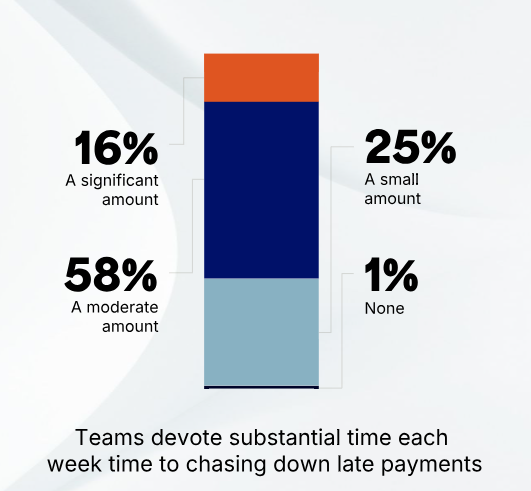
Most AR teams spend too much time on routine administration. Collectors build account lists, send reminders, update notes, check payment status and decide which customers to contact first. At scale, that leaves less time for high-risk accounts, disputes and difficult collection conversations.
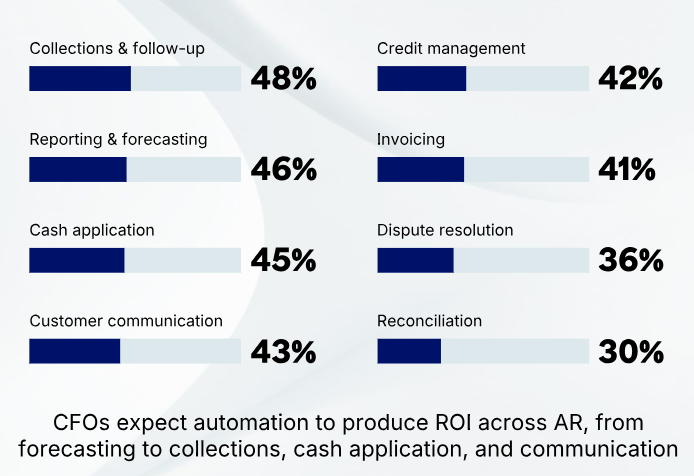
Modern AR automation solutions can reduce that burden. They help schedule follow-ups, prioritise accounts, track promises to pay and improve cash flow and collections visibility.
The rise of AI in accounts receivable management has made the case even stronger. AI can identify changing payment behaviour, surface likely risks and give collectors a clearer starting point each day. These gains matter, especially where data is clean and the collection path is straightforward. The limitation appears when the overdue balance sits inside a wider issue across the order to cash (O2C) process.
RELATED BLOG: Accounts Receivable vs. Payable Automation in the UK: What 2026 Finance Leaders Must Know
Automation earns its place in AR when the work is repetitive, rules-based and supported by clean data.
Automated reminders, statements and payment nudges reduce the administrative load on collectors. Accounts receive consistent follow-up without teams rebuilding contact lists or drafting the same messages each week.
Modern AR automation solutions can sort accounts by balance, aging, payment behaviour and risk. This gives teams a clearer daily priority list and keeps high-value or deteriorating accounts from getting buried in the ledger.
Promise-to-pay dates, customer responses, overdue balances and collector actions can be captured in one place. Better cash flow and collections visibility helps CFOs understand where cash is expected and where collection risk is building.
Automated collections workflows reduce dependence on spreadsheets, inboxes and individual memory. Tasks are scheduled, account histories are easier to follow, and fewer invoices fall through the gaps.
These improvements can make accounts receivable (AR) operations far more efficient. They work especially well when the invoice is accurate, the customer acknowledges the balance and the route to payment is clear.
The harder AR cases rarely follow that clean path.
An overdue invoice may be tied to a pricing error, missing purchase order, service complaint, deduction, short shipment or contract disagreement. A system can identify the unpaid balance. Resolving it may require finance, sales, billing and operations to piece together what happened.
A strategic customer with a genuine dispute should not receive the same treatment as a habitual late payer avoiding contact. Good collections depend on knowing when to push, when to escalate and when a commercial relationship needs more careful handling. That judgement remains central to human-led AR management.
Collectors have to decide when an account needs senior finance involvement, when sales should step in, and when credit terms or legal action should be reviewed. Those decisions depend on value, history, risk and customer context.
Billing mistakes, missing documentation, contract gaps and service issues can all delay payment. Unless those causes are addressed across the order to cash (O2C) process, automated reminders simply keep chasing an invoice the customer is not ready to pay.
This is where collections process optimisation needs more than workflow speed. It needs people who can investigate the issue, coordinate the right teams and keep ownership of the balance until it is resolved.
Automation is a capability. Accounts receivable outsourcing is a way of running the function.
The distinction matters because software can support reminders, prioritisation, reporting and payment tracking, while collections still need ownership. Someone has to investigate disputes, follow up with customers, coordinate internal teams and keep difficult balances moving. High-performing outsourced accounts receivable services bring those pieces together:
This model also gives CFOs more flexibility. Internal teams do not have to carry every follow-up, exception and escalation themselves, while technology continues to improve speed and visibility across accounts receivable (AR) operations.
For businesses looking to outsource accounts receivable, the value lies in combining capacity, collections expertise and automation inside one accountable operating model. That creates a stronger base for collections performance than adding software to an already stretched team.
RELATED CASE STUDY: QX ProAR: Optimising Receivables for UK Healthcare Recruiter
Automation metrics can look impressive while cash performance remains unchanged. A high number of automated reminders or workflow actions says little about whether customers are paying sooner. CFOs should measure AR transformation through outcomes that connect directly to working capital:
These measures give CFOs a better view of whether collections process optimisation is improving performance across the wider order to cash (O2C) process.
For a strong CFO working capital strategy, the question is straightforward: is the AR model producing more predictable cash, cleaner collections visibility and fewer unresolved balances? That matters far more than the percentage of tasks handled by automation.
Automation can remove a large amount of routine work, but it does not add capacity, collections expertise or ownership when the team is already stretched. That is usually when accounts receivable outsourcing starts to make more sense. Common signs include:
In these situations, adding another tool may improve activity without solving the capacity or accountability gap. Strong outsourced accounts receivable services bring people into the areas where software has limited reach. AR specialists can investigate disputes, manage escalations, follow up with customers, coordinate with billing and sales, and keep ownership of difficult balances until they move.
For companies looking to outsource accounts receivable, the value becomes clear when collections need more structure and attention than the internal team can consistently provide.
A mature AR model is easy to recognise. Routine work moves quickly, difficult accounts receive the right attention, and leadership has a reliable view of what is expected to convert into cash. Four elements usually sit behind that:
Strong human-led AR management brings judgment to disputes, negotiations, payment behaviour and relationship-sensitive conversations. High-risk accounts are handled according to context rather than a standard sequence.
Customer segmentation, contact strategies, escalation paths and dispute ownership are defined in advance. Teams know what happens next when an invoice becomes overdue or a promise to pay is missed.
AI-driven finance automation helps prioritise accounts, schedule routine follow-ups, track actions and improve reporting. Collectors spend less time organising work and more time resolving the balances that need attention.
Collections performance depends on billing accuracy, documentation, service delivery and internal response times. A mature model tracks the root causes of delay across the order to cash (O2C) process and assigns ownership beyond the AR team where needed.
When these elements work together, AR becomes easier to scale and cash becomes more predictable. That is the real advantage of combining automation with accounts receivable outsourcing.
RELATED BLOG: Top Accounts Receivable Outsourcing Companies in UK: What Businesses Should Look For?
QX Global Group helps businesses strengthen accounts receivable outsourcing through a model that combines skilled finance teams, structured collections processes and technology-enabled delivery. Our outsourced accounts receivable services support collections, cash application, customer account management, dispute follow-up, aging analysis and wider order to cash (O2C) process activities. This gives CFOs stronger cash flow and collections visibility, cleaner ownership of overdue balances and a more scalable collections model as customer volumes grow.
The result is a more balanced AR operation: routine activity moves faster, difficult accounts receive proper attention and finance gains a clearer view of expected cash.
For businesses considering whether to automate further or outsource accounts receivable, the answer may be both. The strongest model uses technology to improve speed and skilled teams to improve outcomes. Looking to strengthen collections performance and working capital visibility? Book a free, no-obligation call with our AR experts today.
A specialist finance transformation partner can assess process volume, complexity, control requirements, customer impact, and internal capability before recommending the right model. The best approach usually combines AI-driven finance automation, selective outsourcing, and retained in-house ownership for strategic or relationship-sensitive work.
CFOs should use automation for routine reminders, prioritization, reporting, and payment tracking, while keeping disputes, escalations, and high-value customer conversations under skilled human oversight. This balance improves efficiency without weakening the relationship judgment required in accounts receivable (AR) operations.
Modern accounts receivable outsourcing provides the people, process discipline, and accountability needed to turn automation into better collections outcomes. Technology improves workflow speed and visibility, while outsourced AR teams manage customer communication, disputes, follow-ups, and complex exceptions.
The ROI of AR automation solutions should be measured through outcomes such as lower DSO, reduced overdue exposure, faster dispute resolution, improved promise-to-pay performance, stronger collector productivity, and more reliable cash forecasts. Workflow activity alone does not show whether collections performance has actually improved.
Outsourced accounts receivable services add interpretation and ownership to the data produced by automation. Experienced AR teams can explain why balances are delayed, identify recurring issues across the order to cash (O2C) process, and give CFOs clearer insight into expected cash and collection risk.
The strongest providers combine finance domain expertise, automation capability, process standardization, and clear operating accountability. Firms such as QX Global Group use AI-led workflows alongside trained finance teams to support scalable collections, cash application, reporting, and wider O2C operations.
Businesses choose QX because its accounts receivable outsourcing model combines skilled AR professionals, structured collections processes, and technology-enabled delivery. This helps improve customer follow-up, dispute handling, aging visibility, and cash flow control while giving finance leaders clearer ownership of overdue balances.

Education:
B.A. - Mass Communication

Expertise: Finance & Accounting Thought Leadership, Transformation & Operating Model Storytelling, CFO & Executive-Level Content Strategy, Outsourcing, Shared Services & Global Delivery Narratives
Originally published Jun 18, 2026 05:06:46, updated Jun 23 2026
Topics: Accounts Receivable Automation, Accounts Receivable Process, Outsourcing
09 Sep 2026
A business can post record sales and still feel the squeeze. Orders are strong, revenue looks health...
Read More04 Aug 2026
For CFOs, the decision to outsource accounts receivable is rarely just about collections capacity. I...
Read More22 Jul 2026
Most cash flow problems do not begin when an invoice becomes overdue. They begin much earlier, throu...
Read More21 Jul 2026
A company can hit its revenue target and still weaken EBITDA. That sounds counterintuitive until you...
Read More