Topics: Accounts Receivable Process, Finance & Accounting Outsourcing
Posted on September 09, 2026
Written By Pratik Bhatt




A business can post record sales and still feel the squeeze. Orders are strong, revenue looks healthy, but cash is tight, because profit stays theoretical until the money actually lands. That gap between billed and collected is where a lot of financial pressure quietly builds.
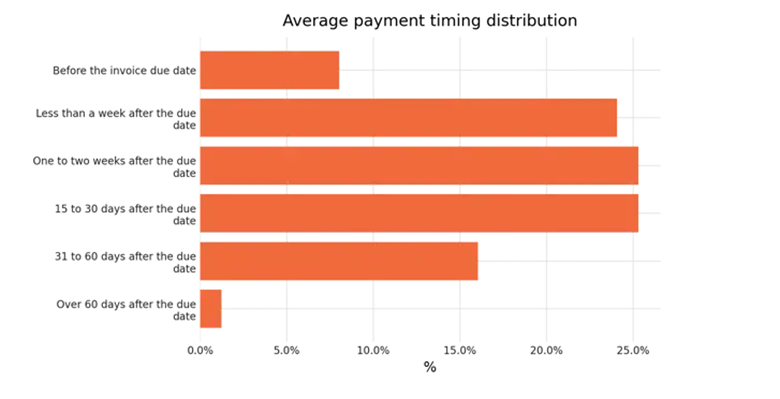
In 2026, rates have settled well above the cheap-money years, so every unpaid invoice is expensive capital doing nothing. And late payment is the norm in B2B now, with around 70% of companies carrying a DSO above 46 days, cash they’ve earned but can’t touch.
Which is why accounts receivable has quietly become one of the sharpest levers a finance leader has, not a back-office chore. Treating it that way is increasingly what separates the businesses funding their own growth from the ones financing their customers’. It’s also why more companies are rethinking their accounts receivable services and what they expect from them.
For years, receivables sat low on the finance agenda. Not anymore. Across the largest US public companies, an estimated $1.7 trillion is trapped in working capital, roughly $600 billion of it in receivables.
A few things pushed it up the list. Expensive capital makes trapped cash a real cost, so freeing it has become a frontline defense. Customers are stretching terms and paying slower, which turns loose AR into a liquidity risk. And leadership wants tighter cash control without throwing more headcount at it.
So the job has changed. AR has stopped being about reminding customers to pay and started being about capital recovery and risk. Strong accounts receivables services now get judged on how reliably they turn revenue into cash, not how many follow-ups went out, which is exactly why accounts receivable services for your business belong in the strategic conversation, not just the month-end one.
Accounts receivable services manage the full journey from invoice to cash, not just the chasing at the end. That’s the shift worth understanding: the money doesn’t get stuck only because customers are slow, it gets stuck across the whole cycle, and strong AR services work on all of it. In practice, that usually spans:
The point of proper accounts receivables solutions lies in closing the gaps across the cycle that quietly delay cash, so revenue converts predictably instead of stalling.
RELATED BLOG: Still chasing payments manually? These AI tools are changing the game — explore the list.
Most AR functions run on autopilot: send the invoice, wait, chase when it’s late. That keeps things moving, but it leaves most of the value on the table. A few things separate strategic accounts receivable services from the purely operational kind.
The first is how effort gets allocated. Operational teams work the overdue list by date; strategic ones work it by risk. A customer who always pays late but always pays doesn’t need the same energy as one whose payments have crept later three months running, that second pattern is the one worth escalating early, before it turns into a write-off.
There’s also a question of scope. Chasing payments is only part of why cash stalls. Disputes sit unresolved, deductions go unexplained, cash lands but isn’t applied cleanly. Strategic AR treats all of that as core work, because that’s where the real delay lives, not in the follow-up email.
Then there’s the data, which is where most businesses leave money on the table. The AR team already knows who broke a payment promise, who disputed over a defect, and who’s quietly changing how they pay. Read properly, that tells you about credit risk and even customer churn weeks before it shows up anywhere else. Most of it just stays locked in the ERP, unused.
And the measure of success changes. A team can be busy all month and still end up with late cash and messy ageing, so activity isn’t the point. Lower DSO, faster dispute closure, less bad debt, more predictable cash, those are the numbers that matter. That difference is essentially why accounts receivable as a service is now built around control and intelligence rather than the capacity to chase.
RELATED BLOG: Every extra day of DSO is cash you’ve earned but can’t use. Here’s how to claw it back. Read the blog.
The payoff from strong AR isn’t abstract. It shows up in the numbers leadership actually watches:
That’s the quiet advantage of treating accounts receivable services for your business as a discipline rather than a monthly scramble.
Plenty of businesses run AR well in-house, and there’s no reason to change what’s working. The question is usually less about capability than capacity, and where the model starts to strain.
| Signs in-house is holding up | Signs it’s time to look outside |
| Manageable invoice volume | Volume climbing, exceptions multiplying |
| Disputes cleared quickly | Disputes and short-pays piling up |
| Process knowledge shared across the team | Everything resting on one or two people |
| Cash conversion steady and predictable | DSO drifting, ageing getting messier |
When the right-hand column starts to feel familiar, outsourced accounts receivable services become worth considering, provided they’re set up properly. Done well, outsourcing isn’t handing collections calls to someone cheaper. It’s a governed operating model: a consistent follow-up cadence, disputes worked as tracked items rather than emails, cash applied cleanly, and SLA-backed reporting leadership can rely on. The best accounts receivable companies are judged on control and outcomes, not headcount or hourly rates.
The honest answer comes down to scale. Below a certain volume, in-house is often fine. As receivables grow and the cost of trapped cash rises, a specialist partner usually delivers cleaner cash conversion without the hiring cycle.
Most guidance on this defaults to the obvious checks, SLAs, integrations, references. Worth confirming, but they won’t separate a genuinely strategic partner from a competent processor. For that, the sharper question is simple: does this provider treat AR as data, or as dialing?
A processor will talk about volume, turnaround, and how many accounts they can cover. A strategic partner will talk about what your receivables are telling you, which customers are drifting, where disputes cluster, which segments carry the most write-off risk. One is selling capacity to chase. The other is selling a clearer read on your own cash and customers.
So before the usual due diligence, ask a provider to look at a slice of your ageing and tell you what they see in it. The answer reveals almost everything. A capable accounts receivable management companies shortlist will spot patterns and risks; a weaker accounts receivable firm will just describe how they’d work the list. That gap is the whole decision.
The businesses pulling ahead on cash in 2026 aren’t necessarily the ones with the most collectors or the newest tool. They’re the ones that stopped treating receivables as something to process and started treating it as something to read, a live signal on liquidity, risk, and customer health that most companies leave buried in the ERP.
That shift is the real point of strategic accounts receivable services. Whether you build the capability in-house or bring in a partner matters less than the mindset behind it: AR is no longer the last step of the sale. In a higher-rate, slower-paying market, it’s one of the few levers that frees cash without needing a single new customer.
QX Global Group works with finance teams on exactly that shift, running invoice-to-cash as a governed, insight-led operation rather than a chase, so cash conversion becomes predictable and risk shows up early enough to act on.
Talk to QX Global Group about turning your receivables into a strategic cash-flow advantage, not just a collections function.
Accounts receivable services manage the full invoice-to-cash cycle, billing, credit, collections, dispute resolution, cash application, and reporting. They improve efficiency by removing manual chasing, standardizing follow-up, and clearing disputes faster, so cash converts more predictably and finance teams spend less time firefighting and more time on higher-value work.
The firms worth shortlisting run both functions as governed operating models, not staffing top-ups. Look for proven US GAAP depth, ERP fluency, SLA-backed reporting, and dedicated teams that give continuity. Providers offering integrated outsourced accounts receivable services alongside AP tend to give US businesses cleaner handoffs and a single, consistent view of cash.
By closing the gaps that quietly delay cash, late or inaccurate invoicing, inconsistent follow-up, ageing disputes, and slow cash application. Tighten those and revenue converts to cash faster. Strong accounts receivable services for your business can pull DSO down meaningfully, freeing working capital without a single new sale.
Most of the cycle. Common ones include invoicing and billing, credit control, collections, dispute and deductions management, cash application, and AR aging and reporting. Businesses can hand over the full function or just the stages that are straining. Flexible accounts receivables solutions let you outsource selectively and scale up as volumes grow.
Look for a partner that leads with process assessment rather than a pre-set package. The right one maps where the cash is actually getting stuck, then recommends what to automate, what to outsource, and what to keep in-house, instead of pushing all three. QX Global Group works with finance teams on exactly this kind of process-first review before any delivery model is set.
Automation handles the high-volume, repetitive work, invoice delivery, payment matching, reminders, and flags exceptions for human judgment. Applied to a clean process, it speeds cash application, cuts errors, and sharpens visibility. Companies that automate a large share of AR typically see DSO fall meaningfully. The key is that automation works best on a sound process, which is where structured accounts receivable services matter.
Usually when volume climbs, exceptions multiply, or the process rests on one or two people whose departure would create real risk. If DSO is drifting and hiring feels slow and expensive, that’s the signal. Outsourced accounts receivable services make sense once receivables are large enough that cleaner cash conversion outweighs the cost of building capacity in-house.
Growth needs cash, and receivables are one of the cheapest sources of it. Faster, more predictable cash conversion funds payroll, suppliers, and investment without new borrowing, while earlier risk signals protect margins. Treated strategically, accounts receivable as a service shifts from a back-office task to a genuine enabler of growth.
QX runs invoice-to-cash as a governed, insight-led operation rather than a chase, structured collections, disciplined dispute handling, clean cash application, and reporting leadership can act on. With senior teams that stay with the account and a process-first approach, QX’s accounts receivable services help US businesses convert revenue into cash faster and see risk earlier.

Education:
Diploma in Electronics & Telecommunication

With over 10 years of experience in payroll and finance operations, Pratik Bhatt specialises in multi-cycle UK payroll, compliance, accounts receivable, and accounts payable. At QX, he combines strategic planning with hands-on execution to deliver consistent results across client engagements. Known for his collaborative approach and stakeholder focus, Pratik brings a strong track record in project delivery, team leadership, and client relationship management.
Expertise: UK Payroll & Compliance, AR & AP Operations, Client & Stakeholder Management, Project Delivery, Strategic Execution
Originally published Sep 09, 2026 06:09:00, updated Sep 09 2026
Topics: Accounts Receivable Process, Finance & Accounting Outsourcing
08 Sep 2026
Revenue looks settled the moment the invoice goes out, but is it really? Until the cash lands, the s...
Read More02 Sep 2026
Hospitality has become one of the most data-rich industries in the world. Every reservation, room sa...
Read More01 Sep 2026
For much of the year, operations run relatively predictably. Then leasing season arrives and the pre...
Read More27 Aug 2026
On paper, the finance function looks covered. The books are kept, payroll runs on time, and month-en...
Read More