Topics: Finance & Accounting Outsourcing, Financial Reporting
Posted on April 10, 2026
Written By Rajen Sachaniya




Financial reporting was once built primarily for compliance. The goal was straightforward: close the books, produce statements, and meet regulatory requirements.
Today, finance leaders expect much more from reporting.
Executives rely on financial data to track performance across business units, evaluate profitability drivers, and guide operational decisions. Investors and lenders expect greater transparency. Boards want reporting that highlights trends, risks, and forward-looking indicators rather than just historical results.
This shift has fundamentally changed how the reporting function operates.
Finance teams are now expected to deliver decision-ready financial reporting that connects operational performance with financial outcomes. Reporting cycles must move faster, insights must be clearer, and financial visibility must remain consistent as organizations scale.
The discussion around financial reporting outsourcing vs in-house reporting teams is therefore no longer just about cost. It is about accuracy, scalability, technology leverage, and the ability to produce reporting that supports strategic decision-making.
Financial reporting is the structured process of preparing financial statements and management reports that communicate a company’s financial performance, position, and operational efficiency.
These reports provide visibility for multiple stakeholders. Management teams use them to monitor performance and allocate resources. Investors and lenders rely on them to assess financial stability. Regulators require them to ensure compliance with accounting standards.
Most organizations produce several core reporting outputs:
Outsourced financial reporting services typically support the preparation, management, and analysis of financial reports that help organizations track performance and maintain financial transparency.
Core reporting outputs usually include:
For many growing companies, these capabilities are delivered through finance reporting outsourcing models that combine reporting expertise, structured reporting workflows, and technology-enabled reporting systems.
Effective financial reporting outsourcing is built around structured reporting workflows that improve accuracy, consistency, and scalability. Several operational characteristics typically define strong outsourced financial reporting solutions.
Consistent templates, reporting timelines, and reconciliation procedures help strengthen reporting discipline and support measurable financial reporting accuracy improvement.
Many financial reporting outsourcing companies operate within cloud-based reporting platforms and automated reporting tools that streamline data consolidation and report generation.
As reporting complexity grows, scalable finance reporting teams allow organizations to expand reporting support without continuously increasing internal headcount.
Strong reconciliation checks and review structures improve reporting reliability and strengthen governance across the reporting cycle.
Together, these elements allow financial reporting outsourcing to function as a structured reporting infrastructure rather than simply an external extension of internal teams.
When implemented well, financial reporting outsourcing can significantly strengthen reporting quality while improving operational efficiency.
Standardized workflows and structured reconciliations reduce reporting inconsistencies and support measurable financial reporting accuracy improvement.
Compared with maintaining large internal reporting teams, finance reporting outsourcing allows organizations to operate with a more flexible cost structure.
Experienced finance professionals bring structured reporting discipline and cross-industry knowledge through outsourced financial reporting services.
Many financial reporting outsourcing companies operate within technology-enabled reporting environments that improve reporting visibility and reduce manual work.
Structured processes and dedicated reporting teams help organizations shorten close cycles and deliver more timely decision-ready financial reporting.
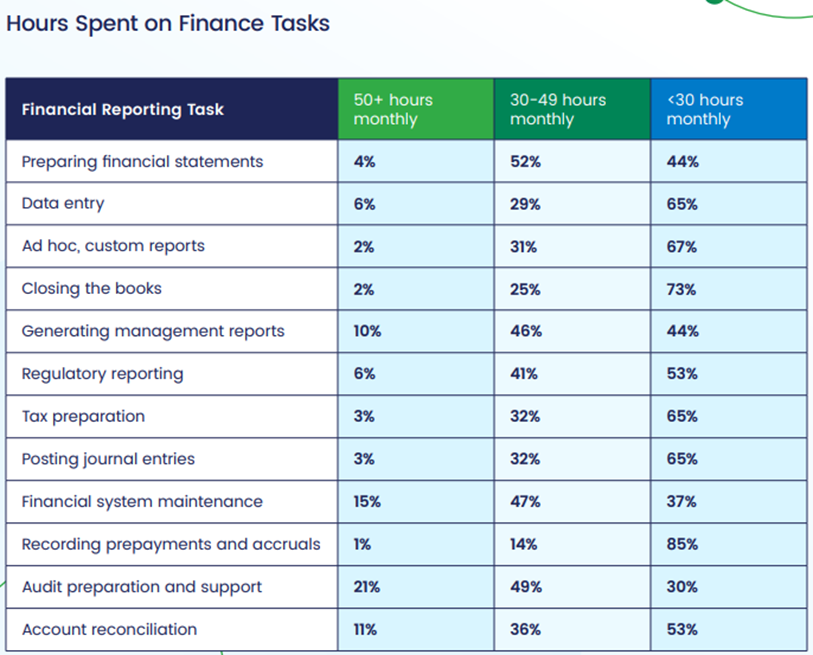
Internal reporting teams manage financial reporting activities within the organization’s finance department. These teams typically handle financial statement preparation, management reporting, and coordination with auditors and leadership teams.
Internal reporting teams offer several advantages: they operate close to the business, understand internal processes, and provide leadership with direct access to financial information. This proximity can strengthen alignment between finance and operational teams.
However, internal teams often face structural limitations as organizations grow. Expanding reporting complexity, tighter reporting timelines, and increasing data volumes can quickly stretch internal capacity. Maintaining larger reporting teams also creates higher fixed costs, particularly when companies must invest in new reporting technologies or specialized reporting expertise.
This dynamic is why many organizations today evaluate the internal vs outsourced finance function when redesigning their reporting operating model.
Also Read: Best Finance and Accounting Outsourcing Companies in USA – A C-Suite Buyer’s Playbook
Choosing between internal reporting teams and financial reporting outsourcing requires evaluating several operational and strategic factors.
For many CFOs, the decision ultimately comes down to how the reporting function can best support growth while maintaining accuracy, speed, and financial transparency.
The decision between internal reporting teams and financial reporting outsourcing often comes down to how well the reporting function can scale while maintaining accuracy and speed.
Internal teams typically provide close operational alignment, but their capacity is limited by staffing levels and internal technology infrastructure. As reporting complexity grows, expanding these teams often requires additional hiring, system investments, and process redesign.
By contrast, outsourced financial reporting services are usually built around standardized workflows, scalable delivery models, and technology-enabled reporting environments. This structure allows organizations to increase reporting capacity without proportionally increasing internal costs.
| FACTOR | INTERNAL REPORTING TEAM | FINANCIAL REPORTING OUTSOURCING |
| Cost Structure | High fixed labor costs and ongoing hiring needs | Flexible operating costs through finance reporting outsourcing |
| Scalability | Capacity limited by internal staffing | Highly scalable finance reporting teams |
| Technology Access | Requires internal investment in reporting systems | Often included within outsourced financial reporting solutions |
| Expertise | Dependent on internal skill sets | Access to specialized reporting expertise |
| Reporting Speed | Can slow as reporting complexity grows | Structured workflows support faster reporting cycles |
For many CFOs, the comparison between financial reporting outsourcing vs in-house reporting ultimately comes down to which model can deliver consistent reporting quality while supporting long-term business growth.
Rather than choosing between fully internal reporting teams and complete outsourcing, many organizations adopt hybrid finance operating models.
In these structures, strategic finance roles remain internal while operational reporting processes are supported through finance reporting shared services or external financial reporting support.
Internal finance leaders typically retain responsibility for financial oversight, strategic planning, and executive communication. Meanwhile, specialized reporting teams handle report preparation, data consolidation, and structured reporting workflows.
This hybrid approach allows organizations to maintain control over financial strategy while benefiting from the scalability and efficiency of outsourced financial reporting services.
For growing companies, hybrid models often provide the most practical balance between operational flexibility and governance discipline.
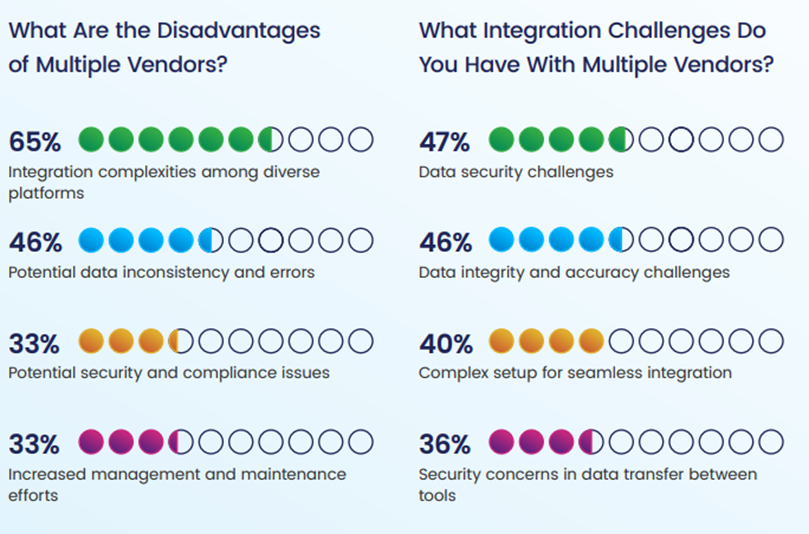
Organizations typically consider financial reporting outsourcing when reporting complexity begins to outpace the capacity of internal finance teams.
Several operational signals often trigger this shift.
In these situations, financial reporting outsourcing companies can provide structured reporting processes, specialist expertise, and scalable delivery models that help organizations strengthen reporting discipline without expanding internal teams.
Also Read: Top Outsourced Financial Planning and Analysis Services Companies in USA: What Businesses Should Know
For many CFOs, the move toward outsourced financial reporting services is less about replacing internal teams and more about building a reporting function capable of supporting growth, transparency, and faster financial decision-making.
As reporting expectations evolve, many organizations are rethinking how their finance functions deliver financial insights. The goal is no longer just producing reports. It is building reporting systems that scale with business complexity while maintaining accuracy and speed.
This is where structured financial reporting outsourcing models can make a measurable difference.
At QX Global Group, we support U.S. businesses through specialized finance and accounting outsourcing services that strengthen reporting infrastructure and improve financial visibility. Our teams deliver outsourced financial reporting services across management reporting, variance analysis, forecasting support, and board-level reporting.
By combining reporting expertise, standardized workflows, and scalable finance reporting teams, QX helps organizations deliver more reliable and decision-ready financial reporting without expanding internal teams.
If your reporting function is struggling to keep pace with growth, it may be time to reassess the reporting model. Speak with our specialists to explore how QX Global Group financial reporting outsourcing solutions can help build a more scalable reporting function.
Financial reporting outsourcing involves delegating financial statement preparation, management reporting, and performance analysis to external finance specialists. Through structured workflows and reporting platforms, outsourced financial reporting services support report preparation, variance analysis, and financial consolidation while internal teams retain strategic oversight.
Organizations typically explore financial reporting outsourcing when reporting complexity grows faster than internal finance capacity. Common triggers include multi-entity reporting structures, tighter reporting timelines, expansion into new markets, or the need for more scalable outsourced financial reporting solutions.
Structured reconciliation workflows, standardized reporting templates, and dedicated reporting teams allow finance reporting outsourcing models to streamline reporting processes. This helps finance teams reduce manual corrections and accelerate close cycles while improving overall financial reporting accuracy improvement.
Yes. Many outsourced financial reporting services extend beyond reporting to support budgeting, forecasting, and performance analysis. In practice, financial planning and analysis outsourcing often works alongside reporting functions to connect historical financial data with forward-looking financial insights.
Companies should evaluate data security, process governance, and provider expertise before adopting financial reporting outsourcing. Selecting experienced financial reporting outsourcing companies with structured controls, secure systems, and clear reporting frameworks helps mitigate these risks.
By introducing standardized reporting processes, automated reporting environments, and scalable finance reporting teams, outsourced financial reporting services help finance leaders move beyond basic reporting to produce more consistent and decision-ready financial reporting that supports strategic planning.

Education:
CMA, B.Com

Rajen Sachaniya is a CMA with over 16 years of experience in finance, accounting, FP&A, and commercial strategy. At QX, he plays a pivotal role in shaping financial direction through budgeting, policy design, and governance. His expertise spans treasury, taxation, legal, compliance, payroll, and multi-currency consolidation. Rajen is known for aligning cross-functional teams across operations, sales, recruitment, and support—ensuring strategic coherence and long-term business growth.
Expertise: Finance & Accounting, FP&A, Budgeting, Commercial Contracts, RFPs, Financial Governance, Cross-Functional Leadership
Originally published Apr 10, 2026 02:04:42, updated Apr 10 2026
Topics: Finance & Accounting Outsourcing, Financial Reporting
15 Sep 2026
Every compliance obligation a finance team meets requires data. Be it tax filings, statutory reporti...
Read More14 Sep 2026
A control failure doesn’t announce itself. It hides in the one routine a single trusted person own...
Read More11 Sep 2026
Picture a 90-unit association collecting around $290 a month per home. The books live in a spreadshe...
Read More09 Sep 2026
In July 2026, one of Britain’s biggest housebuilders had a rough morning. Vistry Group warned ...
Read More