Topics: Finance & Accounting, Multifamily
Posted on June 22, 2026
Written By Siddharth Sujan




When the market is forgiving, weak accounting discipline can stay hidden.
A late variance note, a loosely coded invoice, a slow reconciliation, a property-level cost trend that gets noticed a month too late. None of it feels urgent when rent growth is doing the heavy lifting.
That cushion is thinner now.
Multifamily leaders are dealing with softer rent growth, stubborn operating costs, insurance pressure, higher taxes, concessions, and closer scrutiny on net operating income (NOI). In this environment, accounting cannot sit at the end of the process, simply reporting what already happened.
Strong multifamily accounting now must help leadership see where margin pressure is building, which costs are controllable, and where property performance is starting to drift. The focus has moved beyond a clean close. CFOs need sharper property-level financial visibility, tighter cost discipline, and numbers they can trust early enough to act on.
When margins tighten, accounting becomes less about recordkeeping and more about interpretation. Leadership needs to know why performance is moving, not just where the numbers landed. Is NOI pressure coming from softer revenue, higher insurance, payroll creep, turn costs, vendor pricing, bad debt, or weak cost control at specific assets?
That distinction is where multifamily accounting becomes more strategic.
A portfolio may look stable at the top level while individual properties are telling a different story. One asset may be absorbing higher maintenance costs. Another may be carrying concessions that are not being read clearly enough. A third may have recurring coding issues that make performance harder to compare.
In this environment, strong multifamily financial management depends on separating external pressure from internal leakage. Market pressure cannot always be controlled. Poor visibility, slow reconciliations, inconsistent coding, and weak review discipline can be. That is why accounting needs to give executives a cleaner line of sight into what is happening, what is controllable, and where action is needed first.
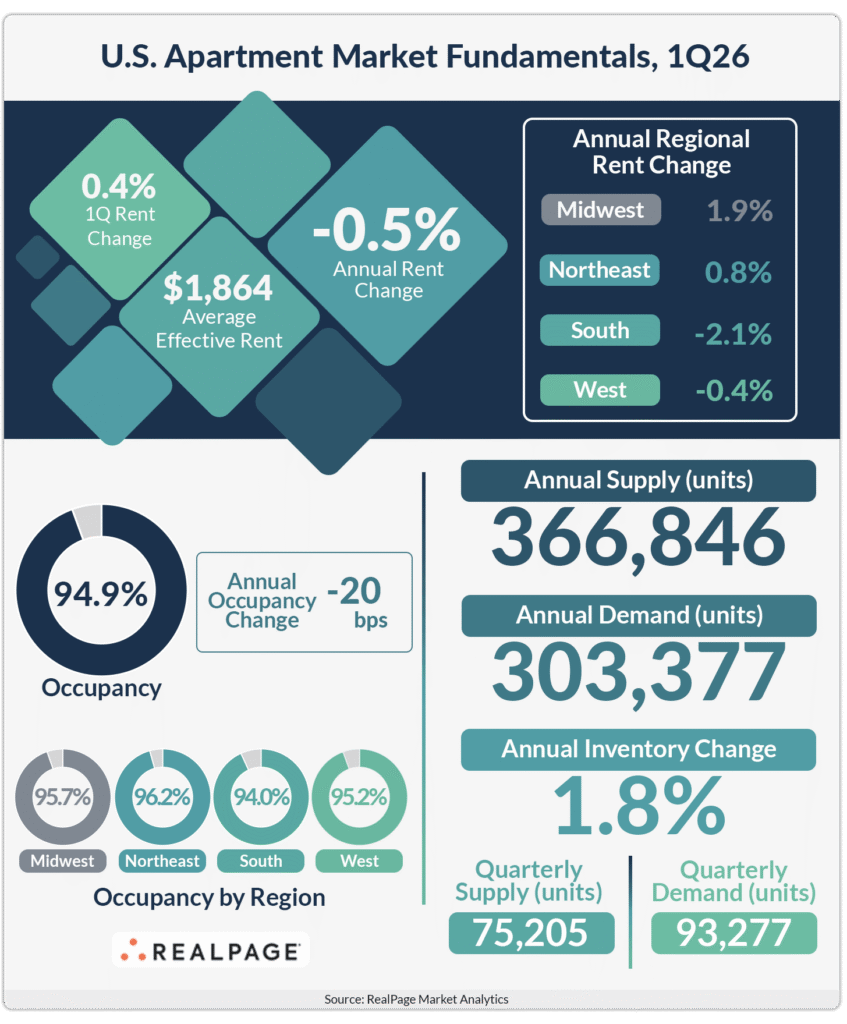
A higher-pressure environment does not break accounting all at once. The strain usually shows up in small, familiar places first.
Portfolio-level numbers may look manageable while individual assets are already showing signs of pressure. One property may be dealing with higher turn costs. Another may have rising repairs. A third may be carrying vendor spend that has not been properly reviewed.
Without strong property-level financial visibility, leaders may know that margins are tightening, but not exactly where the pressure is coming from.
Variance reporting has limited value when it only explains what happened weeks ago. In a tougher operating environment, leadership needs to know sooner whether a cost movement is temporary, recurring, property-specific, or part of a wider trend. Late explanations leave teams reacting after the impact has already moved through the numbers.
When teams are busy, coding discipline can slip. Repairs may be treated inconsistently. Capex and operating expenses may blur. Vendor invoices may be coded differently across properties. Concessions, utilities, maintenance, payroll, and marketing costs may not always sit where leadership expects them to. These issues may look small in isolation, but they weaken the quality of property management accounting over time.
More exceptions, delayed approvals, higher transaction volume, and fragmented property management finance systems can slow reconciliations. The close may still get completed, but the process becomes heavier, more manual, and more dependent on a few people knowing how to fix recurring issues. That is usually a warning sign.
This is the part executives feel most. The reports may be delivered, close complete and dashboards updated. But if leaders are still asking whether the numbers fully explain property performance, the accounting model is not giving them enough confidence.
In a higher-pressure market, confidence in the numbers is a part of CFO real estate financial strategy.
In a tougher market, executives do not need more reports for the sake of it. They need accounting to make the portfolio easier to read. That starts with clearer visibility into cost movement by property, category, vendor and timing.
The same applies to expenses that can quietly weaken performance. Insurance, taxes, payroll, utilities, turn costs, marketing, bad debt and vendor spend all need sharper interpretation when margins are tight.
This is where strong multifamily accounting services can support better decision-making. The goal is not to flood leadership with more data. The goal is to make the right signals easier to see. Executives need accounting that can help answer:
That is the difference between accounting that closes the month and accounting that helps protect performance.
RELATED CASE STUDY: A real-world look at finance transformation across complex multifamily operations. Read the case study.
Strengthening multifamily accounting in a tougher market is all about tightening the places where weak discipline quietly turns into margin leakage.
The first place to look is cost classification. When repairs, turns, utilities, marketing, payroll, concessions, vendor spend and capex are not coded consistently, leadership loses the ability to compare assets properly. Cleaner category discipline gives CFOs a more reliable view of where pressure is real.
Reconciliations need the same focus. In a higher-pressure environment, delayed bank recs, tenant ledger issues, AP aging gaps, deposit mismatches, intercompany balances and balance sheet cleanups can quickly weaken confidence in the close. Stronger reconciliation discipline is one of the simplest ways to improve property-level financial visibility and protect trust in the numbers.
Variance review also needs to become more useful. A line that says “higher repairs due to increased maintenance” does not help an executive decide much. The better question is whether the increase came from deferred maintenance, higher unit turns, vendor pricing, emergency work, poor preventive maintenance, or a one-time timing issue. That is where property management accounting needs to connect the number to the operating reality.
The same thinking applies to recurring exceptions. If the same vendor creates invoice issues every month, the same property needs repeated coding corrections, or the same approval route delays the close, the problem should not keep returning as commentary. It needs an owner. Strong real estate accounting controls help finance teams spot these patterns, assign responsibility and reduce the rework that eats into close quality.
Technology can support this, but it should be applied where the friction is real. Used well, automation supports operational finance optimization by reducing manual dependency in the areas that slow accounting down most.
RELATED BLOG: From reporting to integrations, get the buyer’s guide for smarter software selection. Read now!
For multifamily operators, the aim should be simple: fewer unexplained movements, cleaner property comparisons, faster issue detection and numbers that leadership can trust when decisions need to be made.
Better accounting does not always announce itself through a new dashboard or a thicker reporting pack. It usually shows up in smaller, more useful ways.
The CFO does not have to chase five people to understand a variance. The COO can see which properties need attention before the month is lost.
Asset managers stop debating whether the number is right and start discussing what should change. That is what good multifamily accounting should create in a tougher market: less confusion around the numbers and a faster path to action.
A stronger model usually shows up in a few practical shifts:
The same issues should not keep appearing as fresh discoveries every month. If turn costs are rising, concessions are affecting revenue, or vendor spend is moving above plan, leadership should see the pattern early.
Good accounting helps make review meetings more useful because the numbers arrive with context, not just explanations.
Finance and operations often look at the same property from different angles. Operations may know what happened on the ground, while finance sees how it moved through the numbers.
The value comes when those two views connect. Stronger property management accounting helps turn questions like “Why did costs rise?” into better conversations around staffing, maintenance timing, vendor performance, leasing strategy, or asset-level execution.
In many portfolios, the numbers make sense because a few experienced team members know where to look, what to adjust, and which property has recurring issues.
A better accounting model reduces that dependency. Processes are clearer, classifications are tighter, review notes are more useful, and property-level history is easier to trace. For growing portfolios, this is where multifamily financial management becomes far more scalable.
A lot of accounting friction lives in handoffs: site teams to accounting, AP to property managers, finance to asset management, reporting to leadership. When those handoffs are loose, small delays and errors build up quickly.
Better multifamily accounting services help bring more discipline to those handoffs, so work moves with fewer follow-ups, fewer corrections, and less last-minute cleanup.
When accounting is working well, leaders do not feel like they are always catching up. They can see which issues need action, which ones need monitoring, and which ones are simply part of the current market environment.
In a tougher operating climate, that clarity supports better CFO real estate financial strategy. It helps leadership protect performance without turning every cost movement into a fire drill.
When margins are harder to protect, multifamily operators need accounting support that goes beyond routine transaction processing.
QX Global Group helps real estate firms strengthen multifamily accounting through scalable finance talent, standardized workflows, technology-enabled processes, and stronger reporting discipline. The focus is on giving leadership cleaner visibility into property performance, cost movement, reconciliations, and recurring exceptions.
The value is practical: cleaner close cycles, sharper cost interpretation, better property-level financial visibility, and accounting support that helps executives understand where performance needs attention.
Looking to strengthen your multifamily accounting model? Book a free, no-obligation call with our experts today.
CFOs can strengthen real estate accounting controls by focusing on the areas that create the most rework: coding discipline, approval ownership, reconciliations, variance review, and exception tracking. The goal is not to slow property teams down, but to make the accounting process cleaner, easier to follow, and less dependent on manual fixes.
Property-level financial visibility helps leaders see where performance is actually moving across the portfolio. Without it, rising repairs, concessions, payroll pressure, vendor costs, or bad debt can stay hidden inside broader portfolio numbers and weaken profitability before leadership can respond.
Rising costs make multifamily accounting more strategic because every expense movement needs sharper interpretation. Finance teams must track whether pressure is coming from insurance, taxes, payroll, utilities, turns, vendor spend, or internal leakage, so leaders can protect net operating income (NOI) with more confidence.
The strongest firms are those that go beyond basic transaction processing and support better reporting, forecasting, controls, and decision visibility. For real estate leaders, partners with deep experience in multifamily financial management, property accounting, reconciliations, management reporting, and portfolio-level finance operations are better placed to help finance become a strategic function.
Strong multifamily accounting supports NOI protection by giving leaders earlier visibility into cost movement, recurring exceptions, revenue leakage, and property-level variance patterns. When numbers are clean and timely, CFOs can separate market pressure from controllable issues and act before margin leakage becomes normal.
The best outsourcing partner depends on the company’s industry, systems, transaction volume, reporting needs, and control requirements. Mid-sized US businesses should look for providers that offer end-to-end multifamily accounting services, AP, AR, GL, reconciliations, management accounts, reporting, and scalable support without weakening visibility or accountability.
QX Global Group helps multifamily operators strengthen accounting through scalable finance talent, standardized workflows, technology-enabled processes, and sharper reporting discipline. Its support across AP, AR, GL, reconciliations, management accounts, and property management accounting helps leaders improve cost visibility, close quality, and control across growing portfolios.

Education:
B.A. - Mass Communication

Expertise: Finance & Accounting Thought Leadership, Transformation & Operating Model Storytelling, CFO & Executive-Level Content Strategy, Outsourcing, Shared Services & Global Delivery Narratives
Originally published Jun 22, 2026 07:06:40, updated Jun 23 2026
Topics: Finance & Accounting, Multifamily
14 Oct 2026
Most multifamily finance teams have seen some version of this. A new ERP gets approved, an AP automa...
Read More02 Sep 2026
Hospitality has become one of the most data-rich industries in the world. Every reservation, room sa...
Read More27 Aug 2026
In June 2026, Morgan Stanley and Ridgeback paid £1.045 billion for Metra Living, L&Q’s re...
Read More20 Aug 2026
On a June morning this year, retirement housing found itself in the one room operators would rather ...
Read More