Topics: Finance & Accounting, Financial Planning & Analysis, FP&A
Posted on May 21, 2026
Written By Rajen Sachaniya




Most UK CFOs are not struggling because they lack reports.
They have dashboards, board packs, monthly forecasts, variance commentary, budget files, and more spreadsheets than anyone wants to admit. The problem is more uncomfortable than that.
A lot of those numbers are only as good as the assumptions sitting underneath them.
And in the current UK market, those assumptions are moving quickly.
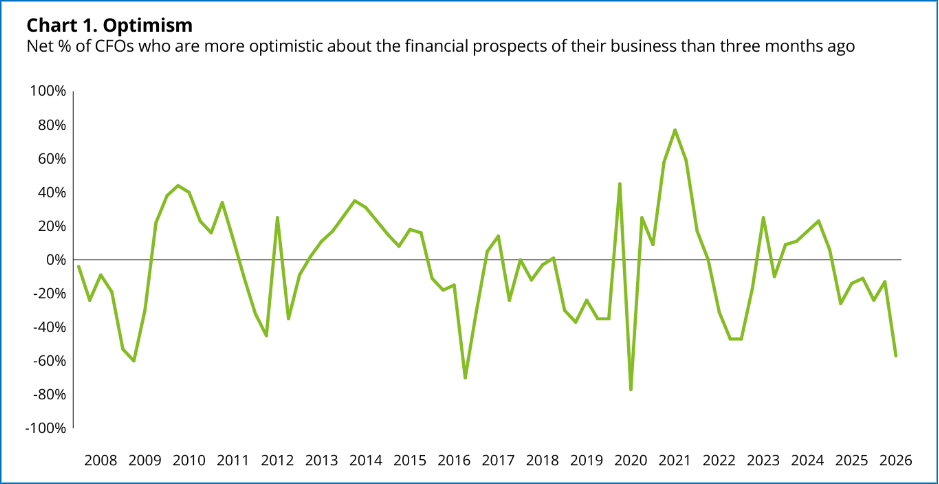
Deloitte’s Q1 2026 CFO Survey found that business optimism among UK CFOs has fallen to a six-year low, with cost control and building up cash now at the top of the finance agenda. CFO confidence also fell to a net -57%, down from -13% in the previous quarter.
That changes what businesses should expect from a financial planning and analysis services partner.
The question is no longer just can they:
The better question is can they:
This is where a strong UK FP&A services partner starts to matter.
Not as an extra pair of hands for reporting. Not as a cheaper way to produce management packs. But as a partner that helps finance leaders test assumptions, improve visibility, and give the board a clearer view of what decisions need to be made next.
This blog looks at what C-suite leaders should look for in a UK financial planning and analysis services partner, from forecasting discipline and scenario planning to data quality, governance, automation, and board-ready insight.
More importantly, it explores how the right FP&A partner can help CFOs move from reporting performance to actively protecting it.
For a long time, financial planning and analysis (FP&A) was treated as a finance support function.
Useful, yes. Important, yes. But often still viewed as something that sat behind the business, not at the centre of board-level decision-making.
That view is becoming harder to defend.
The Bank of England’s April 2026 Decision Maker Panel found that 64% of UK firms expected to increase prices, while 68% expected profit margins to be lower over the next 12 months. The same update also noted that sales and employment were expected to be lower than they otherwise would have been.
That is a difficult planning environment.
For CFOs, the issue is no longer just whether the budget is accurate. It is whether the business can see which assumptions are starting to weaken before they show up as margin pressure, cash strain, covenant risk, pricing tension, or delayed investment.
This is why the FP&A partner decision has become more strategic.
A strong partner should help leadership understand:
This is where CFO financial strategy and FP&A start to overlap.
The right partner does not simply produce forecasts and reports. It helps finance leaders build forward visibility, test risk-adjusted planning scenarios, and give the board more confidence in the decisions sitting behind the numbers.
In that sense, FP&A is no longer just helping the business plan. It is helping the CFO protect the business from decisions based on outdated assumptions.
A lot of FP&A services still get judged on output.
How many reports are produced, how quickly the pack is prepared. How detailed the variance commentary looks. All of that matters, but it misses the bigger question.
How quickly does useful insight reach the people making decisions?
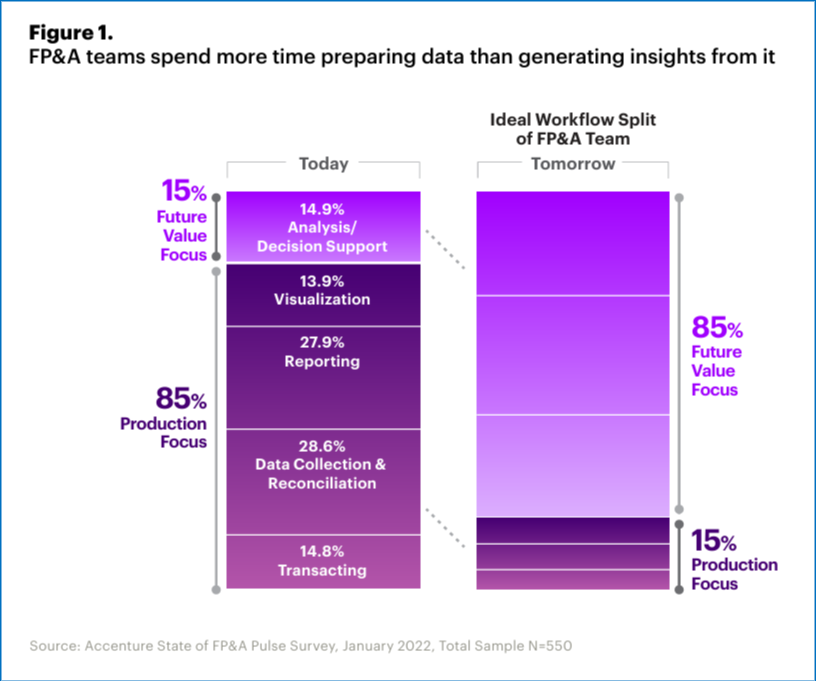
That is where many finance teams still struggle. Accenture found that 62% of CFOs are seeing more demand for insight from financial data, while 53% worry that finance is too reactive. Its survey also found that FP&A teams spend 85% of their time on tactical production work and only 15% on generating insights.
For a CFO, that delay is not just a process issue. It can affect pricing decisions, cash planning, margin protection, hiring, stock levels, and investment calls.
By the time a variance is explained, the business may already have moved on.
This is why the right financial planning and analysis services UK partner should do more than support financial forecasting and reporting. They should help reduce the lag between what is happening operationally and what leadership can see financially.
That means helping finance teams move away from constant data preparation and towards sharper decision support.
A good partner should be able to help answer:
This is where decision velocity becomes a useful test.
If the partner only helps produce the same reports faster, the impact may be limited. But if they help shorten the time between month-end close, variance identification, forecast refresh, and management action, they are supporting the CFO in a much more meaningful way.
For C-suite leaders, the question is simple:
Does this partner make finance faster at producing reports, or faster at supporting decisions?
Before selecting an FP&A services partner in UK, CFOs should ask can they:
The best partners will not make FP&A feel busier. They will make it more useful.
Also Read: Financial Planning and Analysis Services vs In-House Financial Analyst: UK Cost & ROI Comparison
Most FP&A discussions still start with the obvious things: budgets, reports, dashboards, templates, and variance commentary.
They are all useful. But they are not the starting point a CFO should care about.
The better question is: does the partner understand what actually moves the numbers?
In one business, that might be labour cost, pricing, occupancy, utilisation, and debt service. In another, it could be sales mix, customer churn, procurement cost, production volume, working capital, or capacity.
This is where a strong FP&A services partner in UK should bring more than reporting support. They should be able to look at the business model behind the forecast and understand which levers carry the most risk.
AFP defines business drivers as “the key inputs and activities that drive organisational operations and financial results.” These can include production units, pricing, sales mix, website traffic, and retail locations.
For CFOs, this distinction matters.
A spreadsheet-led forecast may show that revenue is down, margin is tight, or cash has moved. But a driver-based forecast helps explain what caused the movement.
That is the level of clarity leadership needs before making decisions on cost, hiring, pricing, investment, or cash preservation.
For UK business financial planning, this is especially important because small movements can quickly change the outlook.
This is why C-suite leaders should look for a partner that can build forecasts around business drivers, not just historical numbers.
The partner should be able to ask better questions, such as:
That is the difference between basic financial forecasting and reporting and proper FP&A support.
A good partner should help the CFO see the business in motion, not just review it after the fact.
When evaluating financial planning and analysis services UK, look for a partner that can support:
A capable FP&A partner will not just update the numbers every month.
They will help the CFO understand which numbers deserve attention, which assumptions need challenge, and where the business may need to act before the issue becomes visible in the board pack.
Dashboards can look impressive in a board pack.
Clean charts. Neat filters. Month-on-month movement. A few trend lines that make everything feel under control.
But most CFOs know the real question is not whether the dashboard looks good. It is whether the numbers behind it can be trusted.
That is where many FP&A services fall short.
Accenture found that 57% of finance executives say a lack of availability and access to data is keeping their function from achieving real-time, continuous accounting. It also found that 76% of FP&A teams depend on hybrid, spreadsheet-based systems for reports and dashboards.

That creates a quiet risk for leadership.
If actuals sit in one system, forecast assumptions sit in another, operational data comes from different teams, and the final report is stitched together in spreadsheets, the CFO may still get a dashboard. But it may not be a decision-grade one.
A credible FP&A services partner in UK should be able to work with imperfect systems. Most businesses have them.
But they should not normalise poor data hygiene.
They should help bring consistency to reporting definitions, source data, assumption logs, reconciliations, and management packs. Otherwise, finance ends up spending too much time debating whose number is right and not enough time discussing what the number means.
This matters even more when leadership is relying on financial forecasting and reporting to make decisions on cost, cash, pricing, hiring, and investment.
A small data mismatch can create a bigger judgement problem.
This is why data discipline should come before dashboard design.
The right partner should not just help finance present the numbers better. They should help make the numbers more reliable before they reach the board.
When reviewing a partner, look for evidence of:
A strong FP&A partner will not hide messy data behind better visuals.
They will help the CFO reduce the mess before it becomes a boardroom problem.
A static budget can still be useful, but it is no longer enough on its own. When costs, demand, interest rates, supply chains, and customer behaviour are all moving, the annual budget can start ageing almost as soon as it is approved.
That is why scenario planning has become a more important test when choosing an FP&A outsourcing partner UK. The partner should not only help finance report against the plan, but also help the CFO understand what happens when the plan starts to drift.
Deloitte’s Q1 2026 CFO Survey found that CFO confidence fell to a net -57%, down from -13% in the previous quarter. The same survey found that the top concerns from adverse geopolitical developments were energy costs at 61%, inflation and interest rates at 61%, and cyber-attacks at 60%.
That is exactly the kind of environment where one fixed forecast can be too narrow. CFOs need to know what the numbers look like if the business faces a cost shock, delayed demand, higher financing costs, or slower cash conversion.
This is where financial planning and analysis outsourcing UK should move beyond budget support. The value is not just forecast accuracy, but preparedness.
These are not theoretical planning exercises. They are the kinds of questions that shape hiring decisions, pricing moves, discretionary spend, debt planning, supplier terms, and capital allocation.
The right partner should bring enough structure to scenario planning without turning it into another complex finance exercise. Leadership should be able to see the base case, downside case, and upside case clearly, along with the assumptions that would trigger a change in direction.
For CFOs, this is the point of scenario planning. It gives the board a clearer view of what the business can absorb, where the pressure points are, and which decisions should be made before the numbers force the issue.
When assessing a partner, look for scenario planning support that is practical, not over-engineered. The model should be detailed enough to guide decisions, but simple enough for leadership to understand and challenge.
A strong partner should be able to support:
A good financial planning and analysis (FP&A) partner will not treat scenario planning as a once-a-year board exercise. They will help the CFO keep the forecast live enough to support decisions while the market is still moving.
AI is becoming a bigger part of finance, but CFOs have good reason to be careful. The point is not whether a partner mentions AI in a proposal, but whether they can show exactly where it improves the FP&A process.
Technavio estimates that the AI in financial planning and analysis market will increase by USD 48.87 billion at a CAGR of 26.9% from 2024 to 2029. It also links this growth to business volatility and the need for greater agility in finance.
That growth is important, but it does not mean every AI-led promise is useful. In financial planning and analysis (FP&A), the practical value of AI depends on the quality of data, the strength of controls, and whether finance teams can explain the output clearly enough for leadership to trust it.
Accenture’s research gives this point some balance. It found that just 4% of finance teams use machine learning or artificial intelligence to get more value from data, even though 88% of finance executives believe AI will help increase the accuracy and predictability of forecasts.

That gap says a lot.
Finance leaders may believe in the potential, but adoption is still cautious. Accenture also notes that teams face roadblocks around automation risk, funding, legacy IT, spreadsheets, and fear that AI may replace people rather than support them.
This is why CFOs should look for practical automation maturity, not AI theatre. A credible FP&A services service provider should be able to show where automation reduces manual effort, improves variance analysis, speeds up reporting, or makes forecast refreshes more reliable.
For example, automation may help with data collection, reconciliation, exception tracking, report production, and first-level variance checks. But judgement still matters when assumptions need to be challenged, unusual movements need context, or a forecast needs to be explained to the board.
The right partner should not hide behind the tool. They should be able to explain what is automated, what is reviewed by people, where controls sit, and how sensitive financial data is protected.
When evaluating AI and automation maturity, CFOs should ask questions that move beyond generic capability claims:
A good partner will not sell AI as a shortcut to better FP&A. They will show how automation fits into the wider operating model, where human review remains essential, and how it helps finance move faster without weakening control.
For years, outsourcing in finance was often judged through a simple lens: can it reduce cost and take work off the internal team? That still matters, but it is no longer the whole story, especially when the work sits close to forecasting, planning, performance insight, and board reporting.
The more useful question for CFOs is whether the partner brings capability the business does not have enough of internally. In financial planning and analysis outsourcing UK, that means access to people who understand finance, data, reporting, automation, sector context, and commercial decision-making, not just people who can update files and prepare packs.
Mordor Intelligence estimates that the finance and accounting outsourcing market will grow from USD 54.79 billion in 2025 to USD 59.05 billion in 2026, and is forecast to reach USD 85.92 billion by 2031. It also notes that buyers are now evaluating providers on cyber-resilience, data-sovereignty alignment, and demonstrable business results, not only cost.

That shift is important. It suggests that finance outsourcing is moving away from a pure labour-arbitrage model and towards something more outcome-led, where control, resilience, insight quality, and business impact matter as much as capacity.
This is especially relevant when choosing an FP&A outsourcing partner UK. A cheaper extension of the finance team may help with workload, but it may not improve the quality of forecasting, scenario planning, business partnering, or management insight.
A strong partner should bring a blend of capabilities into the finance function. That may include senior FP&A review, data modelling, BI and visualisation skills, automation knowledge, commercial finance understanding, and sector-specific judgement.
Accenture’s research underlines why this matters. It found that 56% of finance executives say access to talent is a challenge, with demand rising for business intelligence, visualisation, coding, machine learning, and analytical skills. Yet only 39% of finance leaders say their organisation would consider partnering with a managed services provider to a large or very large extent.

That gap says a lot about where many finance teams are stuck. They know the skills they need are changing, but they may still be trying to build every capability in-house, even when speed, cost, and access to specialist talent make that difficult.
For CFOs, the aim should not be to outsource judgement. It should be to strengthen the finance team’s ability to produce better insight, challenge assumptions earlier, and support business decisions with more confidence.
When assessing a partner, look beyond the number of analysts they can provide. The real test is whether the team has the depth to support the kind of FP&A work your leadership team actually needs.
The best FP&A partners are not just adding people to the finance function. They are adding skills, structure, and judgement that help CFOs build a more capable planning and performance function.
Also Read: Top Outsourced Financial Planning and Analysis Services Companies in USA: What Businesses Should Know
Outsourcing FP&A should never create a black box around the numbers. If anything, the right FP&A outsourcing partner UK should make it easier for the CFO to explain where the numbers came from, which assumptions changed, who reviewed them, and what evidence sits behind the final view.
This matters more in the UK now because governance expectations are moving towards clearer evidence, not just better reporting. The FRC’s UK Corporate Governance Code 2024 says Provision 29 now asks boards to make a declaration in relation to the effectiveness of their material internal controls. It also says the board’s monitoring and review should cover material controls, including financial, operational, reporting and compliance controls.
For CFOs, this changes the way outsourced FP&A should be assessed. A partner may be preparing forecasts, management packs, variance analysis, and board reporting, but the internal finance team still needs clear ownership, review rights, and evidence trails.
A good partner should not weaken accountability by taking work out of sight. They should strengthen CFO financial strategy by making the planning and reporting process more transparent, more controlled, and easier to challenge.
That means assumptions should be documented, not buried in a model. Forecast changes should be traceable, not dependent on someone remembering which version was last updated.
The same applies to reconciliations and reporting logic. If the numbers move materially, the CFO should be able to see what changed, why it changed, who reviewed it, and whether it needs escalation.
This is especially important when FP&A supports decisions on pricing, hiring, funding, capital allocation, cost reduction, and cash preservation. These are not just finance outputs; they are board-level decisions that need confidence in the process behind the numbers.
The right partner should therefore support control as well as insight. They should help finance move faster, but not at the expense of auditability, accountability, or board assurance.
When evaluating an FP&A partner, CFOs should look for clear ownership between the internal finance team and the external partner. The business should know which decisions stay internal, which activities are executed externally, and where review and approval rights sit.
They should also look for documented assumptions and model logic. A forecast is far more useful when leadership can see the assumptions behind revenue, margin, cost, cash, working capital, and investment plans.
Version control is another non-negotiable. Finance should know which forecast, board pack, or scenario model is current, who made the last change, and why that change was made.
Audit trails matter too. If a material number changes between forecast cycles, the partner should be able to show the source, the adjustment, the reviewer, and the rationale.
Exception reporting should also be part of the operating rhythm. Material variances, unusual movements, missing data, and assumption changes should be flagged early rather than discovered during board pack review.
SLA and KPI governance should go beyond deadlines. It should include quality, accuracy, rework, timeliness, escalation, and whether the output is genuinely useful for decision-making.
Finally, there should be a clear escalation process for material variances. If something affects EBITDA, liquidity, covenant headroom, cash flow, or board guidance, it should not sit quietly inside a spreadsheet.
A strong partner will not ask the CFO to choose between speed and control. They will help finance build a planning process that is faster, cleaner, and easier to stand behind.
See how a large PBSA operator brought more structure, efficiency, and cost control into its finance operations through end-to-end F&A support. Read the case study to explore the approach and outcomes in more detail.
A technically strong FP&A team can build a good model, prepare a clean report, and explain the variance. But that does not automatically mean the business knows what to do next.
For CFOs, that distinction matters. The real value of FP&A services is not only in producing analysis, but in helping leadership turn that analysis into decisions on cost, pricing, hiring, cash, and investment.
AFP notes that one in two organisations seek business partnering as the top skill when hiring FP&A professionals. It also makes an important point: even strong analysis will not drive decisions if finance cannot communicate clearly and influence stakeholders.
That is exactly what C-suite leaders should test when choosing a partner. Can they explain what the numbers mean in commercial terms, or do they simply hand over a polished pack and leave the interpretation to the CFO?
A useful financial planning and analysis services UK partner should be able to sit between finance and the business. They should help translate performance movement into operational choices, not just report that something has changed.
For example, if margin is tightening, the conversation should not stop at “costs have increased”. The partner should help finance understand whether the pressure is coming from wage inflation, supplier cost, pricing discipline, sales mix, productivity, or demand quality.
That is where business partnering becomes part of CFO financial strategy. It helps leadership see the trade-offs more clearly:
This is especially important when finance teams are under pressure to move faster. A partner who can only produce reports may improve capacity, but a partner who can support business conversations can improve decision quality.
The best FP&A support does not sound like finance talking to finance. It sounds like finance helping the business understand the financial consequence of each operational decision.
When reviewing a partner, CFOs should look for business partnering capability in the way the team communicates, challenges, and explains the numbers. Technical accuracy is important, but it is only useful if the insight can be understood and acted on.
A strong partner should be able to help answer:
A capable partner will not only prepare insight for the CFO. They will help the CFO take that insight into the business in a way that supports better conversations, sharper challenge, and clearer decisions.
Choosing an FP&A services partner in UK should not come down to who can produce the most reports or offer the lowest delivery cost. The stronger question is whether the partner can improve how finance supports decisions, manages uncertainty, and protects control.
Some warning signs become clear quite early in the evaluation process. CFOs should look out for these before signing off on any long-term engagement.
More reports do not always mean better visibility. In many cases, they simply give leadership more information to sort through.
A good partner should be able to explain how their reporting will help the business make better decisions. If the conversation stays focused on pack production, report frequency, and dashboard count, the partnership may end up adding activity without improving insight.
Forecasts are only useful when the assumptions behind them are clear. If a partner cannot explain how assumptions are captured, challenged, updated, and reviewed, that is a serious concern.
Weak assumption governance can make a forecast look tidy while quietly making it unreliable. CFOs need to know what has changed, why it has changed, and whether the business should act on it.
Spreadsheets are not the problem. Most finance teams still use them, and in many cases, they are useful.
The real issue is uncontrolled spreadsheet dependency. If there is no version control, no audit trail, no reconciliation back to source systems, and no clear ownership, the risk sits underneath the numbers before they even reach the board pack.
FP&A without business context quickly becomes mechanical reporting. A partner may be technically strong, but if they do not understand how your business makes money, where margin is created, and what drives cash, the insight will stay shallow.
A credible partner should ask about commercial drivers, cost structures, operational KPIs, pricing, demand patterns, working capital, and capacity. Without that context, financial forecasting and reporting becomes too detached from the decisions leadership actually needs to make.
A partner who only supports static budgets may not be enough in a volatile market. CFOs need to see what happens when wage costs rise, demand softens, interest costs stay high, or working capital stretches.
Scenario planning does not need to be over-engineered. But the partner should be able to build practical base, downside, and upside views that help the board understand risk before it becomes urgent.
Cost matters, but it should not be the only value case. If the partner’s pitch is mainly about cheaper delivery, it may not be enough for a function as close to planning, performance, and board insight as FP&A.
The better value lies in capability, resilience, control, and better decision support. A strong FP&A outsourcing partner UK should help finance teams improve visibility and pace, not just reduce workload.
This is one of the biggest red flags in financial planning and analysis outsourcing UK. The CFO should never lose judgement, accountability, or strategic control.
The partner should be clear on what they will execute, what internal finance will own, who reviews outputs, who approves assumptions, and how material issues are escalated. If that handoff is vague, the engagement can quickly create confusion around accountability.
By the time a CFO is reviewing an FP&A partner, the conversation should move beyond service scope and delivery capacity. The real test is whether the partner can improve the quality, speed, and reliability of financial insight.
These questions can help separate a basic reporting partner from a partner that can support stronger planning, control, and decision-making.
A good partner should be able to explain how they will make forecasts more reliable and reporting cycles more efficient. But they should also show how faster reporting will translate into better decision visibility for leadership.
This is one of the most important questions to ask. The partner should be able to link labour cost, pricing, utilisation, demand, working capital, customer behaviour, and other business drivers to revenue, margin, cash, and capacity.
A strong FP&A services partner in UK should be comfortable working across fragmented finance and operational systems. They should also be clear on how they validate, reconcile, and structure data before using it in reports or forecasts.
Forecasts can quickly lose value when assumptions are unclear or versions are poorly controlled. CFOs should check how the partner documents assumptions, tracks changes, and reconciles actuals, forecasts, and management reporting.
The partner should not rely only on annual budget cycles. A credible provider of financial planning and analysis services UK should help finance refresh forecasts as conditions shift and model base, downside, and upside scenarios.
CFOs should ask for practical examples, not broad AI claims. The partner should be able to explain where automation reduces manual effort, how outputs are reviewed, and where human judgement remains part of the process.
FP&A often involves commercially sensitive information around margins, pricing, payroll, forecasts, investment plans, and cash flow. The partner should be clear on access controls, data handling, audit trails, and governance.
The cadence should show when data is collected, when reports are prepared, when variances are reviewed, and when insight reaches leadership. A good cadence should support action, not just reporting deadlines.
CFOs should check whether senior FP&A review is built into the delivery model. If analysis goes straight from junior preparation to the board pack, there may not be enough challenge before the numbers are used for decision-making.
The answer should not only focus on cost savings or reports delivered. A stronger partner will measure success through forecast accuracy, reporting cycle time, data quality, decision support, scenario planning maturity, and stakeholder confidence.
The real test of an FP&A partner is not whether they can produce a better-looking forecast or a more polished management pack. Most providers can do that. The harder test is whether they can help the CFO see where the business is becoming more exposed before that exposure turns into a board-level problem.
That is where the partner decision becomes more strategic. A good financial planning and analysis services UK partner should help finance understand which assumptions are still safe, which ones need challenge, and which decisions need to be made before the next reporting cycle catches up.
For CFOs, this is no longer just about reporting support. It is about building a finance function that can read the business earlier, challenge the numbers with more confidence, and bring clearer judgement into conversations around cost, cash, margin, pricing, investment, and risk.
The strongest FP&A services partner will not make finance dependent on an external team. It should do the opposite. It should strengthen the operating rhythm around forecasting, data quality, scenario planning, governance, and board-ready insight, so internal finance leaders remain firmly in control.
In a market where assumptions can change faster than annual budgets, that level of visibility is becoming harder to treat as optional. CFOs need partners who can help them move from explaining performance after the fact to shaping decisions while there is still time to act.
For businesses reviewing how their FP&A model supports planning, reporting, and decision-making, QX Global Group can help UK finance teams assess where greater structure, visibility, and forecasting support may be needed.
To explore this further, you can book a consultation call with QX and discuss what a more resilient FP&A operating model could look like for your business.
CFOs can evaluate the strategic impact of an FP&A services partner by assessing whether the partner improves decision-making, not just reporting output. A strong partner should improve forecast confidence, highlight weak assumptions earlier, connect operational drivers to financial outcomes, and help leadership make faster decisions around cost, cash, margin, risk, and growth.
FP&A partner performance should be measured through metrics such as forecast accuracy, reporting cycle time, forecast refresh frequency, scenario planning turnaround time, data reconciliation quality, stakeholder confidence, and the usefulness of variance commentary. The key measure is whether the partner helps finance move from explaining past performance to supporting better decisions.
Scenario modelling helps boards understand how different business conditions could affect revenue, margin, cash flow, and investment capacity. By comparing base, downside, and upside scenarios, CFOs can show the financial impact of risks such as rising costs, weaker demand, higher interest rates, or slower cash conversion before decisions are made.
Industry expertise is important in FP&A outsourcing because forecasts are only useful when they reflect how the business actually works. A sector-aware partner can understand the right business drivers, challenge assumptions more effectively, and provide financial insight that is more relevant to leadership decisions.
FP&A services can improve long-term financial planning in UK businesses by strengthening forecasting, cash flow visibility, scenario planning, margin analysis, and board reporting. They help finance teams move beyond static annual budgets and build a clearer view of future risks, funding needs, cost pressures, and growth opportunities.
Organisations should consider outsourced FP&A support when internal teams spend too much time preparing reports and not enough time analysing performance or supporting decisions. Common signs include slow forecast refreshes, heavy spreadsheet dependency, limited scenario planning, fragmented data, and a need for specialist skills in modelling, automation, BI, or sector-specific analysis.

Education:
CMA, B.Com

Rajen Sachaniya is a CMA with over 16 years of experience in finance, accounting, FP&A, and commercial strategy. At QX, he plays a pivotal role in shaping financial direction through budgeting, policy design, and governance. His expertise spans treasury, taxation, legal, compliance, payroll, and multi-currency consolidation. Rajen is known for aligning cross-functional teams across operations, sales, recruitment, and support—ensuring strategic coherence and long-term business growth.
Expertise: Finance & Accounting, FP&A, Budgeting, Commercial Contracts, RFPs, Financial Governance, Cross-Functional Leadership
Originally published May 21, 2026 03:05:17, updated May 28 2026
Topics: Finance & Accounting, Financial Planning & Analysis, FP&A
27 Oct 2026
On 20 October, the hospitality trade met for a Budget briefing in a pub. Where else? The Blue Boar, ...
Read More26 Oct 2026
Berkeley Group’s AGM on 11 September was meant to be routine. Most of it was. Enquiries were &...
Read More15 Oct 2026
Market signals often reach the business before they reach the forecast. Sales, demand, staffing or i...
Read More09 Sep 2026
In July 2026, one of Britain’s biggest housebuilders had a rough morning. Vistry Group warned ...
Read More