Topics: AI-driven Financial Planning & Analysis, Finance & Accounting Outsourcing
Posted on January 13, 2026
Written By Visharad Saluja




UK CFOs are operating in a tighter, less forgiving environment. Cost volatility has not fully settled, margin pressure is persistent, and boards are asking for clearer answers faster than ever. In this context, instinct and historical reporting are no longer enough.
What separates confident decisions from reactive ones is the quality of financial planning and analysis. More specifically, it is the metrics behind it. The right FP&A metrics connect forecasts to reality, strategy to performance, and finance teams to the decisions that actually move the business.
This blog looks at what financial planning and analysis services really deliver, the FP&A metrics UK CFOs cannot afford to ignore, and how those metrics are shaping data-driven finance decisions in 2026.
Financial planning and analysis services sit at the centre of how CFOs turn financial data into forward-looking decisions. Unlike accounting, which explains what already happened, FP&A focuses on what is likely to happen next and what actions leadership should take in response.
At a practical level, FP&A services support budgeting, forecasting, scenario planning, variance analysis, and performance reporting. The objective is not more reports, but clearer insight into drivers of revenue, cost, and cash flow.
A strong financial planning and analysis service provider helps UK finance leaders move beyond static budgets and toward rolling forecasts, decision models, and structured performance reviews. This is why FP&A services for UK businesses are increasingly positioned as a strategic capability rather than a reporting function.
RELATED BLOG: Finance leaders: rethink how you plan. Read the full blog on financial planning vs budgeting.
Financial planning and analysis metrics are the measures CFOs use to evaluate performance, forecast outcomes, and assess whether the business is tracking against its strategic goals. They act as both a diagnostic tool and an early warning system.
Unlike traditional financial KPIs, FP&A metrics are designed to explain why results are changing, not just what changed. They link financial outcomes to operational drivers, allowing finance teams to test assumptions, refine forecasts, and guide leadership decisions.
When used well, these metrics support data-driven finance decisions across budgeting, investment planning, and cost control. In this sense, every KPI for financial planning and analysis serves one purpose: reducing uncertainty before it becomes risk.
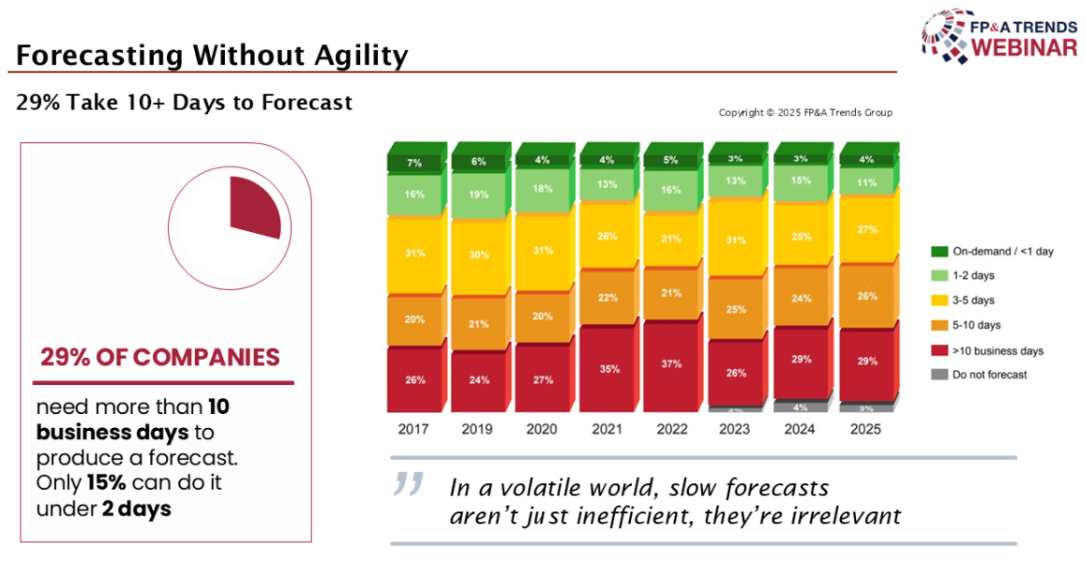
Effective financial planning and analysis metrics do not exist in isolation. Each metric answers a specific question about performance, risk, or direction. UK CFOs get the most value when these metrics are grouped by intent, not by reporting format.
These metrics explain whether the business is creating sustainable value, not just growing top line.
Shows how efficiently revenue is converted after direct costs. Useful for identifying pricing pressure or cost leakage early.
Highlights underlying operating performance by removing financing and tax effects. Often used by boards to assess operational discipline.
Breaks profitability down by product, service, or segment. Critical for understanding which parts of the business are actually funding growth.
These metrics measure the quality of the planning process itself.
Indicates how reliable financial forecasts are over time. Persistent gaps usually signal flawed assumptions or weak driver models.
Helps distinguish between one-off deviations and structural execution issues. A core input for refining future forecasts.
Strong performance here is often the clearest sign that financial planning and analysis services are delivering strategic value rather than static reporting.
These metrics anchor planning in cash reality, not accounting outcomes.
Shows whether reported profits are converting into cash from core operations.
Measures the business’s ability to fund growth, service debt, or return capital after investments.
Connect working capital efficiency with forecast assumptions, highlighting liquidity risk before it escalates.
These metrics reveal whether the cost base is scaling in line with revenue.
Tracks structural cost pressure and highlights inefficiencies as the business grows.
Helps CFOs separate controlled investment from unchecked cost expansion.
These metrics link finance directly to long-term decision-making.
Tests whether strategic priorities are delivering expected returns across markets or business lines.
Evaluates whether capital allocation decisions are paying off over time.
Together, these categories form the core KPIs for financial planning and analysis that support informed, forward-looking decisions.
FP&A metrics matter because they change how decisions are made, not just how results are reported.
Clear, well-defined metrics allow CFOs to explain why forecasts are changing, not just that they have changed. This strengthens the credibility of financial forecasting and planning discussions with boards and investors.
When profitability, cash flow, and forecast accuracy are visible at the right level, investment decisions become more disciplined. Capital moves toward initiatives with measurable returns.
FP&A metrics act as early warning indicators. Variances, margin pressure, or liquidity risks surface sooner, giving leadership time to respond before issues escalate.
The right metrics connect day-to-day financial performance with long-term objectives. Finance shifts from explaining outcomes to shaping them, reinforcing truly data-driven finance decisions.
RELATED BLOG: See how FP&A solutions improve decision-making for CFOs. Read now.
Without a clear set of financial planning and analysis metrics, the same issues tend to surface repeatedly.

Improving FP&A performance is less about adding more metrics and more about sharpening focus.
The first step is defining ownership and governance. Each key KPI for financial planning and analysis should have a clear owner, a consistent definition, and an agreed review cadence. Ambiguity here is one of the fastest ways metrics lose credibility.
CFOs also benefit from standardising reporting frameworks. When metrics are structured consistently across business units, comparisons become meaningful and discussions move faster. This is where well-designed financial planning and analysis services add real value.
Another shift involves moving away from static annual budgets toward rolling forecasts. This allows financial forecasting and planning to reflect current conditions rather than outdated assumptions, especially in volatile cost or demand environments.
Finally, the strongest FP&A functions combine automation with judgement. Systems handle data consolidation and calculation, while finance teams focus on interpretation and decision support. This balance is what enables truly data-driven finance decisions rather than metric overload.

QX Global Group works with finance leaders to build FP&A functions that are structured, scalable, and decision-led. Our teams help CFOs strengthen forecasting, improve visibility into performance drivers, and establish the right FP&A performance indicators to support confident decision-making.
We work alongside finance leaders to:
Our FP&A services for UK businesses combine experienced finance professionals with structured delivery models, ensuring insight arrives on time and in a form leadership can act on. Speak with our FP&A specialists to understand how the right metrics and delivery model can support sharper, more confident decisions across your organisation.
Core financial planning and analysis metrics should be reviewed monthly, with selected FP&A performance indicators monitored weekly during volatile periods. Strategic metrics tied to forecasting, cash flow, and margin should be revisited each planning cycle to stay aligned with business conditions.
Data-driven finance decisions rely on FP&A metrics that link outcomes to underlying drivers. When CFOs can see why margins, cash flow, or forecasts are shifting, they can adjust pricing, investment, or cost strategies before issues surface in reported results.
Without clear FP&A performance indicators, UK CFOs often deal with unreliable forecasts, delayed insight, and reactive decision-making. Planning becomes backward-looking, and finance teams struggle to defend assumptions during board or investor discussions.
FP&A services for UK businesses improve accuracy by introducing driver-based models, rolling forecasts, and disciplined variance analysis. This replaces static assumptions with real-time insight, allowing forecasts to adapt as costs, demand, or market conditions change.
The best tools for financial planning and analysis combine forecasting, modelling, and reporting capabilities. These often include integrated planning platforms, business intelligence tools, and ERP-linked dashboards that support scenario planning and continuous forecasting.
UK businesses should consider outsourcing financial planning and analysis services when forecasting accuracy declines, reporting cycles slow decision-making, or internal teams lack the capacity to support strategic planning. Outsourcing provides access to specialised FP&A expertise without adding permanent overhead.

Education:
C.A., B.Com (Hons)

Visharad Saluja is a Chartered Accountant with over 10 years of post-qualification experience in FP&A, Record to Report, and Procure to Pay processes. Before joining QX, he worked with Indian listed companies, managing budgeting, pricing, costing, GL accounting, and financial finalisation. Visharad brings a sharp commercial lens to finance, combining management reporting with strong stakeholder alignment to drive decision-ready insights.
Expertise: FP&A, R2R, P2P, Contract Management, P&L and B/S Finalisation, Stakeholder Management, Management Reporting
Originally published Jan 13, 2026 04:01:25, updated Jan 22 2026
Topics: AI-driven Financial Planning & Analysis, Finance & Accounting Outsourcing
16 Oct 2026
Multifamily accounts payable can look stable until someone asks whether the process is actually impr...
Read More15 Oct 2026
Market signals often reach the business before they reach the forecast. Sales, demand, staffing or i...
Read More14 Oct 2026
Most multifamily finance teams have seen some version of this. A new ERP gets approved, an AP automa...
Read More14 Oct 2026
A new PBSA asset can add hundreds of beds to a portfolio. It can also add hundreds of daily finance ...
Read More