Topics: AI in Financial Planning, Finance & Accounting
Posted on October 08, 2025
Written By Rajen Sachaniya




The finance landscape for U.S. businesses has never been more unpredictable. Demand swings overnight, capital costs fluctuate, and new regulations can reshape entire models in weeks. For CFOs, staying ahead isn’t about closing the books faster but about anticipating what’s next.
Traditional reporting can’t deliver that foresight. It tells you what happened, not what’s coming. That’s why financial planning and analysis solutions have become a boardroom essential. The right FP&A solutions help finance leaders consolidate data, model scenarios, and enable faster, more confident decisions.
This blog explores how forward-looking FP&A is helping CFOs see around corners, prepare for volatility, and guide their organizations with precision in a market that rarely stands still.
In stable markets, looking in the rear-view mirror was enough. Historical reports could explain what worked, what didn’t, and where the next quarter might land. But in today’s economy, that approach is outdated.
Modern CFOs are expected to do more than report. They need FP&A solutions that turn finance into an early-warning system, surfacing risks and opportunities before they hit the bottom line. This means shifting focus from static variance reports to rolling forecasts, from isolated metrics to integrated business models.
Scenario planning has also become a boardroom expectation. Boards want to know not just what’s happening, but what could happen—under multiple economic, pricing, and investment conditions. With advanced financial planning and analysis solutions, CFOs can model those outcomes in real time and guide strategy with clarity instead of speculation.

Even the most experienced finance leaders can find themselves reacting instead of steering when their FP&A setup isn’t built for today’s pace. Here’s what typically goes wrong when companies rely on outdated tools or fragmented reporting systems:
Traditional reporting cycles make it hard to pivot when market conditions shift. By the time data is consolidated, opportunities have passed and risks have already hit. Without modern FP&A solutions, CFOs are left looking backward instead of forward.
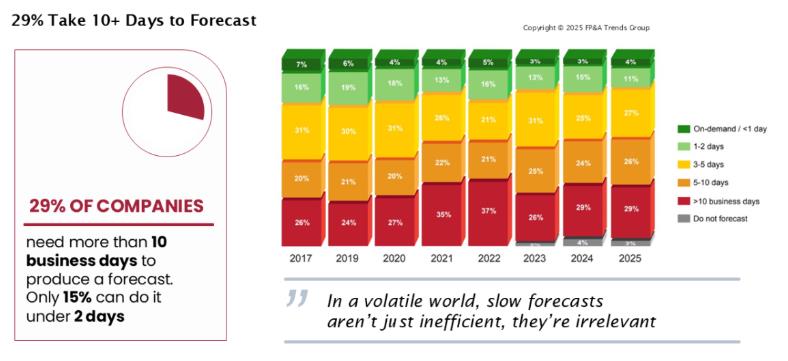
Spreadsheets remain the default tool for many finance teams, but they’re also a major source of risk. Manual inputs, version mismatches, and limited data integration often lead to inconsistent forecasts. The result is a fragile planning process that breaks under pressure.
Without technology-driven modeling, most finance functions can only build a handful of static scenarios. But in reality, business outcomes hinge on countless moving variables, from labor costs to consumer behavior. The best financial planning and analysis solutions let CFOs run unlimited “what ifs” quickly, testing resilience across different economic conditions.
When systems don’t talk to each other, insights stay siloed. Finance builds reports, operations make decisions, and the link between the two weakens. Modern FP&A outsourcing services solve this by aligning financial plans with operational realities. This allows strategy and execution to finally move in sync.
RELATED BLOG: Still planning with last year’s numbers? Read the blog to learn how FP&A beats traditional budgeting at every turn.
Today’s finance leaders need more than accurate numbers. They need context, patterns, and the ability to see what’s next. That’s what modern FP&A solutions deliver—turning fragmented data into meaningful insight that helps CFOs anticipate rather than react.
Here’s how the best FP&A solutions are helping companies stay ahead:
The first barrier to smarter planning is data scattered across systems. Modern FP&A software brings financial, operational, and market data into one connected view. It replaces manual consolidation with live dashboards, giving CFOs and their teams instant access to what’s really happening across the business.
Traditional forecasting looks backward. Predictive models look forward. By using machine learning and trend analysis, FP&A solutions for CFOs can highlight early signals in sales, costs, or cash flow and build more reliable forecasts. This helps finance teams make confident calls in fast-moving markets.
No company can avoid uncertainty, but the right tools help manage it. With advanced financial planning and analysis solutions, CFOs can test multiple scenarios at once—rising interest rates, demand fluctuations, supply delays—and see how each affects revenue and cash flow. These simulations make it easier to plan responses before challenges escalate.
CFOs spend less time preparing presentations and more time shaping strategy. Modern financial planning and analysis services provide automated, visual dashboards that turn data into a clear story for leadership teams. This level of transparency builds credibility and strengthens the link between finance and decision-making.
When these elements work together, finance becomes a driver of agility, helping organizations move from reporting what happened to preparing for what’s next.
RELATED BLOG: Is your FP&A team busy or impactful? Learn the 10 best practices every finance leader swears by.
For U.S. companies navigating unpredictable markets, modern financial planning and analysis solutions reshape how finance teams think, plan, and influence strategy. The gains are both practical and strategic—showing up in better forecasts, faster reactions, and stronger investor confidence.
With real-time data and predictive models, CFOs can see trends before they impact performance. Forecasts become more accurate, not because teams work harder, but because they work with cleaner, connected data. This clarity helps businesses avoid costly surprises and plan with greater precision.
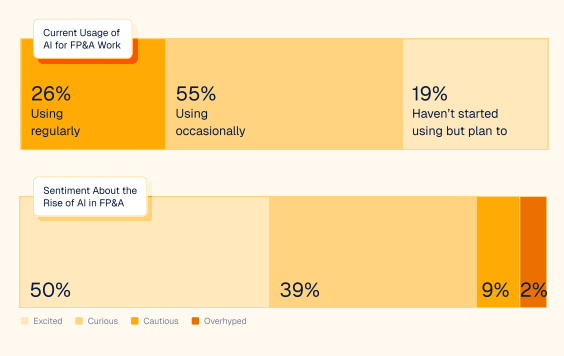
In fast-changing conditions, speed matters. Modern FP&A solutions give leaders instant access to key metrics and scenario outcomes, cutting reporting time from days to minutes. When decisions are backed by up-to-date analysis, finance shifts from being a gatekeeper to being a strategic partner.
Every dollar has to justify itself. With advanced analytics, FP&A outsourcing services help CFOs track performance at a granular level and reallocate capital where it drives the most value. This keeps both cost discipline and growth ambitions in balance.
Boards and investors want clarity, not complexity. Automated reporting and audit-ready data give CFOs the ability to show where the business stands and where it’s headed. Consistent, data-backed storytelling strengthens credibility and builds trust in leadership.
Even the best internal finance teams reach a point where bandwidth limits progress. When forecasting cycles start running late, models feel inconsistent, or reporting takes too long to finalize, it’s usually time to expand capacity through FP&A outsourcing services.
Outsourced FP&A teams bring the structure and discipline needed to standardize planning models, automate recurring tasks, and strengthen the close-to-plan cycle. This helps in-house teams shift focus from spreadsheet management to decision support.
The most effective setups follow a hybrid model—where internal finance leaders continue to partner with the business, while outsourced teams handle the heavy lifting on data modeling, consolidation, and reporting. Layering automation and analytics on top makes the entire FP&A function faster, cleaner, and more reliable.
At QX Global Group, we help CFOs build finance functions that can think ahead, not just look back. Our financial planning and analysis services cover every stage of the planning cycle—from forecasting and budgeting to management reporting and performance packs. Each engagement is designed to deliver accuracy, speed, and scalability for growing U.S. businesses.
We combine a technology-first delivery model—cloud-based systems, workflow automation, and real-time dashboards—with deep domain expertise across key industries such as healthcare, commercial real estate, manufacturing and wine & spirits, amongst others.
For CFOs looking to modernize planning without overextending internal teams, QX offers a scalable hybrid model that blends in-house insight with offshore precision. The result is an FP&A function that’s leaner, faster, and built to anticipate what’s next.
Financial planning and analysis (FP&A) is the process of budgeting, forecasting, and analyzing financial data to guide business decisions. Modern FP&A solutions bring structure and automation to these tasks, helping finance teams translate data into strategy.
Advanced financial planning and analysis solutions connect real-time operational and financial data, replacing static spreadsheets with dynamic models. CFOs gain better visibility into trends, enabling more accurate forecasts and faster adjustments when market conditions change.
Scenario planning helps businesses prepare for uncertainty. With modern FP&A software, CFOs can simulate multiple economic and operational outcomes, assess risk exposure, and choose strategies that protect performance even in volatile markets.
Today’s FP&A solutions are powered by cloud computing, predictive analytics, and AI-driven automation. They integrate with ERP and CRM systems to deliver real-time insights, automate reporting, and enable continuous planning across business units.
By automating reporting and consolidating data, FP&A outsourcing services free CFOs from manual analysis. This allows them to focus on scenario modeling, capital allocation, and performance strategy—elevating finance from a reporting function to a true advisory role.

Education:
CMA, B.Com

Rajen Sachaniya is a CMA with over 16 years of experience in finance, accounting, FP&A, and commercial strategy. At QX, he plays a pivotal role in shaping financial direction through budgeting, policy design, and governance. His expertise spans treasury, taxation, legal, compliance, payroll, and multi-currency consolidation. Rajen is known for aligning cross-functional teams across operations, sales, recruitment, and support—ensuring strategic coherence and long-term business growth.
Expertise: Finance & Accounting, FP&A, Budgeting, Commercial Contracts, RFPs, Financial Governance, Cross-Functional Leadership
Originally published Oct 08, 2025 08:10:51, updated Oct 13 2025
Topics: AI in Financial Planning, Finance & Accounting
02 Sep 2026
Hospitality has become one of the most data-rich industries in the world. Every reservation, room sa...
Read More27 Aug 2026
In June 2026, Morgan Stanley and Ridgeback paid £1.045 billion for Metra Living, L&Q’s re...
Read More20 Aug 2026
On a June morning this year, retirement housing found itself in the one room operators would rather ...
Read More13 Aug 2026
When John Lewis walks away from something, the rest of the sector tends to sit up and take notice.&n...
Read More