Topics: Finance & Accounting, Senior Housing
Posted on April 08, 2026
Written By Nishant Kumar




Running a senior housing operation in the UK means managing far more than rent and occupancy. Finance teams are balancing care costs, staffing pressures, service charges, and regulatory responsibilities in a market where demand is only becoming more complex.
The long-term pressure is clear: the number of people aged 85 and over in the UK is projecte d to rise from 1.7 million to 3.3 million by mid-2047, while in England the number of households led by someone aged 85+ is projected to grow by 42.3% to 1.5 million by 2032.
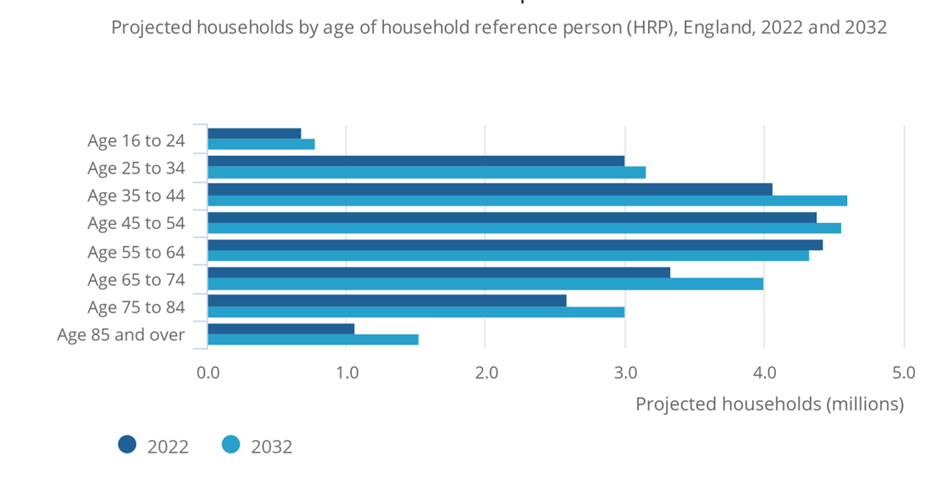
That pressure is already visible across the care system. As per Skills for Care, in 2024/25, England’s adult social care sector employed around 1.50 million people, supported 1.705 million posts, and still carried 111,000 vacancies. For CFOs, finance managers, and operators, that makes financial control much harder. It is no longer enough to record rent and expenses.
Teams need a clear view of care-related spending, labour costs, service charges, and reporting obligations across a highly regulated operating model.
That is why senior housing accounting matters so much. It gives operators the structure to separate revenue streams, track costs accurately, improve reporting, and stay prepared for compliance scrutiny. In a sector where resident wellbeing and financial discipline are closely linked, strong accounting helps organisations stay in control and make better decisions as complexity grows.
Senior housing accounting sits at the point where property finance and care finance meet, and that combination changes nearly everything about how income is recognised, how costs are categorised, and how performance is reported.
A conventional residential or commercial property business generates rent. The accounting reflects that: lease terms, service charge reconciliations, void periods, and capital values. Senior housing generates rent too, but in most operating models that is only one part of what the operator is billing for. Care fees, personal support charges, catering, and ancillary services all sit alongside the tenancy. Each of those revenue lines carries different tax treatment, different recognition rules, and different regulatory implications.
Finance teams in this sector need accounting frameworks that most property-trained professionals have never built before. Ones that can hold property income and care income separately, track costs at a resident level, and produce reporting that satisfies both a property lender and a CQC compliance officer.
That is what separates senior housing financial reporting from every other real estate sub-sector. It is not a variation of standard property accounting. It is a different discipline that happens to involve property.
The term “senior housing” covers a wide range of operating models, and the accounting requirements differ materially across them. Treating the sector as a single asset class is where a lot of reporting problems start.
Care homes carry the most complex revenue structure. Income may arrive from private payers, local-authority placements, and NHS-funded residents under different rates, funding rules, and contractual terms. Without that split clearly reflected in the management accounts, the margin picture at site level is unreliable.
Retirement living and sheltered housing shifts the accounting challenge from revenue recognition to cost compliance. Service charges under the Landlord and Tenant Act 1985 must be reasonable, properly consulted on, and traceable to actual expenditure. The recurring problem is not management overhead per se, but poor allocation: costs that are not clearly permitted by the lease, not properly apportioned, or not evidenced against actual expenditure can become vulnerable on audit or at tribunal.
Housing with care introduces structural complexity the other models do not have. Housing with care often involves separate legal and contractual roles. For example a registered provider, a care provider, and sometimes a developer or management entity operates within the same scheme. Shared cost allocation and intercompany recharges need to be clearly documented, particularly where care and property functions are delivered by related parties.
Retirement villages often sit at the furthest end of reporting complexity. A single site can include long-lease sales, rental income, deferred management fees or other event-fee structures, and resale-related charges. Applying revenue recognition consistently across those streams under IFRS 15 or FRS 102 is not always straightforward, and inconsistent treatment across a multi-site portfolio can create compounding problems over time.
Which part of the portfolio you are accounting for is not a preliminary question. It determines the entire structure of your reporting framework.
Also Read: Top Accounts Payable Outsourcing Companies in UK: Key Qualities That Define the Best
Senior housing finance teams are not dealing with one hard problem. They are dealing with several simultaneously, and those problems interact in ways that make standard property or healthcare accounting frameworks insufficient on their own.
The funding mix in a care home is rarely stable. Private payers, local authority placements, and NHS Continuing Healthcare or Funded Nursing Care contributions can all be active on the same site within the same reporting period. Local-authority (LA) rates are commonly lower than private-pay rates and, in many cases, may not fully reflect providers’ cost of care.
The gap between the LA rate and the private rate needs to be tracked at site level, not averaged away in consolidated accounts. CFOs who rely on blended revenue per bed as their primary operating metric tend to miss margin deterioration until it is already embedded.
For operators running leasehold retirement products, revenue recognition introduces a separate set of questions. Deferred management fees, event fees on resale, and ground rent income do not all recognise at the same point under IFRS 15 or FRS 102. Applying one broad revenue policy across distinct income streams can create problems that often emerge during audit, diligence, or refinancing.
Staffing is typically the largest cost in a care home, with labour costs often accounting for around 50 to 60 percent of provider revenue. The National Living Wage increased to £11.44 per hour from 1 April 2024, up from £10.42 in 2023, and then rose again to £12.21 from 1 April 2025.
The government has also instructed the Low Pay Commission to continue moving toward a broader “genuine living wage” framework, including narrowing age-band differences. Finance teams that track staffing as a single P&L line rather than by shift type, contract type, and role level are working without the granularity they need to manage it.
For retirement living and sheltered housing operators, care home regulatory compliance and service charge accounting carry legal exposure that goes beyond standard financial reporting. Under the Landlord and Tenant Act 1985, charges must be reasonable, must follow the correct consultation process for qualifying works above certain thresholds, and must be supported by cost records that can withstand scrutiny at the First-tier Tribunal.
The practical problem is often poor cost discipline: operators do not always maintain a clear, supportable distinction between costs recoverable under the lease and general management overhead. That distinction is straightforward to establish at the start of a scheme and very difficult to unpick once it has been applied inconsistently for several years.
Housing with care and retirement village structures frequently involve multiple legal entities on a single site. Where costs are shared across those entities, the basis of allocation needs to be documented, consistently applied, and defensible to auditors, lenders, and the regulator. Thin documentation on intercompany recharges can create avoidable friction during audit, lender diligence, and refinancing
Care homes operating out of older stock face a capex cycle that is unavoidable and difficult to plan around. Wet rooms, fire safety upgrades, nurse call systems, and accessibility modifications are not discretionary. The accounting question is whether expenditure qualifies as a capital enhancement or sits as a maintenance charge, and that line is not always obvious.
Operators that capitalise too aggressively inflate asset values and defer P&L impact. Those that expense everything depress their reported EBITDA in ways that affect covenant headroom. Depreciation policy on specialist care fit-out also needs to reflect actual useful life. The correction for getting this wrong tends to arrive as a lump-sum P&L hit when replacement can no longer be deferred.
Also Read: Best Finance and Accounting Outsourcing Companies in UK : 10 Key Questions to Ask
The complexity in senior housing finance does not disappear, but it becomes more manageable when the accounting structure reflects how the business actually operates.
The starting point is clean revenue segmentation. Care fees, rental income, service charges, and ancillary income should sit in separate nominal codes from day one. Operators who build that separation into the chart of accounts early can reduce manual reclassification and improve reporting on funding mix, margin by resident type, and fee-rate movement over time.
For care home operators, one effective step is moving beyond site-level reporting toward resident or placement-level analysis. Funding mix can change as residents move in, move out, or transition between self-funding and publicly funded support. Tracking fee income and direct care costs at a more granular level can give finance teams earlier visibility into profitability shifts than a high-level monthly P&L alone.
Staffing costs usually need their own reporting layer. A single wages line offers limited visibility in a care environment where the mix of contracted hours, overtime, and agency cover can move significantly from week to week. Useful controls often include wage cost per occupied bed, agency spend as a share of payroll, and comparisons between actual and rostered hours. National Living Wage increases have reinforced the importance of that level of detail.
Rent and service charge accounting in retirement living demands similar discipline, applied differently. The key requirement is a clear audit trail between budgeted service costs, actual expenditure, and amounts recovered from residents. Leaseholders also have statutory rights to request summaries of service-charge costs and inspect supporting records, which makes accurate cost classification and documentation essential.
Across all portfolio types, good month-end discipline really matters. Senior housing operators need timely, reliable numbers to manage performance, support lender reporting, and respond to funding or fee pressures. A finance team that can close cleanly and produce clear reporting is not just supporting the business , it is helping run it.
Senior housing finance has become harder to run with a small in-house team, a general accounting system, and spreadsheet-led processes alone.
In a multi-site operation, finance teams are often managing care fee billing, payroll, service charge reconciliations, intercompany recharges, and reporting requirements at the same time. Each task is manageable on its own. The challenge is keeping all of them accurate, timely, and consistent with a lean team.
Technology has helped. Purpose-built care billing platforms are better suited to complex funding streams than generic property systems. Payroll tools linked to rostering software can improve visibility over labour costs, while cloud reporting makes site-level performance easier to track.
But technology does not remove the need for sector knowledge. Systems still need people who understand how senior housing works in practice.
That is why more operators are combining technology with senior living accounting services. Functions such as purchase ledger, care fee billing, payroll, and management reporting can often be handled more efficiently by specialist teams with the right systems and experience already in place.
For growing operators, that matters even more. Expanding an in-house finance team takes time, while outsourced support can scale more quickly as new sites or contracts are added.
QX Global Group’s Senior Housing Accounting services work with UK operators across care homes, retirement living, and housing with care schemes on this basis. Our teams support finance processes such as local-authority payment reconciliations, mixed-income reporting, and preparation for audit and lender review.
For operators reviewing how their finance function is set up, whether because of a slow month-end close, inconsistent reporting, or wider finance process gaps, we would be glad to have that conversation.
Senior housing in the UK is not getting simpler. Demand pressures are structural, the regulatory environment is evolving, and financial reporting requirements are becoming more demanding.
The operators managing this well are not always the largest or the best resourced. They are the ones with the right structure: clearly separated revenue streams, cost reporting detailed enough to support decisions, and a finance function that closes consistently and produces information people can trust.
For many operators, building that structure entirely in-house is not always the most practical option. The sector is specialised, the hiring market is tight, and the finance challenge spans property, care, compliance, and reporting.
Getting senior housing accounting right is not just a finance issue. It is a business decision.
Traditional property accounting is built mainly around rent, lease terms, void periods, and capital values. Senior housing can add care fees, NHS and local-authority funding, and ancillary income on top, creating a broader mix of accounting, tax, and regulatory considerations. The finance function needs to keep those streams distinct and report across them coherently.
A clean chart of accounts is the starting point. Care fees and rental income should sit in separate nominal codes from the outset. For care homes, finance teams also benefit from visibility into funding mix at resident or placement level, including private-pay, local-authority funded, and NHS-funded residents, because those streams can carry different margins and reporting implications.
Common challenges include managing a mix of private, local-authority, and NHS-related income streams; controlling labour costs in a wage-sensitive care environment; and handling multi-entity structures, intercompany recharges, and resale- or event-fee models in more complex retirement settings. National Living Wage rates have continued to rise, increasing pressure on staffing budgets.
Common challenges include managing a mix of private, local-authority, and NHS-related income streams; controlling labour costs in a wage-sensitive care environment; and handling multi-entity structures, intercompany recharges, and resale- or event-fee models in more complex retirement settings. National Living Wage rates have continued to rise, increasing pressure on staffing budgets.
Senior housing operators outsource accounting support because specialist providers can offer additional capacity, sector experience, and systems that are easier to scale as portfolios grow. The benefits vary by operator, but the model can reduce recruitment pressure and provide more flexible support than building every function internally.

Education:

Nishant Kumar is a senior commercial leader with 20+ years of experience supporting hospitality and accommodation businesses through technology-enabled outsourcing and operational transformation. At QX Global Group, he works with property owners, asset managers, and hospitality leaders across the UK and Europe to improve profitability, modernise back-office operations, and build scalable operating models. His expertise spans finance and accounting, payroll, and digital enablement for multi-property and franchise-led hospitality organisations, with a strong focus on cost optimisation, standardisation, and automation-led efficiencies.
Expertise: Hospitality and accommodation outsourcing, Multi-entity finance transformation, Shared services and global delivery models, Automation-led cost optimisation, Strategic commercial advisory
Originally published Apr 08, 2026 05:04:45, updated Apr 09 2026
Topics: Finance & Accounting, Senior Housing
02 Sep 2026
Hospitality has become one of the most data-rich industries in the world. Every reservation, room sa...
Read More27 Aug 2026
In June 2026, Morgan Stanley and Ridgeback paid £1.045 billion for Metra Living, L&Q’s re...
Read More20 Aug 2026
On a June morning this year, retirement housing found itself in the one room operators would rather ...
Read More13 Aug 2026
When John Lewis walks away from something, the rest of the sector tends to sit up and take notice.&n...
Read More