Topics: Finance and Accounting Transformation, Senior Living
Posted on July 30, 2026
Written By Nishant Kumar




It usually falls apart in a board meeting. Finance puts up a beautifully AI-generated forecast, all confident lines and clean projections, and then someone across the table gently asks why it doesn’t match the occupancy figure operations shared last Tuesday. A pause. A shuffle of papers. And the quiet, dawning realisation that the two systems have never once agreed on what a “resident day” actually means. The tool wasn’t wrong, exactly. It just answered a question nobody had bothered to define properly.
If that scene feels a touch too familiar, you’re in good company.
That gap between the dazzling demo and the disappointing Tuesday isn’t a you problem. It’s practically the industry’s default setting.
The numbers are blunt about it. A landmark MIT study found that a staggering 95% of enterprise generative AI initiatives delivered no measurable business return, despite some $30 to $40 billion being poured in. Ninety-five! And before anyone blames the algorithms, the research is rather clear that the models were rarely the culprit.
So what is?
Well, this is where it gets interesting. BCG put a number on it that ought to be pinned above every finance director’s desk: only about 10% of AI success comes from the model itself, another 20% from the platform, and a thumping 70% from the boring stuff. The data. The processes. The people.
Read that again, because it quietly upends how most senior living operators are spending.
The trouble is, the 70% doesn’t photograph well. Nobody puts a general ledger on the front of the brochure. And in an industry that lives and breathes its residents, the money and the attention drift, almost gravitationally, towards the AI you can see: the clever fall sensors, the companion tech, the shiny things that win hearts on a tour.
Meanwhile the plumbing that actually decides whether any of it pays? Left to rattle along on spreadsheets and good intentions.
This piece is about that plumbing. Not because it’s glamorous, but because in 2026 it has quietly become the thing your investors are staring at.
Every operator has a slide on AI these days. Adoption rates, pilot counts, the obligatory nod to “innovation.” All very reassuring.
Here’s the slide you won’t see.
Let’s be honest about something.
Given the choice between two AI projects, one that helps keep a resident safe and one that tidies up the month-end close, which one wins the room? Every time, it’s the first. And quite right too, in a way. It’s a lovely thing to back. It photographs beautifully. It tells a story your families understand and your board can feel proud of.
The trouble is, that instinct, warm and well-meaning as it is, quietly bends where the money goes.
And look where it’s bending. The sector’s energy is pouring almost entirely towards the resident’s door:
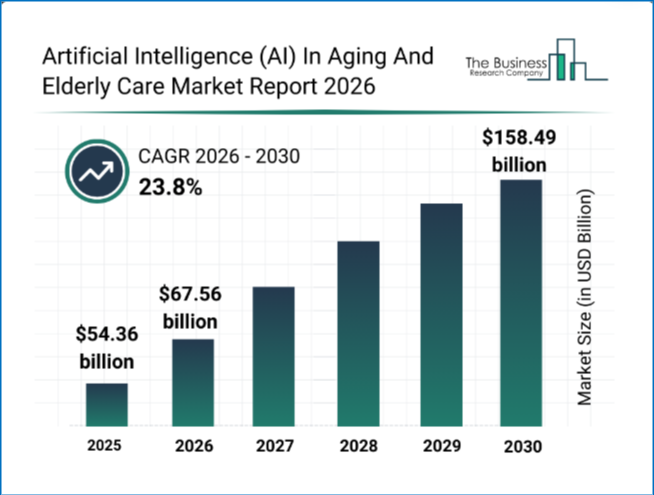
Now, here’s the bit that ought to give a finance chief pause.
The research says the money is chasing the wrong door.
When someone finally sat down and measured this properly, they found that roughly half of all AI budgets go to sales, marketing and the visible, front-of-house stuff, while the quiet back-office work delivers two to three times the return. Read that again. The least glamorous corner of your business, the invoices and reconciliations and reports, is where the actual money hides. And it’s the corner nobody wants to fund.
Why does this keep happening? It isn’t stupidity. It’s human nature.
Care tech makes people feel something. A ledger doesn’t. You can’t put a reconciliation engine on the front of a brochure, you can’t show it off on a tour, and it will never once make a family smile. So it waits at the back of the queue, year after year, while the shiny things go first.
And the cost of that neglect is not hidden, if you care to look. While the clever sensors hum away upstairs, most finance teams downstairs are still “relying on spreadsheets, emails, and manual reconciliation” to get through the month. The future on one floor, the fax machine on the other.
It isn’t that the sector won’t spend on technology. It spends plenty, tech now eats up close to 10% of capital budgets. The problem is where the spending points. As Ziegler’s own analyst rather neatly put it, the real challenge in 2026 is no longer access to these tools but “discernment”, knowing which ones genuinely earn their keep.
Spending isn’t the issue. Aiming is.
So the uncomfortable truth is this. It was never a budget problem. It was a taste problem. We back the AI we can fall in love with, and finance, bless it, has never been much of a looker.
Fair question, because “fix your foundations” is the sort of thing consultants say and nobody acts on. Let’s make it plain. When we talk about the neglected 70%, we really mean three unremarkable things.
The data. In most operators it lives in separate little kingdoms, payroll here, scheduling there, the care records in one system, the property and the ledger in another. Each one holds a piece of the truth, and none of them talk. Ask two systems what happened last Tuesday and you’ll often get two different answers.
The process. The way you close the books, chase a payment, or push through a rate change. In too many groups, every community does it slightly differently, in its own homespun way, which means there’s no single, tidy method for a machine to follow.
The people. The ones who can look an AI in the eye, sense when its answer smells wrong, and push back. This is the hardest gap of the lot. Ask finance chiefs what worries them most right now and building this very skill inside the team tops the list.
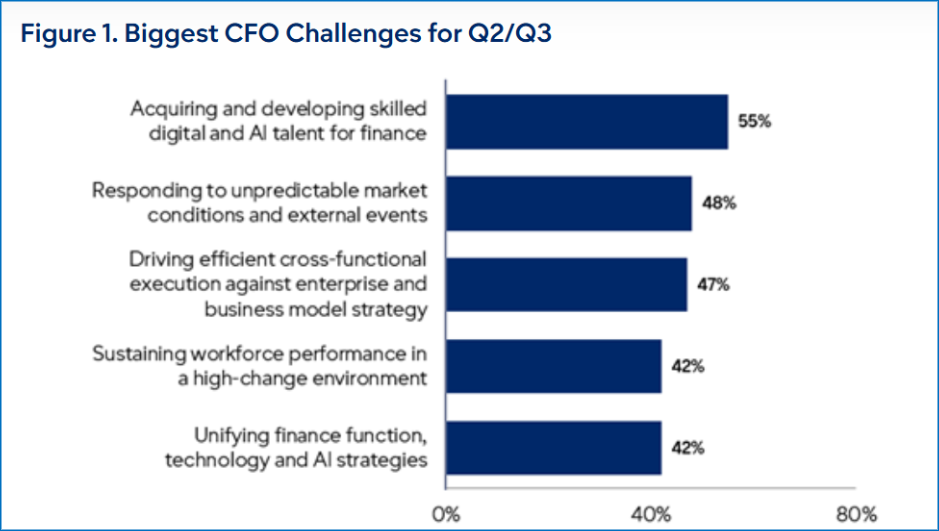
None of it is exciting. None of it will ever trend. But this, and not the model, is the thing that decides whether your AI ever earns a penny.
Get it right and the clever tools finally have something solid to stand on. Skip it, and you’re simply buying a faster way to be wrong.
On a related note, if the capital angle in all this caught your eye, there’s a companion read worth your time: The UK Senior Living Supply Gap Is Becoming a Capital Problem. It picks up where this one leaves off, why the money’s there, yet the deals so often aren’t.
Here’s the thing most AI advice quietly ignores. It’s written for a tidy company. One head office, one system, one version of the truth.
Senior living is nothing like that.
A multi-community operator isn’t a single business. It’s twenty, or forty, or a hundred little businesses stitched loosely together, each with its own quirks, its own habits, and its own way of counting things. And that changes everything about what happens when you add AI to the mix.
BCG said it about as plainly as anyone could:
“Automating a fragmented process scales fragmentation rather than eliminating it.”
Sit with that for a second, because it’s the whole game. If your close is a bit of a muddle in one community, automation doesn’t tidy it up. It simply does the muddle faster, in every community at once. You don’t fix forty messes. You scale them.
And this isn’t theory. It’s already happening.
Take Anthem Memory Care. They rolled out AI in good faith and ran straight into trouble, the tools threw up “hallucinations” and served up “conflicting information on the same data sets,” which then “complicated the company’s process used to create pro formas”. Think about what that actually means on the ground. The numbers they use to plan the business, quietly poisoned by a tool meant to sharpen them.
Now hold that against a very different story.
Over at Ascent Living, they took the slow road. Since 2021 they’ve been, in their own words, “documenting everything so the AI has enough data to work properly.” Guardrails first. Foundations first. The unglamorous 70% first, and only then the clever stuff on top. One operator reached for the shiny model. The other built the road before letting the car out. Guess which one is actually getting somewhere.
There’s one more wrinkle here that the generic advice never mentions.
Your data is bound by rules the tech world simply doesn’t have. You can’t just hoover up resident and staff records and feed them to a hungry model, HIPAA sees to that. So the very foundation senior living most needs to fix is also the one it’s least free to touch carelessly. Harder problem, higher stakes, less room for a shrug.
Put it all together and the picture is uncomfortable but clear. The sector that most wants AI to work is, by its very shape, the sector where standing it on shaky ground does the most damage.
Now for the part that should genuinely keep a finance chief up at night, because it’s happening right now, under the radar, whether you’ve sanctioned it or not.
When people aren’t given tools that work, they don’t down tools. They find their own.
Read that back in a senior living context and it should make you wince. Somewhere in your finance team, right now, someone frustrated by a clunky spreadsheet may well be quietly pasting sensitive numbers into a free tool, just to get their evening back.
And 2026 has raised the stakes on this considerably. We’ve moved past chatbots that merely answer questions. The new tools act, they can reach into connected systems and do things on your behalf . An unapproved tool used to be a leak. Now it’s a stranger with a set of keys.
But here’s the reframe that matters, and it’s easy to miss.
Shadow AI isn’t really a discipline problem. It’s a symptom.
People only go rogue when the proper path is too painful to bother with. Every unsanctioned tool in your finance team is really a little flare going up, a signal that the 70% is starving, and that your people have quietly given up waiting for you to feed it.
Everything so far has been a touch philosophical. Foundations, discipline, and taste. All very well.
But finance chiefs don’t move on philosophy. They move on numbers. So let’s put a price on the thing nobody wants to fund, because once you see it in pounds and pence, the whole argument stops being a nice idea and starts being a leak in the hull.
Start with the humblest object in the building. A single invoice.
Processed by hand, the way most communities still do it, an invoice costs around $9.87 to push through. Automated, that same invoice costs $2.81. Not a dramatic gap on one piece of paper, admittedly. But you don’t process one, do you? And here’s the sting in the tail for an operator with lots of sites:
“A multi-facility operator with paper-and-email AP sits at the expensive end, because every facility multiplies the formats, the approvers, and the exceptions.”
Every community you add doesn’t just add invoices. It adds another way of doing invoices. The mess compounds.
Now widen the lens to the month-end close.
One study followed a modest three-property operator and found it pouring more than 200 staff hours a month into manual close work, keying numbers, chasing discrepancies, and cobbling reports together in spreadsheets. The bill for that? Roughly $8,000 a month, or $96,000 a year, in wages alone. Ninety-six thousand pounds’ worth of clever, capable people, spent doing something a machine could do in its sleep.
And that’s just the work you can see. There’s a quieter, nastier cost underneath it.
Revenue you earned but never actually billed for. It happens all the time in this sector. A care level changes, a new service starts, a rate goes up, and somewhere between the care team, the front desk and the ledger; the information simply falls down a crack. The money was yours. You just never collected it. As one analysis puts it, the cash gets “trapped between resident management, care, occupancy, billing, and accounting systems”, and quietly evaporates.
Stack these up and a rather sobering shape emerges:
Half a million pounds. From tidying up the boring stuff. That’s not a rounding error, that’s a wing of a new building.
So the next time an AI project promising to “reimagine the resident journey” is competing for budget against a dull little proposal to automate accounts payable, remember which one quietly hands you back half a million a year.
The glamorous option wins hearts. The boring one wins the P&L.
You might reasonably say: fine, but we’ve muddled through for years. Why is this now urgent?
Because the maths of running these communities has quietly turned against you.
On paper, business looks grand. Occupancy has climbed to 90%, capping off twenty straight quarters of growth. Rooms are full. Demand is roaring. You’d think everyone would be swimming in margin.
They’re not, and here’s why.
The costs have galloped ahead of the good news. Staff pay now swallows an enormous 56% of operating budgets, and a striking 90% of operators say their staffing bill went up this year. Full houses, thinner margins. It’s a strange, cruel sort of squeeze.
And this is the whole point.
When you can’t fatten your margin by filling more rooms, because the rooms are already full, the only margin left to find is in how tightly you run the place. In seeing your costs clearly, forecasting the wage bill before it bites and plugging the leaks.
Which is precisely the work the neglected 70% was built to do, and precisely the work a clever tool on a broken foundation can never manage.
The boring stuff was always worth doing. In 2026, it’s the difference between a full house that thrives and a full house that quietly bleeds.
Right, this is where it gets genuinely interesting. Because everything we’ve talked about so far, the messy data, the manual close, the leaks, you could file under “operational headache.” Annoying, costly, but ultimately your problem, tucked away behind the scenes.
Not anymore.
Something has shifted in the way senior living is owned, and it has quietly dragged your back office out of the shadows and onto the balance sheet. Most operators haven’t fully clocked what it means yet. The ones who do will have a real edge.
Let me explain.
For years, the big property owners, the REITs, mostly kept things simple. They owned the bricks, leased them to you on a fixed rent, and left you to run the place. Whatever chaos lurked in your finance function was, frankly, none of their concern. They got their cheque either way.
That arrangement is unravelling fast.
Across 2026, nearly every major healthcare REIT has swung back into what’s called a RIDEA or SHOP structure, Welltower, Ventas, Healthpeak, LTC, Omega, the whole cast . The names don’t matter. What matters is the shift underneath them.
Under the old way, the owner collected rent. Under this new way, the owner shares directly in how well, or how badly, each community actually performs . Your operating profit is now their operating profit. Your leaks are now their leaks.
Do you see what that does?
It takes the quality of your finances, once a private matter, and turns it into the very thing your capital partner is buying.
Which is why the same analysis landed on a line that should stop every operator in their tracks:
“Operator selection is now the #1 risk variable in senior housing investment underwriting.”
Read that slowly. Not the location, not the building, not the demographics. You. How you run the place, how clean your numbers are, and how much an investor can trust the figures you hand them.
And make no mistake, the money is watching closely, because there’s an awful lot of it about. 86% of investors say they want more senior housing on their books in 2026 , chasing an over-80 population set to swell by nearly 37% in a decade , with some $24 billion in deals already done . The appetite is enormous. The question every one of those investors is quietly asking is the same: whose numbers can I actually believe?
Here’s the part that turns this from a worry into an opportunity.
Clean operations aren’t just safer. They’re worth more, in hard cash. Communities running on solid, well-fed operational data have posted something like $275 more in profit per resident, every single month . Multiply that across a portfolio and you’re not talking about a tidier spreadsheet. You’re talking about a materially more valuable business.
So let’s retire the word “overhead” for a moment.
Your back office isn’t a cost your investor grudgingly tolerates. Under this new model, it is the return they’re buying. The cleaner it is, the more your business is worth, the cheaper your capital, the easier every future deal becomes.
Which brings us to the line I’d want on the wall of every senior living boardroom this year:
The businesses that win the next capital cycle won’t have the flashiest AI. They’ll have the cleanest foundations for it.
The fall sensors will still win the tour. But it’s the reconciliation engine, dull, invisible, endlessly neglected, that increasingly decides what your company is actually worth.
Funny old world, isn’t it.
So what does a finance chief actually do with all this on Monday morning?
Not rip everything out. Not freeze AI spending and wait for a perfect world that never arrives. The fix here isn’t dramatic, it’s simply a matter of changing the order in which you do things. Getting the sequence right. Here’s where I’d start.
1. Fund the invisible before the visible. The next time a dazzling resident-facing project is squaring up against a dull little back-office one for the same budget, pause. Back the dull one first. Not forever, just first. And you don’t need to boil the ocean either, pick one painful, measurable job, the close, or accounts payable, or the wage forecast, and fix that. As BCG rather wisely notes, “momentum matters more than perfect data” . One solid win funds the next.
2. Tidy the process before you automate it. This is the one everyone skips, and it’s the one that bites hardest. If every community closes its books its own homespun way, automating that simply means doing forty different muddles at speed. So before a machine touches anything, agree on one way. One close. One approval flow. One method. Standardise first, automate second. Never the other way round.
3. Make everyone speak the same financial language. Remember that “resident day” that meant two different things in two different systems? Multiply it across a portfolio and you’ve got an AI confidently producing nonsense, because it’s reasoning on words that don’t line up. Settle your definitions. One chart of accounts, one shared vocabulary, so that “margin” means the very same thing in every building. Dull work. Utterly essential.
4. Give your people proper tools, and the nous to use them. Two jobs here, really.
5. Decide, deliberately, what stays human. Not everything should be handed to a machine, and pretending otherwise is how you end up in trouble. The audit trail, the controls, the covenant maths, the judgement calls a regulator might one day ask about, keep those in human hands. Let AI do the heavy lifting. Let people own the things that carry consequences.
Do these in order and something rather nice happens. The foundation firms up, the clever tools finally have somewhere solid to stand, and the returns that never used to show up quietly start to.
Before you approve another penny of AI spend, try these on for size. If any one of them makes you shift in your seat, you’ve found where the 70% is hiding.
Sit with the ones that stung. That’s your to-do list.
Let’s bring this home.
The clever model, the slick platform, the thing that dazzles in the demo, that’s the 30%. It’s real, it’s useful, and it’s the easiest 30% in the world to fall for. But it was never where the money lived.
The money lives in the other 70%. The data that agrees with itself. The process that runs the same in every building. The people who know when to trust the machine and when to raise an eyebrow. Unglamorous, every bit of it. And decisive.
Here’s the shift worth carrying into your next leadership meeting. For years the question was“which AI should we buy?” It’s the wrong question, and it always was. The better one, the one that actually separates the winners from the disappointed, is quieter:
“Is the ground ready for it? And would an investor pay for what’s underneath?”
Because that’s the real change in 2026. The boring stuff stopped being back-office housekeeping and quietly became the thing that decides what your business is worth. Get it right and everything downstream gets easier, the AI works, the margins hold, the capital comes cheaper and stays longer. Skip it, and no model on earth will save you, you’ll simply have bought a faster way to be wrong.
The fall sensors will still win the tour. Let them. But do spare a thought for the reconciliation engine humming away in the back, because in this market, that’s the thing your investors are really buying.
Sort out the foundations first. The clever stuff has waited this long, it can wait a moment more.
And if that groundwork feels daunting, that’s rather the point of having a specialist in your corner. Sorting out the 70%, the clean data, the standardised close, the finance function an investor can trust on sight, is precisely the sort of unglamorous, high-stakes work QX Global Group does for senior living operators day in, day out. It’s worth knowing what that partnership tends to look like in practice:
None of it will ever make the brochure. But it’s the groundwork that lets all the clever stuff finally pay its way.
If you’re weighing up where your own 70% quietly stands, it might be worth a conversation. Book a consultation with QX, no pitch, no obligation, just an honest look at where your foundations are solid and where they could do with some shoring up before your next AI project, or your next investor, comes knocking.

Education:

Nishant Kumar is a senior commercial leader with 20+ years of experience supporting hospitality and accommodation businesses through technology-enabled outsourcing and operational transformation. At QX Global Group, he works with property owners, asset managers, and hospitality leaders across the UK and Europe to improve profitability, modernise back-office operations, and build scalable operating models. His expertise spans finance and accounting, payroll, and digital enablement for multi-property and franchise-led hospitality organisations, with a strong focus on cost optimisation, standardisation, and automation-led efficiencies.
Expertise: Hospitality and accommodation outsourcing, Multi-entity finance transformation, Shared services and global delivery models, Automation-led cost optimisation, Strategic commercial advisory
Originally published Jul 30, 2026 09:07:03, updated Aug 14 2026
Topics: Finance and Accounting Transformation, Senior Living
01 Sep 2026
For much of the year, operations run relatively predictably. Then leasing season arrives and the pre...
Read More26 Aug 2026
At almost every hospitality conference I’ve attended recently, the convers...
Read More26 Aug 2026
The senior living industry is entering one of the most promising demand cycles in its history. Occup...
Read More20 Aug 2026
On a June morning this year, retirement housing found itself in the one room operators would rather ...
Read More