Topics: AI in Financial Planning, Finance & Accounting
Posted on November 09, 2025
Written By Visharad Saluja




Economic volatility isn’t new. However, the pace and unpredictability of today’s shifts have made planning harder than ever. Interest rates rise and fall within quarters, consumer spending patterns change overnight, and capital remains expensive. For CFOs, that means long-range plans can become outdated before the quarter even closes.
This is where financial planning and analysis services make a difference. They give finance leaders the tools, people, and data models to plan with agility.
In a market that rewards adaptability, FP&A is fast becoming the backbone of resilience. This piece explores how modern FP&A services for CFOs help businesses stay grounded amid volatility, connect strategy to numbers, and make better calls when the economy refuses to stand still.
At its core, financial planning and analysis services help organizations link financial data with business strategy. They turn numbers into insights that guide decisions — whether that’s planning next quarter’s budget or modeling the impact of a market shift.
A well-structured financial planning and analysis process typically includes:
Modern financial planning and analysis companies enhance these capabilities through automation, AI-driven analytics, and cloud-based reporting platforms. The result is a faster, more collaborative planning cycle that gives CFOs a clearer view of both risk and opportunity.
RELATED BLOG: Traditional budgeting limits progress. Learn how modern FP&A helps finance leaders plan, pivot, and perform. Read the blog now!
Uncertainty affects every decision a CFO makes, from hiring plans to capital allocation. When interest rates and consumer demand fluctuate so frequently, having accurate forecasts is only half the battle. The real challenge is adapting those forecasts quickly and confidently.
That’s what FP&A outsourcing services bring to the table. They give finance leaders the flexibility to reforecast as new data comes in, without losing control of accuracy or compliance. Agile FP&A strategies for businesses also help identify pressure points early, allowing teams to adjust before issues escalate.
In volatile markets, finance teams need more than static models; they need insight that moves at the same speed as change. Effective financial planning and analysis services provide exactly that — the ability to see ahead, respond faster, and make choices based on evidence, not instinct.
Strong financial planning and analysis services do more than just track performance. They help finance leaders anticipate change and act with conviction when conditions shift. The value lies in how FP&A connects data, strategy, and agility.
When markets swing, CFOs can’t rely on a single forecast. FP&A teams build multiple “what-if” scenarios that show how interest rate changes, cost pressures, or consumer shifts might affect margins and liquidity. This allows finance leaders to plan contingencies early and allocate capital where it matters most.
Modern FP&A services for CFOs combine automation, predictive analytics, and real-time data to create rolling forecasts that update as new information arrives. This reduces lag and turns reporting into a living process; one that helps leaders make informed moves instead of reacting after the fact.
An effective financial planning and analysis function bridges the gap between finance and operations. When forecasts, budgets, and business targets are aligned, departments can make decisions based on shared priorities rather than siloed assumptions.
Reliable forecasting builds credibility. Regular, transparent reporting supported by solid FP&A insights gives investors and boards confidence that management isn’t guessing but planning with precision.
For organizations facing constant economic movement, the right FP&A model becomes a stabilizer. The advantages go well beyond budgeting efficiency.
RELATED BLOG: Savings are temporary. Strategy is scalable. Read the blog to learn how modern FP&A and R2R functions deliver both.
Not every finance team is built to manage forecasting at scale. For many U.S. companies, deciding between an internal FP&A team and financial planning and analysis outsourcing comes down to capability, cost, and control.
In-house teams offer deep institutional knowledge and close alignment with business units. They understand internal priorities and can respond quickly to leadership demands. But their capacity is often limited, and scaling up during peak reporting cycles can strain both time and budget.
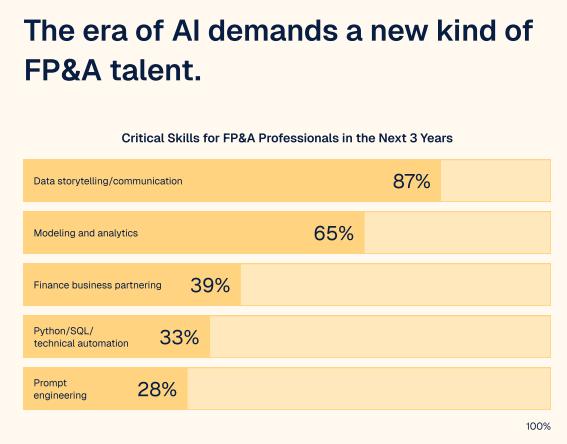
Outsourced FP&A solutions, on the other hand, bring access to specialized analysts, advanced forecasting tools, and structured delivery models. They help fill skill gaps, improve data consistency, and maintain quality even when volumes increase. The right approach often lies in a hybrid setup, where in-house leaders retain strategic oversight while external experts handle analysis, modeling, and reporting support.
When the balance is right, outsourcing strengthens the finance function rather than replacing it.
Modern financial planning and analysis companies are no longer just service providers. They act as strategic partners that help CFOs turn data into decisions. Their support extends across the full FP&A cycle, from budgeting to board reporting.
What these partners typically deliver:
For CFOs managing complex portfolios, this kind of structured partnership turns FP&A from a monthly reporting routine into a year-round strategic advantage.

At QX Global Group, we help U.S. finance leaders bring structure and foresight to planning. Our financial planning and analysis services are designed to enhance accuracy, agility, and decision-making across every layer of the finance function.
Here’s what sets QX apart:
QX’s FP&A teams operate as an extension of your finance department, giving CFOs the bandwidth to focus on growth, capital strategy, and performance improvement.
Ready to build an FP&A framework that can adapt to any market? Speak to our experts to explore how QX Global Group’s financial planning and analysis services can bring agility, precision, and predictability to your financial planning.
Economic uncertainty refers to unpredictable changes in the economy, such as inflation, interest rate shifts, or market volatility. It matters because it makes planning, forecasting, and investment decisions more difficult for businesses.
FP&A helps companies understand their financial health, forecast future performance, and allocate resources wisely. It keeps leadership grounded in facts rather than assumptions.
Leaders rely on scenario planning, data analysis, rolling forecasts, and risk assessments. These tools help them compare outcomes, stay flexible, and choose the most resilient path forward.
FP&A services give CFOs real time visibility into cashflow, costs, and performance. They help identify risks early, adjust budgets quickly, and make informed decisions even when the market shifts.
Outsourcing FP&A brings access to specialised analysts, advanced tools, and accurate forecasting without scaling internal teams. It improves efficiency, reduces costs, and supports faster decision-making.
FP&A turns raw financial data into insights through dashboards, forecasting models, and performance reports. This helps leaders base decisions on trends, evidence, and measurable outcomes rather than intuition.

Education:
C.A., B.Com (Hons)

Visharad Saluja is a Chartered Accountant with over 10 years of post-qualification experience in FP&A, Record to Report, and Procure to Pay processes. Before joining QX, he worked with Indian listed companies, managing budgeting, pricing, costing, GL accounting, and financial finalisation. Visharad brings a sharp commercial lens to finance, combining management reporting with strong stakeholder alignment to drive decision-ready insights.
Expertise: FP&A, R2R, P2P, Contract Management, P&L and B/S Finalisation, Stakeholder Management, Management Reporting
Originally published Nov 09, 2025 08:11:00, updated Nov 14 2025
Topics: AI in Financial Planning, Finance & Accounting
21 May 2026
Most UK CFOs are not struggling because they lack reports. They have dashboards, board packs, ...
Read More20 May 2026
Expense pressure in multifamily moves across payroll, repairs, insurance, utilities, procurement, an...
Read More15 May 2026
A full dining room, a packed bar, or a strong weekend of bookings can still tell only half the story...
Read More14 May 2026
Accounts payable outsourcing has moved from a cost conversation to a control and governance conversa...
Read More