Topics: Accounts Payable Automation, Accounts Payable Optimisation
Posted on January 24, 2026
Written By Rushabh Shah




Think about the last time you paid a bill late. Maybe it was your internet bill. Or electricity. Or a credit card payment you simply forgot about. Nothing dramatic. Just a reminder email. A late fee. Mild irritation. Now imagine that happening hundreds of times a month, across suppliers, properties, departments, and systems.
That, in many ways, is what accounts payable used to look like. For years, AP was about manual invoice handling. Paper invoices. Email approvals. Spreadsheet tracking. And constant follow-ups. It worked, until it didn’t.
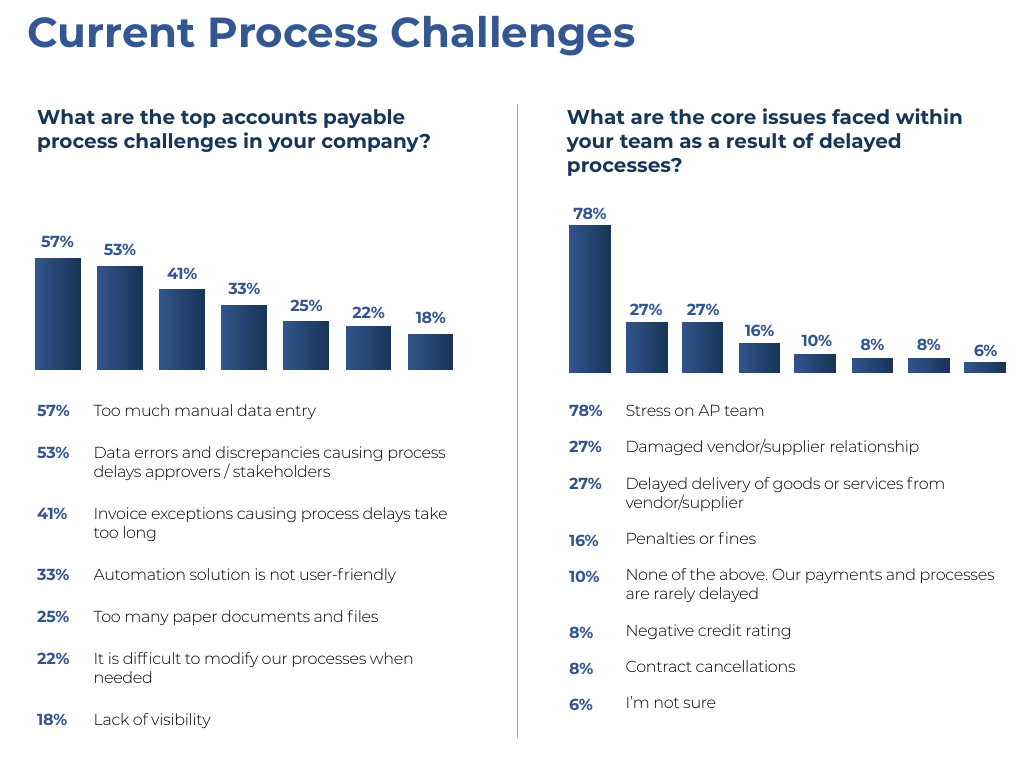
In 2026, accounts payable is no longer just an operational task. It has become a control point for cash flow, compliance, and financial visibility.
Finance teams today are expected to:
This shift is why accounts payable automation tools have moved from being “nice to have” to business-critical. Modern accounts payable automation solutions are not just about digitizing invoices. They are designed for touchless processing, smarter approvals, and real-time insight across the AP lifecycle.
And for many organizations, automation is only one part of the equation. This is where accounts payable outsourcing increasingly comes into play, especially when finance leaders want scale, consistency, and speed without rebuilding internal teams.
So what should finance leaders actually look for in 2026?
This blog breaks it all down.
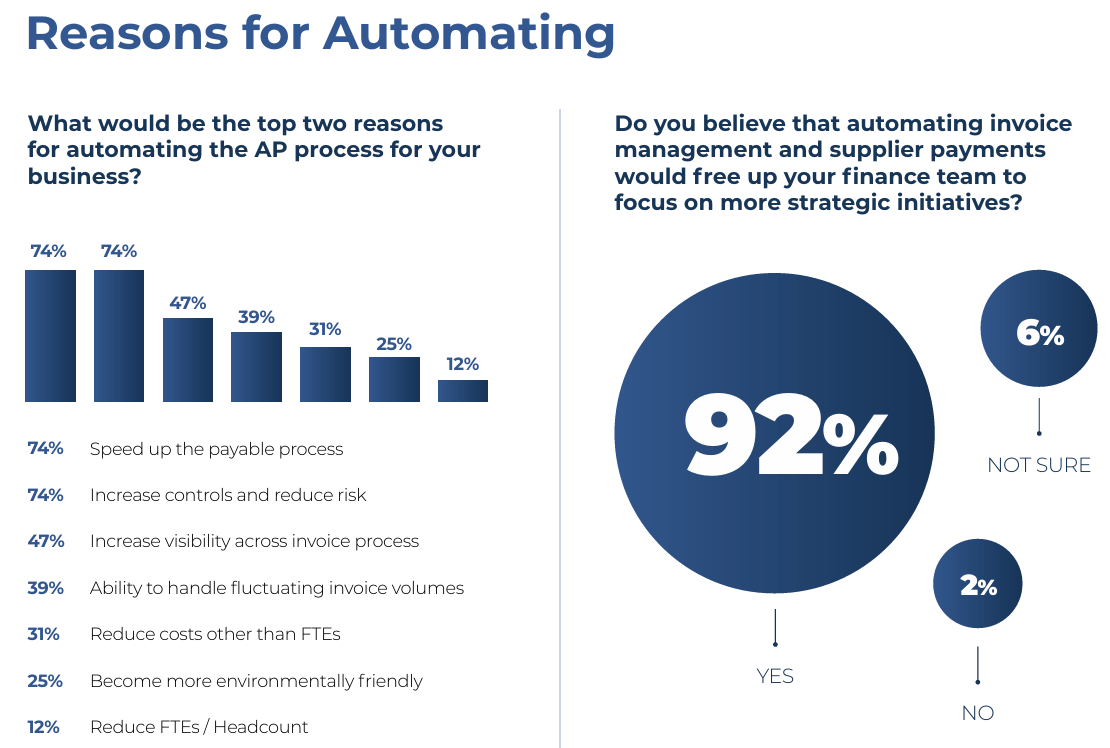
Short answer: because the way invoices, cash, and risk move through organizations has fundamentally changed.
In 2026, finance teams are not struggling with whether to automate. They are struggling with how long they can afford not to.
Invoice volumes are increasing year over year, even for businesses that are not growing aggressively. More vendors and more locations. More digital and hybrid procurement models. But finance headcount is not scaling at the same pace.
This mismatch creates pressure points:
This is where automated accounts payable becomes essential. Modern accounts payable automation tools absorb volume without increasing cost, enabling teams to process more invoices with the same or fewer resources.
For finance leaders, automation is no longer about efficiency alone. It is about protecting margins.
Audit scrutiny is intensifying. Whether it is internal audits, external auditors, or regulatory reviews, expectations around documentation and controls are far higher than they were even three years ago.
Manual AP processes often struggle to:
AP automation for finance leaders introduces built-in controls:
Instead of preparing for audits reactively, finance teams move toward audit-ready by design. That shift alone changes how AP is viewed inside the organization.
In 2026, delayed visibility is almost as risky as incorrect data.
Finance leaders need to know what:
Traditional AP processes often rely on after-the-fact reporting. By the time the numbers surface, decisions have already been made.
Accounts payable automation tools provide real-time visibility into payables, enabling:
This level of visibility transforms AP from a back-office function into a cash management lever.
Finance teams are expected to do more than close books and process transactions. They are expected to explain trends, flag risks, and support strategic decisions. But that is difficult when AP data lives across emails, spreadsheets, and disconnected systems.
Automated accounts payable creates structured, usable data:
For AP automation for finance leaders, this data becomes actionable insight. Not just reporting, but intelligence.
And that is why in 2026, accounts payable automation tools are not just operational tools. They are foundational infrastructure for modern finance teams.
Discover how AI-driven AP automation helps large finance teams process higher volumes, reduce errors, and gain real-time visibility without increasing costs.
An accounts payable automation tool is software designed to manage and automate the end-to-end accounts payable process, from the moment an invoice is received to the point it is approved, recorded, and paid. Instead of relying on manual data entry, email-based approvals, and spreadsheet tracking, these tools create a structured, rules-driven workflow that moves invoices through AP with speed and consistency.
At a fundamental level, accounts payable automation tools digitize and standardize how invoices are handled. Invoices are captured electronically, validated against predefined rules, routed for approval, and posted to the accounting system with minimal human intervention. This reduces the manual effort traditionally associated with AP while significantly improving accuracy.
Modern accounts payable automation solutions typically automate four core stages of the AP lifecycle.
Before automation, AP processes often relied on a patchwork of emails, shared folders, and manual checks. These methods slow down processing and make it difficult to maintain control as volumes grow.
Accounts payable automation solutions replace:
By doing so, they create a single source of truth for payables.
A critical capability of modern accounts payable automation tools is seamless integration with ERP and accounting systems. Rather than operating as a standalone application, these tools sit alongside existing finance systems and exchange data in real time.
This integration ensures that:
Without integration, automation delivers limited value. With it, AP becomes part of a connected finance ecosystem.
One of the most important benefits of accounts payable automation tools is the level of control they introduce. Approval rules, access permissions, and exception handling are defined centrally and applied consistently across the organization.
At the same time, finance teams gain visibility into every invoice’s status, from receipt to payment. Each action is logged, creating a complete audit trail that supports compliance, internal controls, and faster audits.
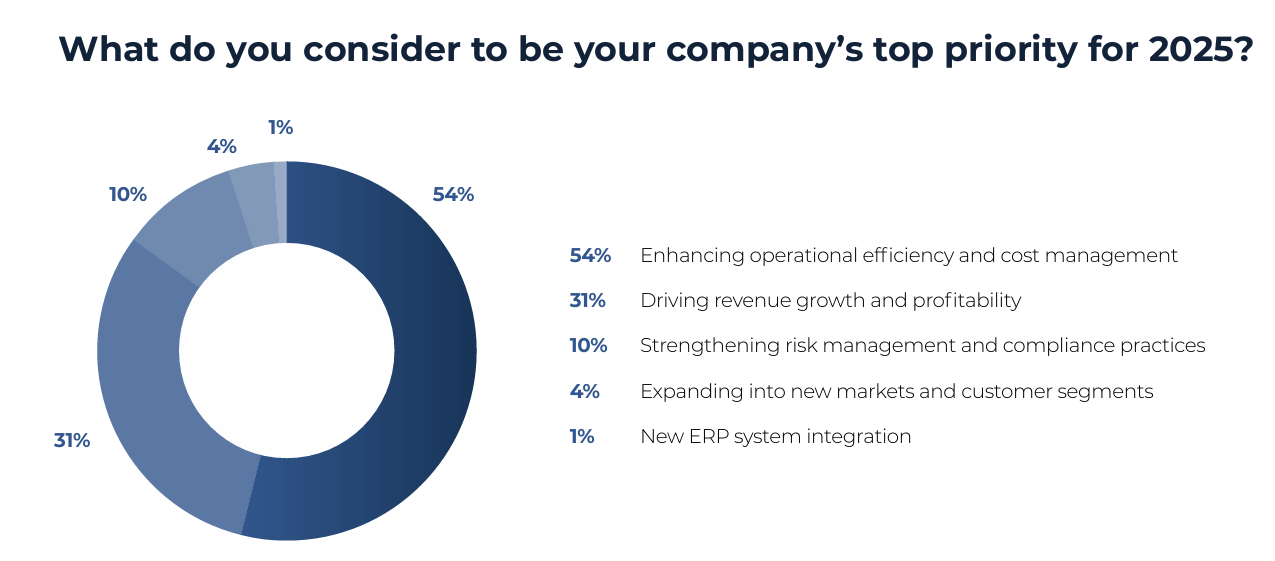
In 2026, finance leaders are looking beyond basic digitization. The expectation is for AP platforms that combine automation, intelligence, and control, allowing teams to operate at scale while maintaining accuracy and visibility. The following capabilities define what modern AP tools must deliver.
Touchless invoice processing enables invoices to move from receipt to posting with minimal human intervention. Standard invoices are processed automatically, reducing cycle times and freeing AP teams from repetitive manual work. For finance leaders, this capability directly supports efficiency at scale.
Modern AP platforms rely on accounts payable AI software to extract and validate invoice data with high accuracy. These systems learn from historical corrections and vendor behavior, improving performance over time. As a result, errors and duplicates are identified early, before they create downstream issues.
Real-time approval workflows ensure invoices are routed instantly based on predefined rules such as value, cost center, or vendor. Approvals can be completed from anywhere, while every action is tracked and time-stamped. This improves turnaround times without compromising control or auditability.
Centralized payment controls allow finance teams to enforce consistent rules across all payments, regardless of entity or location. This reduces the risk of duplicate or unauthorized payments and improves alignment between AP operations and cash management strategies. For finance leaders, this capability strengthens governance without adding complexity.
Advanced dashboards provide real-time insight into AP performance, including processing times, approval delays, and exception trends. With structured data generated by AI tools for accounts payable automation, finance teams can move from reactive reporting to proactive decision-making. This transforms AP data into a strategic asset rather than an operational byproduct.
Learn which AP metrics matter most for visibility, control, and performance and how leading finance teams use them to improve accuracy, cash flow, and decision-making.

Accounts payable automation tools are built to standardize, accelerate, and control every stage of the AP lifecycle. Rather than treating AP as a set of disconnected tasks, these platforms bring structure and intelligence to how invoices move from receipt to payment. Below are the core functions that define automated accounts payable in practice.
Invoice capture is the entry point of any AP automation process. AP workflow automation tools ingest invoices from multiple sources such as email, supplier portals, and scanned documents, converting them into digital records that can be processed consistently. This removes dependency on paper and manual handling from day one.
Optical character recognition and electronic invoice intake allow invoice data to be extracted automatically and converted into usable fields. As these systems learn from corrections over time, accuracy improves and manual keying reduces further. This function is critical to scaling automated accounts payable without increasing effort.
Once invoices are captured, they are automatically validated against predefined rules and reference data. AP workflow automation tools compare invoice details with purchase orders, contracts, and vendor records to identify discrepancies early. This prevents errors from flowing downstream and reduces the need for rework.
Two-way and three-way matching ensure invoices align with purchase orders and goods receipt records where applicable. Exceptions are flagged automatically and routed for review, while compliant invoices move forward without delay. This function strengthens financial control while keeping processing efficient.
AP workflow automation governs how invoices move through approvals. Rules-based routing ensures invoices are sent to the right approvers based on value, category, or business unit, with automatic escalations if approvals are delayed. This keeps processes moving while maintaining consistency and accountability.
Approval rules are defined centrally and applied uniformly across the organization. Escalations trigger automatically when timelines are breached, reducing approval bottlenecks without manual follow-ups. For finance teams, this ensures speed without sacrificing governance.
Payment scheduling aligns approved invoices with cash flow priorities and payment terms. Automated accounts payable systems enable controlled payment timing, helping finance teams avoid late fees while optimizing working capital. Execution is carried out within defined controls to minimize risk.
Automation allows payments to be scheduled strategically rather than reactively. Finance leaders gain flexibility to manage payment runs based on cash availability, discounts, and vendor terms, all while maintaining accuracy and consistency.
Every action within the AP process is logged and traceable. Reporting and audit trails provide end-to-end visibility into invoice status, approvals, exceptions, and payments. This level of transparency supports compliance, faster audits, and stronger internal controls.
With centralized data and real-time reporting, finance teams can see the full lifecycle of every invoice in one place. AP workflow automation tools turn fragmented processes into a single source of truth, enabling better oversight and more confident decision-making.
Accounts payable automation tools deliver value well beyond faster invoice processing. In 2026, finance leaders evaluate AP technology based on its ability to improve accuracy, strengthen control, and support better financial decisions. The benefits below explain why automation has become a foundational capability for modern finance teams.
Automated workflows significantly reduce the time it takes for invoices to move from receipt to approval and payment. Invoices are captured, validated, and routed instantly, eliminating delays caused by manual handoffs and approval chasing. For finance teams, this translates into shorter cycle times and more predictable AP operations.
Manual data entry is one of the primary sources of errors in accounts payable. Automation minimizes human intervention by validating invoice data against predefined rules and reference records. This leads to measurable AP accuracy and error reduction, helping finance teams avoid duplicate payments, mismatches, and costly rework.
As a result, AP becomes a more reliable source of financial data rather than a risk area that needs constant oversight.
Accounts payable automation tools embed controls directly into the AP process. Approval hierarchies, segregation of duties, and exception handling are enforced consistently across all invoices. Every action is logged, creating a complete audit trail that supports internal reviews and external audits.
Instead of preparing for audits as a separate activity, finance teams operate in an always-audit-ready state.
Automation gives finance leaders real-time visibility into approved, pending, and upcoming payments. This allows for more accurate cash forecasting and better alignment between AP operations and treasury planning. Payment timing can be optimized to meet vendor terms while protecting liquidity.
With automation, AP becomes an active contributor to cash flow management rather than a lagging indicator.
By reducing manual effort, rework, and exception handling, automation lowers the cost per invoice processed. Finance teams can handle higher volumes without increasing headcount, while also reducing indirect costs associated with errors and delays.
For many organizations, adopting the best AP automation software delivers both short-term efficiency gains and long-term cost savings.
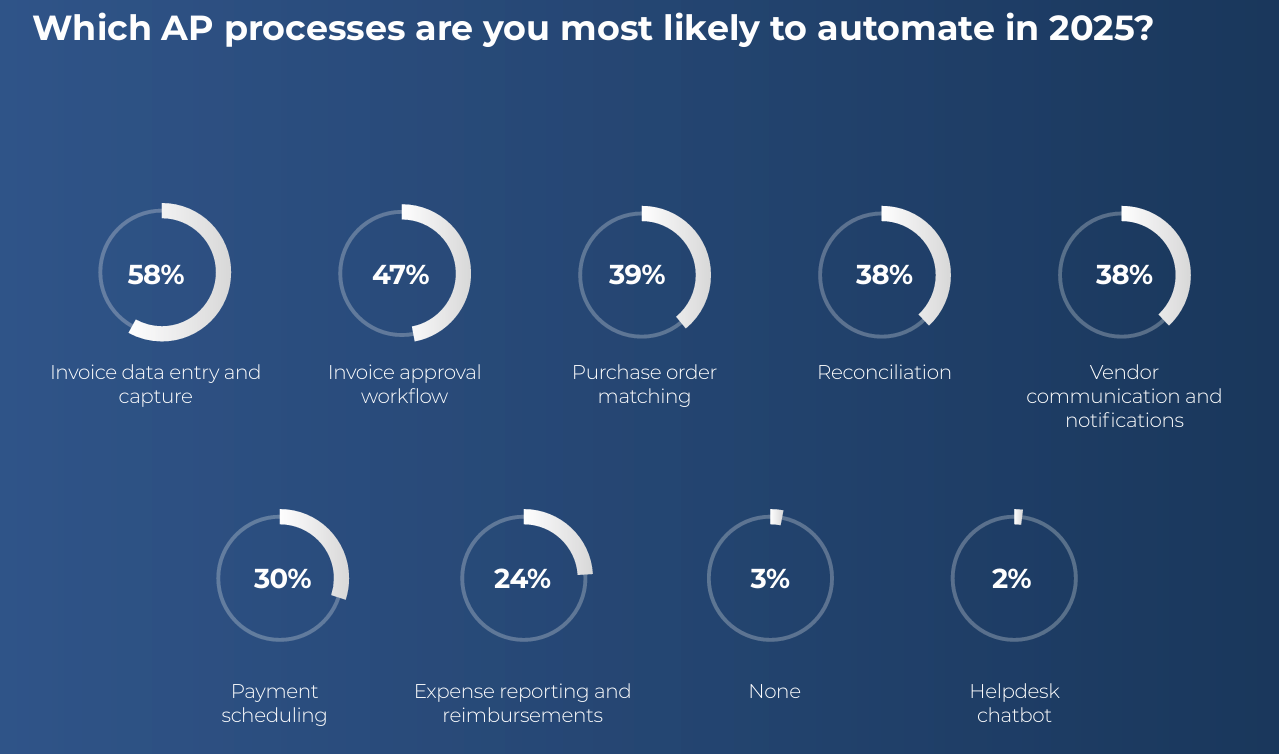
As accounts payable becomes more central to cash management, compliance, and financial visibility, finance leaders need to be selective about the capabilities they invest in. In 2026, not all AP platforms are created equal. The features of accounts payable automation tools matter because they determine how well the solution adapts to complexity, scale, and change.
Below are the features finance leaders should prioritize when evaluating the best AP automation tools 2026 has to offer.
AI-enabled invoice recognition goes beyond basic data capture. It uses machine learning to understand different invoice formats, adapt to vendor-specific layouts, and improve accuracy over time. This reduces manual correction and supports higher levels of touchless processing as invoice volumes grow.
For finance teams, this feature directly impacts processing speed and data quality across the AP lifecycle.
Configurable workflows allow finance teams to design approval paths that reflect how the business actually operates. Rules can be set based on invoice value, vendor type, cost center, or entity, ensuring approvals remain consistent without becoming rigid.
This flexibility is critical for maintaining control while supporting decentralized teams and evolving organizational structures.
Seamless integration with ERP and banking systems ensures AP automation does not operate in isolation. Approved invoices are posted automatically to the general ledger, and payment instructions flow securely to banking platforms.
Strong integrations reduce data duplication, eliminate reconciliation gaps, and provide a single source of truth across finance systems.
As AP systems handle sensitive financial and vendor data, security is non-negotiable. Leading platforms include role-based access controls, encryption, and detailed activity logs to protect data integrity and prevent unauthorized actions.
For finance leaders, robust security features are essential not only for risk mitigation but also for meeting internal governance and regulatory expectations.
Invoice volumes tend to increase as businesses expand, diversify suppliers, or adopt new procurement models. AP automation tools must scale without degrading performance or requiring constant reconfiguration.
Scalability ensures that the solution continues to deliver value over time, making it suitable for both current needs and future growth.
Explore how large finance teams can modernize AP processes, improve efficiency, and scale operations smoothly without breaking existing workflows.
The difference between traditional AP and automated AP is not incremental. It is structural. The table below highlights how accounts payable automation tools fundamentally change the way finance teams operate compared to manual processes.
| ASPECT | TRADITIONAL AP TOOLS | AP AUTOMATION TOOLS |
|---|---|---|
| Invoice Processing | Manual data entry and email-based handling | Touchless processing with automated capture and validation |
| Visibility | Limited, delayed, and spreadsheet-driven | Real-time insight into invoice status and liabilities |
| Accuracy | Higher error risk due to manual intervention | Automated validation reduces errors and rework |
| Payment Approach | Reactive payments driven by due dates | Proactive cash control with optimized payment timing |
Choosing the right AP platform in 2026 requires more than comparing feature checklists. The most effective accounts payable automation solutions are those that align with your operational realities, risk posture, and long-term finance strategy. For finance leaders, the decision should be grounded in clarity around needs, outcomes, and execution.
The starting point is a clear understanding of how AP operates today. This includes invoice volumes, exception rates, approval delays, and the level of manual effort involved. Identifying where bottlenecks and risks exist helps define what automation needs to fix, rather than adopting technology for its own sake.
This assessment also provides a baseline to measure improvement once automation is in place.
Automation goals should be explicit. Some organizations prioritize speed and cost reduction, while others focus on compliance, visibility, or audit readiness. Clarifying these objectives helps determine which capabilities are essential and which are optional.
Well-defined goals ensure that the selected solution delivers meaningful outcomes rather than superficial efficiency gains.
Not all automation is equal. Finance leaders should evaluate how deeply AI is embedded into the solution, particularly in areas such as invoice recognition, validation, and exception handling. Solutions with stronger intelligence tend to improve over time, reducing manual intervention as volumes grow.
This is where differentiation between AP automation companies becomes clear, especially when scalability and accuracy are critical.
The success of AP automation often depends on how it is implemented and supported. Finance leaders should assess the vendor’s onboarding approach, configuration flexibility, and ongoing support model. A solution that is powerful but difficult to deploy or maintain can delay value realization.
Strong implementation and responsive support are as important as the software itself.
Finally, the chosen solution must be able to scale with the business while maintaining strong security controls. As invoice volumes increase and organizational structures evolve, the platform should adapt without extensive rework. At the same time, data protection, access controls, and auditability must remain robust.
This balance between scalability and security is critical when selecting long-term accounts payable automation solutions.
In 2026, finance leaders are looking for more than standalone tools. They need partners who understand AP operations end to end and can apply automation in a way that delivers control, accuracy, and scalability. This is where QX Global Group plays a distinct role.
QX Global Group supports U.S. finance leaders with automation-enabled accounts payable outsourcing services that combine deep AP process expertise with purpose-built technology. The focus is not just on speeding up invoice processing, but on building a resilient, audit-ready AP function aligned with modern finance priorities.
At the center of this approach is QX ProAP, an intelligent accounts payable automation solution designed to streamline AP workflows from invoice capture to posting. QX ProAP automatically ingests digital invoices, extracts and validates key data, applies predefined business rules, and posts clean, structured information directly into ERP and accounting systems.
By eliminating manual handling, rekeying, and repetitive checks, QX ProAP allows finance teams to modernize AP operations without disrupting existing workflows.
QX ProAP is built to address the real operational challenges finance leaders face as invoice volumes rise and control expectations increase.
It helps organizations:
QX ProAP supports multiple invoice formats, including PDFs, scanned documents, emails, and structured digital invoices. Intelligent document processing captures invoices automatically, while smart validation logic checks data against business rules before posting.
Exceptions are identified early and routed through defined workflows for quick resolution. Every action is logged, creating audit-ready processing that supports compliance and internal controls.
For finance leaders, this means greater visibility into payables, stronger governance, and confidence that AP can scale alongside the business.
QX Global Group’s approach reflects how finance is evolving. Accounts payable is no longer a back-office function. It is a critical part of cash flow management, risk control, and financial insight.
By combining AP process expertise with intelligent automation, QX Global Group helps U.S. finance leaders build accounts payable automation solutions designed for efficiency, accuracy, and scalability. This alignment with 2026 finance priorities is what enables finance teams to move faster, operate with confidence, and stay audit-ready as complexity grows.
If your AP process is still slowing down cash visibility or increasing risk, it may be time to rethink how it operates. QX Global Group supports U.S. finance teams with scalable accounts payable automation solutions designed for accuracy, control, and growth.
Explore how QX ProAP can help you streamline AP workflows, reduce errors, and gain real-time visibility into payables.
Accounts payable automation tools reduce manual effort, improve accuracy, and provide real-time visibility into payables. They help businesses process invoices faster, strengthen controls, and manage cash flow more effectively as volumes grow.
AP automation replaces email-based approvals with rules-driven workflows. Invoices are routed automatically to the right approvers, tracked in real time, and escalated if delays occur, reducing bottlenecks and approval cycle times.
AP automation centralizes invoices and supporting documents in a single digital system. This eliminates paper handling, improves traceability, and ensures documents are easily accessible for audits and reviews.
The best AP automation software is one that automates invoice processing end to end, integrates with ERP systems, and scales without adding manual effort. QX ProAP does this by automating invoice capture, validation, and posting, helping finance teams improve accuracy, control, and efficiency.
Yes. Automated accounts payable systems are designed to scale efficiently by reducing manual intervention. This allows finance teams to process higher invoice volumes without adding headcount or increasing operating costs.
Organizations should consider this approach when invoice volumes are growing, internal teams are stretched, or consistent accuracy and compliance are critical. Combining automation with outsourced accounts payable services helps achieve scale, control, and cost efficiency simultaneously.
The best fit is usually an ERP-agnostic F&A outsourcing provider or global systems integrator that can run finance operations across platforms like SAP S/4HANA, Oracle Fusion, Workday, Microsoft Dynamics 365, and NetSuite.
The strongest partners offer:
The key is not just ERP knowledge. It is the ability to create one controlled finance operating model across multiple systems.
The leading providers usually fall into four categories: AP/AR automation platforms, close and reconciliation tools, FP&A systems, and F&A outsourcing partners with AI-enabled delivery. The best fit depends on whether a business needs software, managed execution, or both.
When evaluating providers, look for:

Education:
CA, B.Com

Rushabh Shah is a Chartered Accountant with over 7 years of experience in audits, financial analysis, and process optimisation. At QX, he specialises in CAPEX reviews, treasury management, P2P processes, and tax and statutory compliance. With a strong foundation in financial reporting, Rushabh brings cross-sector expertise and a sharp analytical approach to managing complex finance operations.
Expertise: CAPEX Reviews, Treasury Management, P2P Processes, Tax & Statutory Compliance, Financial Reporting, Audit & Financial Analysis
Originally published Jan 24, 2026 07:01:47, updated Jun 18 2026
Topics: Accounts Payable Automation, Accounts Payable Optimisation
04 Aug 2026
For CFOs, the decision to outsource accounts receivable is rarely just about collections capacity. I...
Read More22 Jul 2026
From the top, accounts payable usually looks like one of the easier to manage parts of finance. Invo...
Read More03 Jul 2026
It is the second week of the month. Occupancy has improved across the portfolio, but EBITDA is still...
Read More03 Jul 2026
Duplicate payments rarely happen because of one careless mistake. More often, they are a sign of a d...
Read More