Topics: Accounts Payable Optimisation, Accounts Receivable Automation
Posted on January 23, 2026
Written By Pratik Bhatt




It begins with something ordinary. You pay a bill. You assume it’s done.
Weeks later, a reminder lands in your inbox. The payment was “never recorded.” The invoice is “still open.” Confusing. Frustrating!
Multiply this by hundreds or thousands of customers, and you start to see what US businesses are dealing with today.
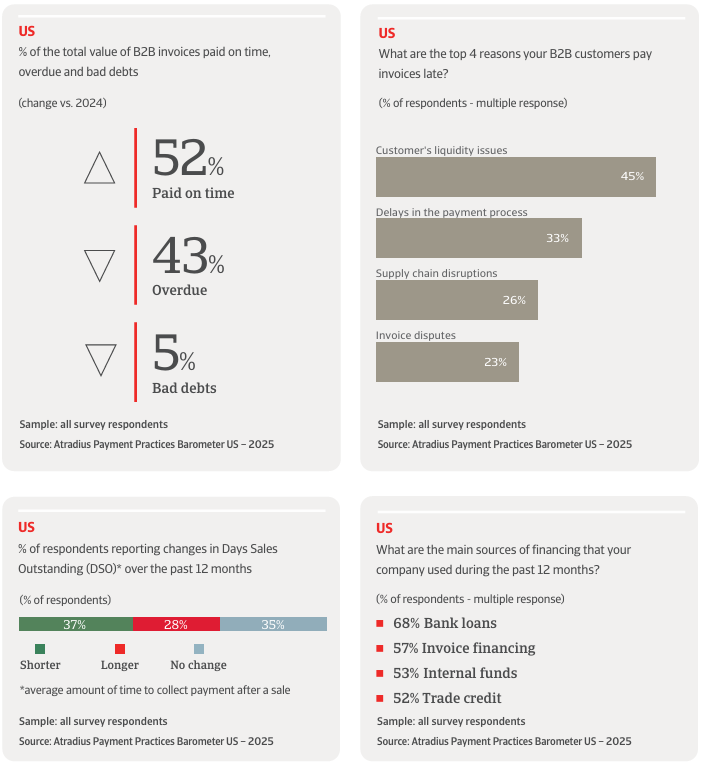
Accounts receivable is no longer just about sending invoices. It now means:
By 2026, these pressures are forcing a rethink of traditional outsourcing. People-only models cannot keep up with the pace or complexity. Automation in accounts receivable is stepping in to bridge the gap by combining technology with human oversight.
This blog explores how automation supports AR functions, how it fits into outsourced models, and why it is reshaping AR delivery in 2026.
The classic AR outsourcing model was built for a simpler time. Fewer invoices. Predictable customers. Slower expectations. That world no longer exists.
Today, businesses are dealing with:
The problem is not effort. It is scale.
Traditional AR outsourcing relies heavily on people to track, follow up, reconcile, and report. As volumes rise, this model starts to crack. Visibility into AR ageing becomes delayed. Risk signals are spotted late. Finance teams react instead of anticipate.
At the same time, expectations have shifted. CFOs now want:
This is where accounts receivable automation outsourcing changes the equation. Technology is no longer just a support layer. It is enabling entirely new operating models. AR outsourcing with automation blends systems, workflows, and analytics with human judgment, allowing outsourced teams to move faster, see deeper, and scale without linear cost growth.
The result is not just outsourced AR. It is outsourced AR that finally keeps up with the business.
For a long time, accounts receivable followed a familiar pattern. An invoice was sent. A payment was expected. If it did not arrive on time, someone noticed it in an aging report and started following up. As invoice volumes grow and customer payment behavior becomes less predictable, that reactive rhythm starts to break down and puts real pressure on cash flow.
Automation in accounts receivable changes this dynamic. It uses software, AI, and connected workflows to run day-to-day AR activities like billing, collections, cash application, and reporting with far less manual effort.
The real shift is not digitization, but decision-making. Modern accounts receivable process automation keeps watch over AR activity as it happens and responds automatically. In practice, that looks like:
This is where AI and automation in receivables start to earn their place. Systems learn from past payment patterns, spot delays before they become chronic, and help teams focus on the few items that actually need human attention.
In outsourced AR environments, automation is no longer a nice add-on. It is the backbone. Technology provides scale and consistency, while people step in where judgment, conversation, and resolution matter most. Together, they create AR operations that move faster, feel more controlled, and are better suited to how businesses operate today.
Automation-led outsourcing does not replace people with software. It redesigns how work flows between technology and specialist AR teams. In modern outsourced AR automation models, routine tasks are handled by systems, while humans step in only where judgment or conversation is needed.
Let’s walk through how this typically works in practice.
The process starts the moment an invoice is created. Instead of relying on manual generation or delayed dispatch, invoices are produced automatically from source systems and delivered digitally.
This ensures:
When invoices go out on time and reach the right contact, downstream delays reduce significantly.
Rather than blanket reminders sent on fixed dates, follow-ups are driven by rules, behavior, and aging.
Automation manages:
This approach keeps collections consistent without sounding aggressive or repetitive.
When payments arrive, automation takes over the heavy lifting. Systems match incoming payments to open invoices, even when remittance data is incomplete or messy.
The impact is immediate:
This step alone can unlock meaningful improvements in daily cash positioning.
Not everything can or should be automated. Disputes, short payments, and complex customer conversations still need people.
In automation-led models:
This keeps human effort focused on value-adding work, not routine tracking.
Throughout the process, data flows into live dashboards instead of static month-end reports.
Finance teams gain:
For businesses using outsourced AR automation models, this visibility is often the biggest shift. AR stops being a black box and starts becoming a controllable, measurable process.
Shortlisting AR outsourcing partners is no longer just about cost. Read this blog to see what finance leaders look for when comparing top accounts receivable outsourcing companies in the U.S.
The real value of accounts receivable automation solutions is not just operational efficiency. It shows up in the numbers finance teams track every month. When accounts receivable process automation is applied consistently, performance shifts in visible, measurable ways.
Below is how key automation functions map to AR metrics that actually matter.
When invoicing is automated and delivered digitally, billing delays drop almost immediately.
This typically improves:
Fewer delays at the start of the cycle mean fewer excuses later in collections.
Automated reminders and behavior-based follow-ups create a steady, predictable collections rhythm. Payments are nudged before they become overdue, not chased after the fact.
The impact is often seen in:
Collections become proactive rather than reactive.
Automated matching removes much of the manual guesswork from cash application. Payments are applied faster and more accurately, even when remittance details are incomplete.
This leads to:
Finance teams stop questioning whether reported cash numbers are reliable.
When disputes and exceptions are flagged early, resolution times shrink. AR teams spend less time searching for context and more time fixing issues.
Common improvements include:
Problems surface early, while they are still solvable.
Automation brings structure to credit monitoring by continuously tracking payment behavior and exposure.
This supports:
Risk is managed actively, not discovered during quarterly reviews.
Finally, automation transforms AR reporting from static snapshots into a live view of performance.
Finance leaders gain:
AR stops being a black box and starts behaving like a controllable process.

For a long time, outsourcing AR meant handing everything over to a team and hoping volume would somehow take care of itself. It worked when invoice counts were lower and customer behavior was fairly predictable. That is no longer the case.
Today, most US businesses need a different setup. One where routine work runs in the background and people step in only when something needs judgment or a real conversation. That is where AR outsourcing with automation comes in.
In hybrid models, technology does the heavy lifting:
Meanwhile, specialist AR teams focus on the parts that cannot be automated:
This balance is what makes outsourced AR automation models work at scale. As businesses grow, invoice volumes rise, but headcount does not have to grow at the same pace. Cash flow stays visible, customers are handled more thoughtfully, and AR stops feeling like a constant fire drill.
Hybrid outsourcing is not about choosing between people and technology. It is about letting each do what they do best.
The impact of automation in accounts receivable shows up quickly, not just in efficiency, but in how AR feels to manage day to day. Teams spend less time reacting to problems and more time staying ahead of them. Over time, the benefits compound.
Here’s where businesses tend to see the biggest shifts.
When invoices go out on time, reminders are consistent, and follow-ups are triggered automatically, payments simply move faster. There is less waiting for someone to notice an overdue invoice and more momentum built into the process itself.
The result is:
Collections become part of the system, not a scramble.
Cash flow problems are often visibility problems. Automation brings structure and timing into AR activity, which makes forecasting far more reliable.
With automated tracking and reporting:
Cash flow conversations become calmer and more informed.
Manual AR work leaves room for mistakes, especially at scale. Automation removes much of that risk by applying consistent rules every time.
This leads to:
Accuracy improves quietly, but its impact is felt everywhere.
Customers notice when AR processes are clear and consistent. Automated invoicing and communication reduce confusion and prevent mixed messages.
From the customer’s side:
AR becomes less of a friction point and more of a background process.
As automation takes over high-volume tasks, the cost of processing and collecting each invoice drops.
Businesses typically see:
AR becomes more efficient without feeling stretched.
Growth usually brings more invoices, more customers, and more complexity. Automation absorbs much of that increase without requiring teams to grow at the same rate.
This allows:
Scaling feels controlled instead of chaotic.
Finally, automation brings everything together at a portfolio level. Instead of fragmented views, teams get a clear picture of what is happening across customers and regions.
This includes:
AR stops being a collection of individual issues and starts behaving like a manageable system.
Wondering how large real estate organizations modernize finance at scale? Read this case study to see how a global real estate company transformed its F&A operations with QX’s help.
By 2026, CFO expectations around outsourced AR are clear and practical. The focus has shifted from cost alone to performance, visibility, and control.
AR automation delivers real value when it is implemented thoughtfully. When it is rushed or treated as a plug-and-play solution, teams often run into problems that slow adoption and dilute results.
Some of the most common pitfalls show up in familiar ways.
Most AR automation challenges are not technology failures. They are design and governance issues. When those are addressed early, automation becomes an asset rather than a source of friction.
As more businesses look to outsource accounts receivable services, the differentiator is no longer whether a provider offers automation. It is how well that automation is applied in the real world.
A few factors tend to matter most.
Ultimately, evaluating an automation-led AR partner comes down to confidence. Confidence that the model will scale, the data will be reliable, and cash flow outcomes will improve in a way you can see and measure.
As automation reshapes how receivables are managed, the role of the outsourcing partner becomes more important, not less. The value lies in how well technology and people are brought together in day-to-day AR operations.
QX Global Group has built its AR outsourcing model around that balance.
At its core, QX Global Group supports automation-enabled outsourced accounts receivable services for US finance teams by combining process expertise, technology, and people into a model built for modern AR realities.
To explore how automation-led AR outsourcing could improve collections, visibility, and control in your receivables function, connect with QX Global Group to start a conversation tailored to your AR priorities.
Accounts receivable management is critical because it directly impacts cash flow, working capital, and financial stability. Strong AR management ensures invoices are collected on time, risks are identified early, and revenue is converted into cash without unnecessary delays.
Accounts receivable automation software uses technology, rules, and AI to manage invoicing, collections, cash application, and reporting with minimal manual effort. It is a core component of accounts receivable process automation, helping teams work faster and more accurately.
Yes. Automation in accounts receivable helps reduce DSO by sending timely invoices, triggering automated follow-ups, prioritizing overdue accounts, and applying cash faster, which shortens the overall collection cycle.
AR automation helps businesses improve collections, reduce errors, and gain better control over receivables. By combining workflows and AI and automation in receivables, teams spend less time on manual tasks and more time resolving exceptions and customer issues.
Mid-sized and large businesses with high invoice volumes, complex customer bases, or multiple billing systems benefit most from outsourced AR automation models, especially when internal teams struggle to scale efficiently.
Businesses can automate key AR activities such as invoice generation, customer reminders, cash application, dispute tracking, aging analysis, and reporting using modern accounts receivable automation solutions.
Automation provides real-time dashboards and continuous tracking of invoices, payments, and aging. This creates cash flow visibility through AR automation, allowing finance leaders to spot risks early and forecast cash more accurately.
The leading providers usually fall into four categories: AP/AR automation platforms, close and reconciliation tools, FP&A systems, and F&A outsourcing partners with AI-enabled delivery. The best fit depends on whether a business needs software, managed execution, or both.
When evaluating providers, look for:
The strongest firms are usually finance transformation and F&A outsourcing providers that can support all three models: project work, managed services, and staff augmentation. This matters because finance needs can change from transformation support to daily execution very quickly.
When evaluating providers, look for:
The best fit is a partner that can advise, execute, and scale finance support, rather than one that only offers consulting or only supplies temporary staff.

Education:
Diploma in Electronics & Telecommunication

With over 10 years of experience in payroll and finance operations, Pratik Bhatt specialises in multi-cycle UK payroll, compliance, accounts receivable, and accounts payable. At QX, he combines strategic planning with hands-on execution to deliver consistent results across client engagements. Known for his collaborative approach and stakeholder focus, Pratik brings a strong track record in project delivery, team leadership, and client relationship management.
Expertise: UK Payroll & Compliance, AR & AP Operations, Client & Stakeholder Management, Project Delivery, Strategic Execution
Originally published Jan 23, 2026 03:01:29, updated May 29 2026
Topics: Accounts Payable Optimisation, Accounts Receivable Automation
04 Aug 2026
For CFOs, the decision to outsource accounts receivable is rarely just about collections capacity. I...
Read More03 Jul 2026
It is the second week of the month. Occupancy has improved across the portfolio, but EBITDA is still...
Read More03 Jul 2026
Duplicate payments rarely happen because of one careless mistake. More often, they are a sign of a d...
Read More22 Jun 2026
UK CFOs are watching cash more closely. Costs remain under pressure, borrowing is expensive, and the...
Read More