Topics: Credit Control, Finance & Accounting
Posted on August 06, 2026
Written By Nishant Timbadia




You never applied for a banking licence. Yet if your customers routinely pay you late, that’s rather what you’ve become. A lender. An unpaid invoice isn’t money you’re waiting for. It’s a loan you’ve extended without meaning to, interest-free, unsecured, and on terms you’d never have agreed to had anyone actually asked.
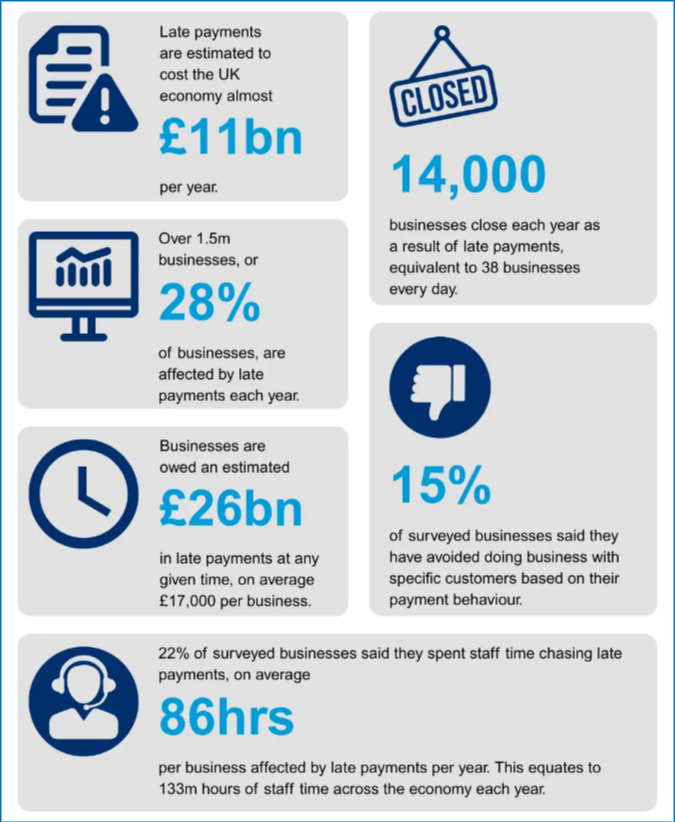
It’s a quietly expensive habit. Late payments cost the UK economy almost £11 billion a year and close some 14,000 businesses, around 38 every single day. Most of those weren’t unprofitable. They simply ran out of the one thing profit on paper can’t guarantee: cash in the account when it’s needed.
And here’s the part that stings for any finance leader who prides themselves on a tidy P&L. You can be thoroughly profitable and still be starved, because the money you’ve earned is sitting in someone else’s bank, doing someone else’s work. The trouble was never the sale. It was everything that happened after it.
So the question worth asking isn’t “how do we chase harder?” It’s a rather more uncomfortable one: why are we in the lending business at all, and who should really be running that desk?
Here’s the odd bit about a sale. The moment you raise the invoice, your accounts show it as revenue. Your P&L is delighted. Everyone moves on to the next deal. But the cash hasn’t arrived, and until it does, you’ve handed your customer something rather generous: the use of your money, for free, for as long as they fancy taking.
That’s the quiet nature of accounts receivable. Every invoice outstanding beyond its terms is working capital you’ve earned but can’t touch, sitting in someone else’s account and funding someone else’s business. For most small and medium-sized enterprises, that gap between “invoiced” and “paid” is precisely where the strain lives. Not in winning work. In waiting to be paid for it.
The metric that exposes all this is Days Sales Outstanding, or DSO, the average number of days it takes you to collect after a sale. Plenty of finance leaders track it. Fewer track the number that actually matters, which is DSO measured against your own agreed terms. A DSO of 45 days looks respectable enough until you remember you invoice on Net 30. That’s not a rounding error. That’s a fifty per cent overrun on every pound you’re owed, a fortnight of your cash quietly working for somebody else, every single cycle.
And it compounds. One late payer is an irritation. A book full of them is a structural leak, the sort that turns a profitable business into a nervous one, forever checking the balance before it commits to payroll. The uncomfortable truth is that this drift rarely happens because anyone decided it should. It happens because collecting on what you’re owed is nobody’s actual job, or worse, it’s everybody’s job in the odd half-hour they can spare. Which is exactly where the trouble starts.
Ask most business owners who handles the chasing, and the answer is faintly heroic. They do. Or their finance lead does, or the account manager who knows the client best. It sounds sensible. It’s the worst possible arrangement.
The account manager who has spent two years nurturing a relationship is precisely the wrong person to send a firm reminder. They’ve built rapport, trust, the odd friendly lunch, and now you’re asking them to jeopardise all of it over an overdue invoice. So they hesitate. They soften the email. They give it “another week.” Relationship capital, the very thing that makes them good at their job, is what makes them hopeless at collections. Proximity doesn’t sharpen the ask. It blunts it.
There’s a neat irony here. A neutral third party, someone with no lunch to protect and no rapport to risk, actually preserves the relationship better, because the awkwardness is depersonalised. The chase stops being a personal falling-out between two people who know each other and becomes what it always should have been: a matter of process. Good debtor management isn’t about being aggressive. It’s about being consistent, unemotional, and entirely predictable, which is a difficult posture to hold when you’re also the person hoping to win the next contract.
Then there’s the cost nobody itemises. When invoice chasing falls to founders and finance directors, you’re spending your most expensive hours on your least strategic task. The numbers are sobering: businesses affected by late payment spend, on average, 86 hours a year on staff time chasing what they’re already owed. That’s more than two working weeks, gone, not on growth, not on strategy, not on the things only senior people can do, but on ringing round a debtor book and waiting on hold.
When did payment collections become the founder’s job?
Nobody decided it should be. It simply drifted there, one unpaid invoice at a time, because it was never anyone’s role to begin with. And a task that belongs to everyone, in the margins of a busy week, is a task that gets done badly. Not through want of effort. Through want of ownership.
If any of this rings true, you might find our next piece worth a look. AR Team at Breaking Point: Is Outsourced Credit Control the Missing Layer?
Most businesses treat collections as a backward-looking task, a matter of recovering what’s already owed. In truth, a well-run receivables function is one of the most forward-looking things you have. It doesn’t just tell you who owes you money. It tells you which of your customers is quietly getting into trouble.
Consistent, structured follow-up builds a behavioural map of your entire customer base. The signals are small on their own, but telling together:
Read individually, these are minor irritations. Read together, they’re a warning system, and often the earliest one you’ll get. Payment behaviour tends to change before anything else does. A customer sliding towards difficulty will stretch their payables long before it surfaces in a press release, a profit warning, or a county court judgment.
A disciplined credit function turns that lag into your advantage. It gives leadership the chance to act early rather than late:
This is where accounts receivable outsourcing earns its keep in a way the cost argument never quite captures. A specialist function, working at scale across many clients, spots the patterns faster and reads the signals more accurately than an in-house team juggling collections alongside a dozen other duties. Mature outsourced credit management setups now run all of this through real-time dashboards and ageing analysis, giving finance leaders a live view of their debtor book that most would struggle to build for themselves.
You stop finding out about a problem at month-end. You start seeing it as it forms. Collections, done properly, isn’t the department that tidies up after the sale. It’s the one watching the horizon.
Whenever outsourcing comes up, someone reaches for the obvious comparison. A credit controller costs around thirty thousand a year, so why pay anyone else to do it? It’s a tidy argument. It’s also quite wrong, because that salary is the smallest part of the true figure.
The honest cost of one in-house hire includes rather more than the number on the offer letter:
Load all of that in, and your thirty-thousand-pound controller is comfortably closer to forty-five, for one person who can only ever cover one desk. Which leads to the second problem the in-house model rarely admits: receivables volume is lumpy. It spikes at quarter-end, swells during a growth run, and sags in the quiet months. A fixed headcount either sits half-idle or drowns under the peak, and neither is a good use of money.
This is the quiet appeal of credit control outsourcing. You swap a fixed, brittle cost for a flexible one that scales with the work in front of it. Outsourced collections services flex up when the debtor book balloons and settle back when it eases, and they don’t take annual leave in the middle of your busiest fortnight.
Good outsourced credit control services UK providers also operate as a genuine extension of your finance team rather than a detached call centre, sitting alongside your existing people, often handling the wider ledger too, from receivables through to outsourced accounts payable services, so the whole cash cycle is watched by one joined-up function rather than a scatter of part-time hands.
Then there’s the return nobody puts in the cost column. Recovering even a modest slice of what would otherwise be written off as bad debt changes the entire calculation. A function that pulls back a few thousand pounds a quarter in debt that would have been lost hasn’t cost you anything at all. It’s paid for itself, and then some.
Ask a finance director to name the levers that move company value, and you’ll hear the usual suspects. Revenue growth. Margin. Perhaps a smart acquisition. Almost nobody says “our debtor days,” and that’s precisely the oversight worth correcting.
Here is the part that rarely makes it into the boardroom conversation. For any business that might one day raise investment, take on lending, or sell, working capital is not a housekeeping matter. It is priced. When a buyer or a lender looks under the bonnet, one of the first things they examine is how efficiently the business converts sales into cash. A bloated debtor book, full of invoices stretching well past their terms, tells them the business is harder to run and slower to pay itself than the headline profit suggests. A tight one tells the opposite story.
That is why Days Sales Outstanding deserves a place well above the finance function. Every day you shave off DSO is a day of cash pulled back onto your own balance sheet and out of your customers’. It flatters the cash conversion cycle, the very metric a sophisticated acquirer scrutinises. Two businesses with identical profit can carry very different valuations, and the difference often sits in how disciplined each one is about collecting what it’s owed.
Framed this way, credit control stops looking like an operational cost and starts looking like an equity-value activity. It’s the sort of quiet, unglamorous discipline that lifts a multiple without anyone in the room quite realising why. The business that collects on time simply looks better built, because it is.
Most companies never make this connection. They file collections under admin and move on. The ones that treat it as a strategic lever, however, are quietly doing something their competitors aren’t: turning the dullest task in finance into one of the more valuable ones on the balance sheet.
Let’s return to where we started. Every business that offers payment terms is, whether it likes the word or not, in the lending business. That part isn’t really optional. B2B trade runs on credit, and refusing to extend any would cost you more customers than it ever saved you in bad debt. So the question was never whether to lend. It’s who should run the desk once you’ve decided to.
Put like that, the usual arrangement looks rather odd. You’d never leave certain things to whoever had a spare afternoon, yet collections routinely is:
If lending is a genuine function of your business, and it is, then collecting on it deserves specialists rather than spare moments.
This is usually where someone raises the obvious worry: hand collections to an outside party and you lose control, or worse, you let a stranger loose on your carefully tended customer relationships. It’s a fair concern, and also the wrong way round:
The real decision isn’t “do we give up control of collections?” It’s a sharper one: is your team’s time better spent chasing invoices, or on the handful of things only they can actually do? Answer that honestly, and the way forward tends to make itself rather obvious.
You never set out to run a bank. No licence, no lending committee, no interest to show for it. Yet a business that lets its invoices drift is doing precisely that, financing its own customers quietly, patiently, and entirely for free. The good news is that it’s a choice, not a fate.
Healthier cash flow was never about squeezing customers harder or turning every reminder into a confrontation. It’s about running the collection engine properly, consistently, and mostly in the background, so the money you’ve earned actually reaches the account that earned it. Done well, credit control for SMEs stops being the thankless job nobody wants and becomes one of the quieter engines of a resilient, well-run business.
The firms that get there tend to have one thing in common. They stopped treating collections as a chore squeezed into the odd half-hour and started treating it as a discipline worth doing properly, whether in-house or through specialist credit control services UK providers built for exactly this. Either way, the shift is the same: from waiting and hoping to knowing and planning.
So it’s worth a moment’s honest reflection on your own debtor days. If the gap between “invoiced” and “paid” is wider than you’d like, it may simply be time to hand the desk to people who do this all day.
If any of this has you eyeing your own debtor book, it might be worth a quiet conversation. Book a call with QX Global Group to talk through what smarter cash flow management services could look like for your business.
Outsourced credit control means handing collections to a specialist provider. They manage your accounts receivable end to end, issuing reminders, chasing overdue accounts and reporting on your debtor book, while you keep control of credit limits and terms. It works as an extension of your finance team.
You swap a fixed cost for a flexible one that scales with your workload. Credit control outsourcing removes single-point-of-failure risk, adds continuity through holidays and peaks, and frees senior people from invoice chasing, so their most expensive hours go towards growth rather than collections.
Consistency is the secret. A dedicated function chases every account on time, tightening Days Sales Outstanding (DSO) and catching slow payers early. It flags customer distress before a debt turns sour, so bad debt is prevented while the money is still recoverable, not written off later.
Rather well, often better than in-house. A neutral third party depersonalises the chase, so an overdue invoice becomes a matter of process, not a personal falling-out. The follow-up stays firm and predictable, protecting the relationship precisely because there is no rapport at stake.
The signals are clear: rising DSO, a growing debtor book, or founders swallowed by chasing. If collections have become nobody’s clear responsibility, it is time to explore outsourced credit control services UK providers built for exactly this, before chasing costs more than the delay itself.
QX works as a genuine extension of your finance function, handling receivables through to outsourced accounts payable services. With qualified specialists, real-time dashboards and proven results, QX delivers credit control services UK firms trust to protect cash flow. Book a conversation to learn more.

Education:
PGDM (Finance)

Nishant Timbadia is a seasoned finance professional with over 12 years of experience in the outsourcing industry, specialising in end-to-end F&A operations. At QX, he leads delivery across Credit Control, Order to Cash, R2R, P2P, and intercompany processes. With a strong background in payroll, billings, and management accounts, Nishant is known for driving process optimisation, managing high-performing teams, and ensuring seamless transitions from setup to go-live.
Expertise: Credit Control, O2C, R2R, P2P, Intercompany, Payroll & Billing, Management Accounts, Client & People Management
Originally published Aug 06, 2026 01:08:23, updated Aug 06 2026
Topics: Credit Control, Finance & Accounting
03 Aug 2026
The CFO’s job has grown faster than the function beneath it. Strategy, technology, capital all...
Read More27 Jul 2026
Every finance leader knows the version of this meeting. It’s a Tuesday, the coffee’s gon...
Read More24 Jul 2026
For many recruitment agencies, winning clients and making placements isn’t the probl...
Read More22 Jul 2026
Most cash flow problems do not begin when an invoice becomes overdue. They begin much earlier, throu...
Read More