Topics: Finance & Accounting, Multifamily
Posted on December 23, 2025
Written By Siddharth Sujan




Cash doesn’t become revenue when it sits in receivables.
Multifamily payment delays are not an occasional nuisance. Instead, they are a persistent drag on cash flow, planning, and growth. Missed invoices, fragmented follow-ups, manual handoffs between leasing, operations, and finance — all of it adds friction to the multifamily order to cash process.
For most teams, the result looks familiar: longer days-sales-outstanding, unpredictable liquidity, and a collections cadence that reacts instead of prevents. These problems often point to weak points in the process where cash gets stuck.
This blog breaks down where those weak links typically hide in the multifamily billing and collections process, how they turn into rent collection delays multifamily properties face every month, and what operators can do to get cash moving predictably.
The order to cash cycle in multifamily looks simple on paper. Bill the resident. Collect the payment. Apply the cash. Close the books.
In practice, it is one of the most interconnected processes in the business.
Charges originate in leasing systems. Adjustments come from onsite teams. Payments flow through portals, banks, and third-party gateways. Finance teams are then expected to reconcile everything accurately and on time. When these handoffs are not tightly aligned, friction builds across the multifamily order to cash process.
The biggest issue is fragmentation. Billing lives in one system. Payments in another. Collections tracking often sits in spreadsheets or inboxes. Reconciliations happen after the fact. Each disconnect introduces delays, manual effort, and room for error.
When operators lack end-to-end visibility across the multifamily billing and collections process, small issues compound quickly. A delayed charge posting turns into a missed payment. A missed payment turns into follow-up activity. Follow-ups turn reactive. Cash flow becomes harder to predict at the portfolio level.
This is how operational complexity quietly turns into payment delays in multifamily.
RELATED BLOG: Scaling faster than your finance ops can handle? Read the full blog to see the warning signs most teams miss.
Most payment delays in multifamily do not come from a single failure. They come from a series of small process gaps that slow the cycle down.
Charges that post late, incomplete, or incorrectly create immediate friction. Residents hesitate to pay when statements do not align with expectations, leading to disputes and avoidable rent collection delays multifamily properties deal with regularly.
Resident portals, payment gateways, and accounting platforms often operate in silos. Payments may be made on time but applied late, distorting aging reports and creating unnecessary follow-ups. This is a common source of multifamily billing and collections problems.
Without structured workflows or automation, reminders and escalations depend on individual effort. When teams are stretched across multiple properties, follow-up becomes reactive, increasing AR challenges in multifamily housing.
When teams lack real-time insight into what is billed, paid, disputed, or pending, issues surface too late. By the time finance identifies the gap, cash has already slipped into aging.
Approved adjustments, move-in changes, and credits often fail to flow cleanly between teams. These breakdowns create mismatched ledgers, resident confusion, and stalled collections, exposing key multifamily O2C weak links.
Multifamily payment delays show up first in receivables, but they rarely stay there.
As collections slow, days sales outstanding begins to creep up. Cash inflows become less predictable, forcing finance teams to hold wider buffers and delay decisions. Even well-occupied portfolios feel the pressure when liquidity timing becomes uncertain.
Over time, the impact extends into planning. Forecasts rely on assumptions that no longer reflect reality. Budgets turn cautious and capital allocation slows down. For operators trying to scale, improving cash flow in multifamily operations becomes harder, not because demand is weak, but because cash arrives inconsistently.
There is also a hidden operational cost. Teams spend more time following up, resolving disputes, and correcting posting errors. What should be a structured multifamily credit control process turns into manual intervention. Without clear portfolio-level cash flow visibility, leadership ends up reacting to aging reports instead of addressing why cash is getting stuck in the first place.
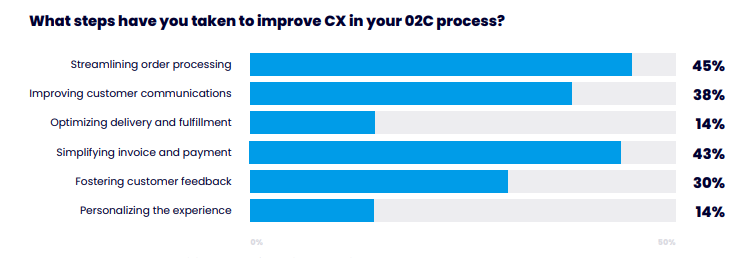
Fixing payment delays starts with tightening execution across the cycle, not adding more pressure at the back end.
The first area to address is billing accuracy and timing. Charges need to post cleanly and consistently across systems. When billing is reliable, disputes drop and collections move faster by default.
The next lever is automation. Structured reminders, payment confirmations, and cash application workflows reduce dependency on manual effort and bring discipline to follow-ups. Used correctly, automation in the O2C cycle shifts teams away from chasing payments toward managing exceptions.
Centralizing data is equally important. When billing, payments, adjustments, and aging sit in disconnected systems, reconciliation slows and visibility suffers. A unified view supports O2C process optimization multifamily teams need to operate across multiple properties without losing control.
Finally, overdue balances should follow clear escalation paths. Standard workflows based on age and risk strengthen the multifamily credit control process and prevent issues from lingering unnoticed. With real-time visibility in place, solving O2C bottlenecks in property management becomes proactive.
RELATED BLOG: Process automation fails more often than it succeeds. Read this blog to avoid the mistakes mid-sized operators keep repeating.
Predictable cash flow is not the outcome of aggressive collections. It is the result of a disciplined process that runs consistently across the portfolio.
The foundation is continuous monitoring. Billing, collections, and aging cannot be reviewed only at month-end. Ongoing visibility into variances helps teams spot delays early, before they harden into write-offs or prolonged disputes. This is where portfolio-level cash flow visibility changes the conversation from chasing gaps to managing trends.
Forecasting also plays a role. When O2C data feeds directly into forecasting models, finance teams gain a more realistic view of near-term liquidity. Instead of relying on static assumptions, leaders can adjust spend, vendor timing, and capital plans based on how cash is actually moving through the cycle.
Many operators also rethink how work is distributed. Repetitive follow-ups, reconciliations, and exception handling consume time but add limited strategic value. Offloading these activities allows internal teams to focus on oversight, risk, and decision-making. Over time, this shift strengthens revenue cycle management for multifamily and creates a cash engine that supports growth rather than constrains it.

QX Global Group works with multifamily operators to strengthen the order to cash process at scale. Our teams help identify where delays originate across billing, collections, and cash application, then redesign workflows to remove friction. This includes tightening the multifamily billing and collections process, improving follow-up discipline, and bringing structure to credit control and reconciliations.
Through our multifamily accounting services, we combine experienced AR teams with automation-led workflows to reduce manual effort and improve consistency across properties. By integrating data across systems, we help operators gain clearer visibility into receivables, aging, and cash movement. The result is fewer surprises, faster resolution of exceptions, and more reliable cash flow.
For operators dealing with multifamily payment delays, the goal is not just faster collections. It is a cleaner, more predictable O2C cycle that supports planning, growth, and operational stability. Talk to our team about building a stronger, faster O2C engine for your multifamily portfolio. Book a free, no-obligation call with our finance experts today!
The biggest driver of payment delays in multifamily housing is process fragmentation. Billing, resident payments, cash application, and follow-ups often sit in different systems and teams. When handoffs are manual or poorly aligned, delays start before collections even begin. Most multifamily payment delays are not caused by residents paying late, but by gaps in the multifamily order to cash process that slow billing accuracy and payment application.
Delays most often originate in three areas: billing accuracy, payment application, and follow-up discipline. Late or incorrect charges create disputes. Disconnected portals delay cash posting. Manual follow-ups lack consistency. Together, these become the core multifamily O2C weak links, turning routine transactions into ongoing multifamily billing and collections problems.
Automation improves rent collection delays multifamily teams face by removing manual friction. Automated billing, reminders, payment confirmations, and cash application ensure consistency across properties. Instead of reacting to missed payments, teams gain structured workflows that prevent delays. When implemented correctly, automation in the O2C cycle shifts collections from chasing balances to managing exceptions.
The biggest gains come from automating billing validation, reminder schedules, payment matching, and aging reviews. These steps consume significant time when handled manually and directly impact cash timing. For multifamily CFOs, targeted O2C process optimization multifamily efforts reduce DSO, strengthen the multifamily credit control process, and improve predictability without adding complexity.
Visibility improves when billing, payments, adjustments, and aging data are centralized rather than spread across spreadsheets and siloed platforms. Integrated accounting systems, payment gateways, and real-time dashboards enable portfolio-level cash flow visibility. This allows finance leaders to track where cash is moving, where it is delayed, and why, supporting stronger revenue cycle management for multifamily.
Reducing delinquency does not require larger teams. It requires better execution. Standardized workflows, automated reminders, and clear escalation paths reduce manual effort while improving outcomes. By tightening the multifamily billing and collections process and using automation in O2C cycle activities, operators can address rent collection challenges multifamily properties face without expanding headcount.

Education:
B.A. - Mass Communication

Expertise: Finance & Accounting Thought Leadership, Transformation & Operating Model Storytelling, CFO & Executive-Level Content Strategy, Outsourcing, Shared Services & Global Delivery Narratives
Originally published Dec 23, 2025 04:12:37, updated Dec 23 2025
Topics: Finance & Accounting, Multifamily
02 Sep 2026
Hospitality has become one of the most data-rich industries in the world. Every reservation, room sa...
Read More27 Aug 2026
In June 2026, Morgan Stanley and Ridgeback paid £1.045 billion for Metra Living, L&Q’s re...
Read More20 Aug 2026
On a June morning this year, retirement housing found itself in the one room operators would rather ...
Read More13 Aug 2026
When John Lewis walks away from something, the rest of the sector tends to sit up and take notice.&n...
Read More