Topics: Finance & Accounting Outsourcing, Order-to-cash cycle
Posted on April 05, 2026
Written By Siddharth Sujan




The order-to-cash process sits at the center of a company’s revenue cycle. Every customer order, invoice, and payment flows through it. When managed well, it improves liquidity, strengthens customer relationships, and provides finance leaders with clear visibility into receivables performance.
When managed poorly, the consequences appear quickly.
Delayed invoicing slows collections. Weak credit governance increases exposure to payment risk. Disputes remain unresolved for longer, pushing cash further down the cycle. Over time, these operational gaps begin to affect both cash flow predictability and customer experience.
This is why the choice of order-to-cash service providers has become a strategic decision for finance leaders. The right partner can introduce structured workflows, stronger collections discipline, and better reporting across the receivables cycle. The wrong provider can create operational friction that directly affects working capital performance.
For CFOs evaluating order-to-cash outsourcing services, asking the right questions before signing a contract is essential.
Order-to-cash services manage the full revenue cycle from the moment a customer order is received until payment is collected and reconciled. This cycle connects multiple financial and operational activities that determine how quickly a company converts revenue into cash.
The typical order-to-cash process includes several key functions:
Effective order-to-cash management directly affects liquidity and working capital performance. When executed efficiently, it shortens the receivables cycle, reduces disputes, and improves overall financial visibility.
This is why many organizations increasingly work with O2C service providers that specialize in outsourced order-to-cash solutions designed to improve collections efficiency, strengthen credit controls, and support structured invoice to cash cycle management.
When selecting order-to-cash service providers, CFOs typically evaluate capabilities across several operational areas that influence collections efficiency, reporting visibility, and risk management.
Providers should demonstrate experience managing complex order-to-cash processes, including credit control, billing accuracy, dispute resolution, and collections management.
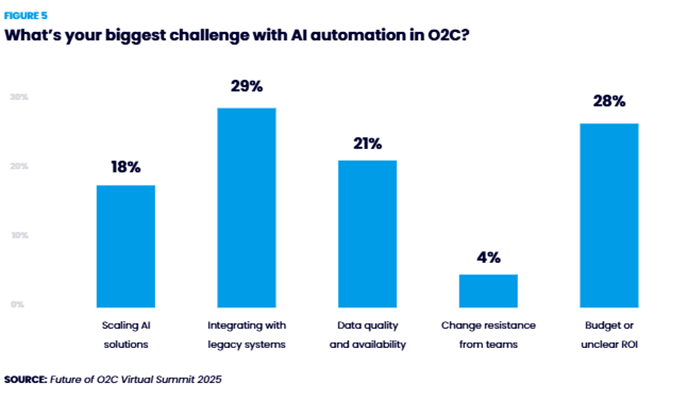
Modern O2C service providers increasingly rely on reporting platforms, analytics tools, and O2C automation capabilities to improve invoice tracking, collections workflows, and receivable visibility.
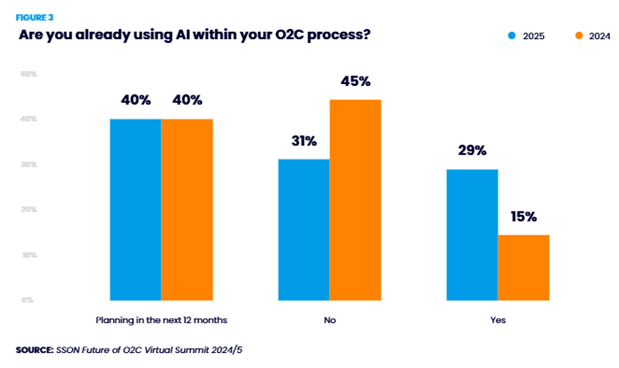
Strong providers deliver structured reporting dashboards and actionable order-to-cash performance metrics, allowing finance leaders to monitor collections effectiveness and receivables health.
Effective providers maintain strong credit governance, internal controls, and data security practices that support audit readiness and regulatory compliance.
As businesses grow, providers must be able to scale order-to-cash management operations across higher transaction volumes, new entities, and expanding customer bases.
These capabilities form the foundation for effective O2C process optimization and help finance teams strengthen the overall performance of the receivables cycle.
Selecting among order-to-cash service providers should go beyond reviewing service scope or pricing. The right questions reveal whether a provider can actually improve collections performance, reduce disputes, and strengthen financial visibility across the receivables cycle.
CFOs evaluating order-to-cash services should focus on the operational mechanics behind how the provider manages the revenue cycle.
Clarify whether the provider supports the full order-to-cash process or only selected activities such as billing or collections. Fragmented delivery often leads to handoff delays and weaker invoice to cash cycle management.
Strong O2C service providers should explain how they reduce DSO through credit controls, structured collection workflows, and proactive dispute resolution.
Effective providers rely on O2C automation tools that streamline invoicing, track payment behavior, and provide real-time receivables visibility.
Also Read: The 8 Stages of Order-to-Cash (02C) Transformation Process
Dispute resolution processes should be clearly defined, with structured escalation paths that prevent payment delays and protect customer relationships.
Reliable providers deliver clear order-to-cash performance metrics, including DSO, aging analysis, collection effectiveness, and dispute resolution timelines.
Strong providers enforce credit policies, monitor exposure limits, and maintain disciplined credit governance as part of structured order-to-cash management.
Leading order-to-cash outsourcing companies operate as an extension of the finance function, aligning reporting, communication, and escalation procedures.
Providers should demonstrate how their outsourced order-to-cash solutions can support higher transaction volumes, multi-entity environments, and expanding customer bases.
When these questions are addressed clearly, finance leaders can better identify top order-to-cash service providers capable of strengthening collections discipline, improving receivables visibility, and supporting sustainable cash flow performance.
For many organizations, outsourcing the order-to-cash process helps improve receivables performance while reducing operational complexity.
Selecting the right order-to-cash service providers requires more than comparing service offerings or pricing models. Several common mistakes can undermine the effectiveness of an outsourcing partnership.
4. Not evaluating process governance: Weak governance structures around credit policies, dispute resolution, and collections workflows can disrupt invoice to cash cycle management and increase payment delays.
Avoiding these mistakes helps finance leaders identify O2C service providers that can support reliable O2C process optimization and long-term receivables performance.
As organizations scale, managing the order-to-cash process efficiently becomes critical for maintaining liquidity and improving working capital performance. QX Global Group supports U.S. organizations with end-to-end order to cash services, helping finance teams improve collections efficiency and gain stronger visibility into receivables performance.
Our approach focuses on structured O2C process optimization, combining standardized workflows, advanced reporting, and scalable delivery models that support efficient invoice to cash cycle management.
Through technology-enabled processes and experienced finance specialists, QX delivers outsourced order-to-cash solutions that strengthen credit governance, accelerate collections, and improve operational visibility across the revenue cycle.
If your organization is evaluating order-to-cash services, the right partner can significantly improve collections performance while maintaining strong customer relationships. Speak with our O2C experts to explore how QX can help build a more efficient and scalable order-to-cash operation.
CFOs should evaluate order-to-cash service providers across four critical areas: process expertise, technology capabilities, reporting transparency, and scalability. Strong providers demonstrate structured order-to-cash management, use O2C automation tools for invoicing and collections, provide clear order-to-cash performance metrics, and can scale operations as transaction volumes grow.
Successful order-to-cash outsourcing services are typically measured through key order-to-cash performance metrics such as Days Sales Outstanding (DSO), collection effectiveness index, receivables aging, dispute resolution cycle time, and invoice accuracy. Consistent improvement in these indicators signals effective invoice to cash cycle management and stronger receivables discipline.
O2C automation streamlines billing, payment tracking, and collections workflows within the order-to-cash process. Automated invoicing reduces billing errors, analytics dashboards provide real-time receivables visibility, and workflow tools prioritize follow-ups. These capabilities strengthen accounts receivable management and help finance teams manage larger transaction volumes more efficiently.
Well-designed outsourced order-to-cash solutions reduce DSO by introducing structured credit controls, consistent collections workflows, and proactive dispute resolution. Experienced O2C service providers also monitor receivables aging closely and implement disciplined follow-up processes, helping shorten the overall invoice to cash cycle management timeline.
Companies often shift to order-to-cash outsourcing services when internal teams struggle with rising transaction volumes, slow collections cycles, or limited reporting visibility. Partnering with specialized order-to-cash outsourcing companies helps organizations access scalable expertise, improve O2C process optimization, and strengthen receivables performance without significantly expanding internal headcount.

Education:
B.A. - Mass Communication

Expertise: Finance & Accounting Thought Leadership, Transformation & Operating Model Storytelling, CFO & Executive-Level Content Strategy, Outsourcing, Shared Services & Global Delivery Narratives
Originally published Apr 05, 2026 03:04:57, updated Apr 10 2026
Topics: Finance & Accounting Outsourcing, Order-to-cash cycle
15 Sep 2026
Every compliance obligation a finance team meets requires data. Be it tax filings, statutory reporti...
Read More14 Sep 2026
A control failure doesn’t announce itself. It hides in the one routine a single trusted person own...
Read More11 Sep 2026
Picture a 90-unit association collecting around $290 a month per home. The books live in a spreadshe...
Read More10 Sep 2026
Late March 2026. Boardrooms across UK hospitality did the same sum. Days before 1 April, the n...
Read More