Topics: 360 Recruitment, Full Cycle Recruitment, Recruitment Outsourcing
Posted on September 16, 2024
Written By Ranjana Singh



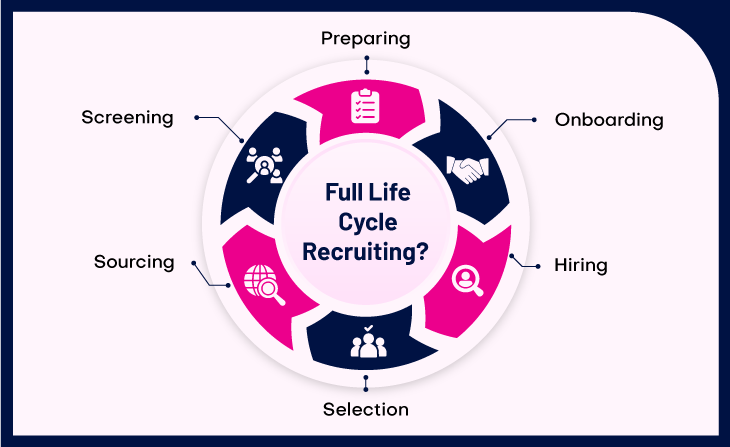
The recruitment industry is facing unprecedented challenges due to an on-going talent shortage. Traditional, intuition-based recruitment methods often fall short, leading to mismatches, hiring biases, and costly inefficiencies. To counter these issues, many organizations are turning to the 360-recruitment process, a comprehensive, data-driven approach that transforms how businesses attract and retain top talent.
This end-to-end recruitment process ensures that every stage, from sourcing to onboarding, is handled seamlessly. By adopting the 360-recruitment process, businesses can make informed hiring decisions, reduce costs, and build high-performing teams that align with their long-term goals.
In this blog, we’ll cover what 360 recruitment means, how it differs from 180 recruitment, the stages of recruitment, and how the 360-recruitment process improves hiring efficiency.
A 360 Recruitment Process, also called full-cycle or end-to-end recruitment, covers the entire hiring journey. It’s a complete approach where a recruiter or recruitment consultant takes charge of every step in finding and hiring the right candidate.
From spotting a talent gap to bringing the new hire onboard, the 360 recruitment cycle ensures accountability, speed, and consistency. The recruiter manages all stages: preparing, sourcing, screening, selection, hiring, and onboarding.
Example: Suppose a company needs a software engineer. In a 360 recruitment process, one recruiter would:
This start-to-finish approach saves time and gives candidates a smoother experience.
In short, 180 vs 360 recruitment comes down to division of responsibilities versus complete ownership.

The 360 hiring process improves efficiency by streamlining workflows, reducing miscommunication, and creating stronger candidate relationships. Some key benefits include:
Usually, a full cycle recruiter is responsible for completing all stages of a recruitment life cycle. Large organizations may have separate teams, HR professionals, or departments to take care of different stages of a full cycle recruitment process. Outsourced full cycle recruitment services or its specific stages such as candidate sourcing, screening, onboarding, etc., is a common practice for staffing firms having huge volumes of hiring requirements.
Take a closer look at the different stages of full life cycle recruiting below to understand how you can optimize the 360 recruitment process.
The first stage of the 360 recruitment process is all about preparation and planning for hiring. This involves identifying a talent gap in the organization and understanding the specific requirements for the role. The preparation stage includes:
Pro Tip: Ensure the job description highlights both technical skills and company values to appeal to candidates who align with your organization’s culture.
The second stage of the 360 recruitment process focuses on finding the right talent using various sourcing methods. Since many qualified candidates are passive job seekers, this step often requires a proactive approach:
Pro Tip: Invest in advanced sourcing tools like Applicant Tracking Systems (ATS) and Customer Relationship Management (CRM) systems to streamline sourcing efforts and manage candidate pipelines efficiently.
The screening stage is critical in shortlisting the most suitable candidates from the applicant pool. This step ensures that only qualified candidates move forward in the 360 recruitment process:
Pro Tip: Use pre-employment tests, such as cognitive ability or personality assessments, to predict job performance and avoid mismatches.
The selection stage involves detailed interviews and assessments to identify the best-fit candidate for the role. This stage is where the recruiter delves deeper into a candidate’s profile:
Pro Tip: Maintain open communication between recruiters and hiring managers during this stage. Regular updates help align on candidate preferences and make informed decisions.
This is the most sensitive phase of the 360 recruitment process, where the selected candidate is offered the role and negotiations take place:
Pro Tip: Provide constructive feedback to candidates who were not selected. This builds a positive employer brand and keeps unsuccessful candidates engaged for future opportunities.
Onboarding marks the final stage of the 360 recruitment process and is crucial for integrating new hires into the organization successfully:
Pro Tip: Create a structured onboarding checklist to ensure nothing is missed. Regular check-ins during the first few weeks help address any issues early and improve retention rates.
The 360 recruitment or end-to-end recruitment process helps businesses strengthen relationships with candidates and hiring managers while ensuring cost efficiency. Outsourcing the full cycle recruitment process to experts like QX Global Group enables staffing firms to:
The 360 role in recruitment refers to a recruiter who handles every stage of the hiring process, from sourcing candidates to onboarding them, ensuring a seamless and efficient recruitment cycle.
The key components include preparation, sourcing, screening, selection, hiring, and onboarding. Each stage is designed to ensure a smooth and effective hiring experience for both the employer and candidate.
By leveraging advanced tools, structured interviews, and data-driven assessments, the 360 recruitment process ensures candidates are evaluated based on skills, experience, and cultural fit, minimizing mismatches.
The 360 recruitment process addresses issues of bias and diversity in the hiring process by employing structured assessments, blind resume reviews, and diverse sourcing strategies, reducing unconscious bias and fostering a more inclusive hiring process.
Companies can measure the success of their 360 recruitment process through metrics like time-to-hire, cost-per-hire, employee retention rates, and candidate satisfaction scores.
The stages of recruitment improve hiring by ensuring a structured, step-by-step process that reduces errors, enhances candidate experience, and speeds up time-to-hire.
The end-to-end recruitment process covers everything from job preparation to onboarding, while partial recruitment only covers specific steps such as sourcing or interviewing.
QX Global Group helps optimize your end-to-end recruitment process by providing offshore recruiters, automation tools, and compliance expertise that reduce costs and improve hiring efficiency.
Choosing QX Global Group means accessing a dedicated offshore team that manages all stages of recruitment, ensuring scalability, compliance, cost efficiency, and faster hiring.
The 360 Recruitment Process is more than just a hiring strategy, it’s a complete end-to-end recruitment process that streamlines every stage of recruitment, builds stronger candidate pipelines, and improves long-term retention. Compared to partial models, full cycle recruiting ensures accountability, efficiency, and better hiring outcomes.
For staffing firms and organizations looking to scale smartly, adopting or outsourcing the 360 recruitment process is the key to future-proofing recruitment strategies.
We hope you enjoyed reading this blog. If you want our team to help you resolve talent gaps, reduce costs and transform your business operations, just book a call.
Originally published Sep 16, 2024 01:09:51, updated Dec 16 2025
Topics: 360 Recruitment, Full Cycle Recruitment, Recruitment Outsourcing
Resolve the talent gaps, reduce costs, and improve your margins
Get a Free Consultation
19 Dec 2025
Staffing firms rarely lose clients because of poor demand. They lose them because delivery cannot ke...
Read More08 Sep 2025
When staffing firms struggle to hit their fill rate targets, every missed placement means lost reven...
Read More29 Aug 2025
For many recruitment firms, the biggest challenge isn’t finding open roles, it’s filling them qu...
Read More10 Jul 2025
On July 4, President Donald Trump signed into law what he called the “One Big Beautiful Bill Act�...
Read More