The UK recruitment industry is at a turning point. Around 86% of businesses are concerned about what the upcoming Autumn Budget 2025 will mean for them. With more candidates available, fewer job openings, and weaker pay growth, many employers are hoping this year’s Autumn Budget will bring some relief and clarity.
The Autumn Budget 2024 was tough for recruiters, National Insurance rose by 1.2%, the threshold fell to £5,000, and the National Living Wage hit £12.21/hour, driving up hiring costs. On the upside, Corporation Tax stayed at 25%, and new healthcare and infrastructure investments hinted at growth opportunities.
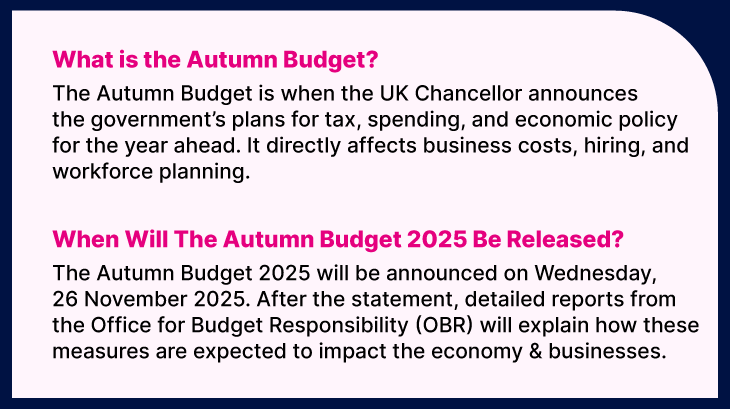
As Chancellor Rachel Reeves prepares to deliver the Autumn Budget 2025 on 26th November, recruitment leaders are waiting to see whether this year’s budget will make hiring easier or add more pressure.
Before the Autumn Budget 2025 lands, we thought we’d make things a little easier for you. This blog walks you through the early signals of what the budget might bring, and what it could mean for UK recruitment firms. We’ve also pulled in insights from experts like APSCo and REC, plus practical tips on how firms can prepare and stay ahead.
Autumn Budget 2025: Key Predictions and What They Mean for Recruitment Firms
Below is a breakdown of the key areas staffing firms should monitor, and what each could mean for day-to-day operations, margins, and client relationships.
1. National Insurance (NI)
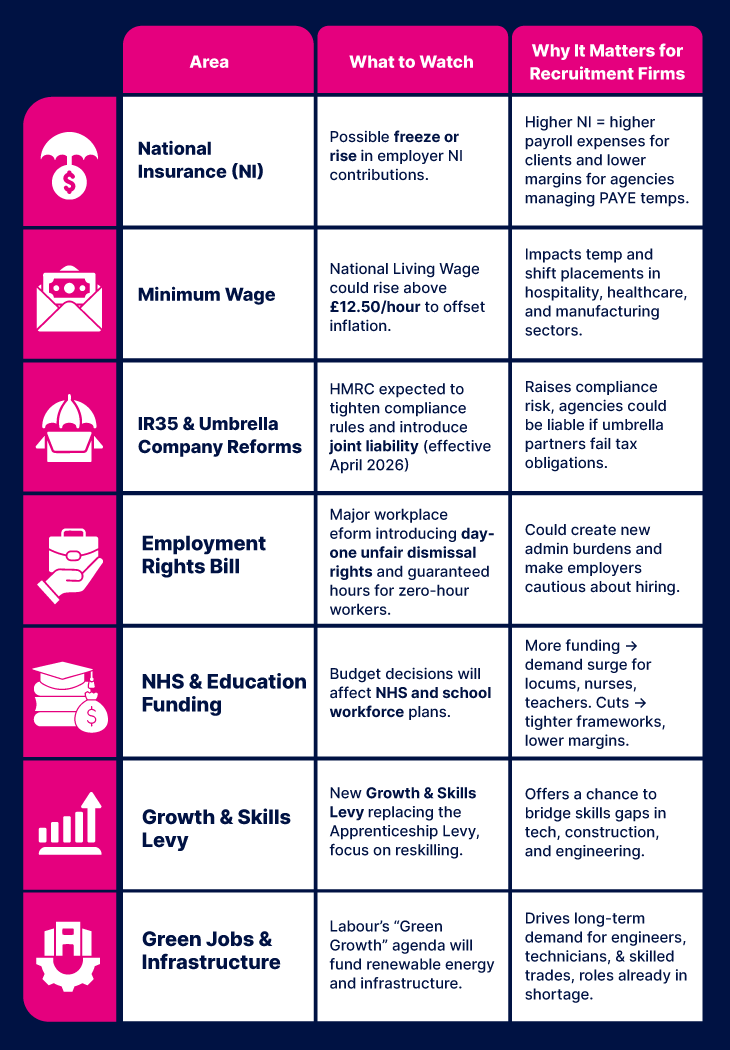
All eyes are on whether the Chancellor will freeze or raise employer National Insurance contributions in the Autumn Budget 2025. After last year’s 1.2% hike (to 15%) and threshold reduction, employers are already under strain. Any further increase could make hiring significantly more expensive, particularly in healthcare, logistics, and education.
Why it matters for recruitment firms:
Higher NI means higher employment costs for clients and smaller margins for agencies managing PAYE temps. Recruiters may need to revisit rate cards or renegotiate client terms to stay competitive.
What to do:
Model payroll scenarios early and plan client conversations around cost transparency. Show how your agency absorbs compliance and payroll complexity, not just wages.
2. Minimum Wage
In the Autumn Budget 2025, the National Living Wage could rise again, possibly above £12.50/hour, to help workers keep up with inflation and living costs.
Why it matters for recruitment firms:
Every increase impacts temporary and shift-based placements, especially in sectors like hospitality, care, and manufacturing. Agencies will need to balance candidate satisfaction with client affordability.
What to do:
Build flexibility into rate cards. Instead of absorbing wage increases, help clients understand the link between fair pay, retention, and quality of placements.

3. IR35 and Umbrella Company Reforms
There’s a growing expectation that the government will revisit IR35 and umbrella company compliance in 2025–26. HMRC is pushing for joint liability rules (from April 2026), meaning agencies could be held responsible for unpaid taxes if their umbrella partners default.
Why it matters for recruitment firms:
This raises compliance risk. Smaller agencies, in particular, could face financial exposure if they work with non-compliant intermediaries.
What to do:
Audit your contractor and umbrella relationships now. Tighten supplier lists, implement due diligence checklists, and ensure all third-party payroll providers meet HMRC standards.
4. Employment Rights Bill
This is the biggest employment law reform in decades, introducing “day-one” rights for unfair dismissal, guaranteed hours for zero-hour workers, and a Fair Work Agency to enforce labour standards.
Why it matters for recruitment firms:
The intent is good to protect workers, but the implementation may create new administrative burdens and make clients more cautious about hiring. Agencies that understand the fine print will have an advantage.
What to do:
Stay ahead of the rollout of the Autumn Budget 2025. Train your consultants on new worker classifications, update contracts, and position your agency as a trusted compliance partner for clients.

5. NHS and Education Funding
Public-sector workforce shortages remain critical. The UK Autumn Budget 2025 predictions suggest that NHS and school budgets will be closely watched. The government’s decision on the NHS and budgets for schools will directly influence the demand for locums, nurses, and supply teachers.
Why it matters for recruitment firms:
If budgets rise, agencies in healthcare and education will see a surge in demand. But if spending is frozen or cuts are introduced, frameworks may tighten, and rate caps could limit agency profitability.
What to do:
Monitor NHS Workforce Plan updates and framework reviews. Strengthen relationships with Trusts and academies now so your agency remains a preferred supplier when funding releases.
6. Growth & Skills Levy
The Growth & Skills Levy, which replaced the old Apprenticeship Levy, aims to fund upskilling and reskilling in the Autumn Budget 2025, but businesses are calling for more flexibility in how funds are used.
Why it matters for recruitment firms:
For recruiters, this is both a policy and a business opportunity. Easier access to training funds could help close candidate skills gaps in sectors like tech, construction, and engineering, reducing time-to-fill and improving hire quality.
What to do:
Collaborate with training providers or offer “hire + train” programs for clients. Promote your agency as a partner that delivers not just candidates, but job-ready talent.
7. Green Jobs and Infrastructure Investment
Expect new funding announcements for renewable energy, infrastructure, and housing projects as the Labour government leans into its “green growth” agenda.
Why it matters for recruitment firms:
This will trigger a wave of demand for engineers, technicians, and skilled trades, but those roles require niche skill sets that are already scarce.
What to do:
Start mapping your green economy talent pool now. Build partnerships with training providers or overseas talent sources to plug upcoming gaps. Agencies that prepare early could capture long-term contracts in this space.

What Industry Leaders Are Saying Ahead of the Autumn Budget 2025
Recruitment & Employment Confederation (REC)
“Businesses are the heart of investment and growth. They need a Budget that backs them, not more burdens that slow them down. This Autumn Budget is a chance to restore confidence, unlock investment, and deliver opportunities through skills reform, business investment, and a practical approach to the Employment Rights Bill.”
Association of Professional Staffing Companies (APSCO)
“APSCo urges HM Treasury to use the Autumn Budget 2025 to drive confidence, not cost. Employers are already under pressure from rising taxes and regulatory complexity. We call for a Budget that supports controlled labour market flexibility, one that recognises recruitment and workforce solutions businesses as vital partners in delivering productivity, digital transformation, and skills growth across the UK.
How UK Recruitment Firms Can Prepare For the Autumn Budget 2025
Even before the Chancellor’s speech, firms can take smart steps to stay ahead:
1. Run Cost Simulations
Anticipate how potential changes to National Insurance, wage rates, or taxation could impact your payroll and client pricing. Create multiple scenarios to see how much margin pressure your agency might face under different outcomes. This will help you make data-backed pricing decisions and have informed conversations with clients early.
2. Review Contractor Arrangements
With upcoming IR35 and umbrella company reforms expected in 2026, agencies should start auditing their supply chains now. Tighten due diligence on umbrella partners, review contracts for liability risks, and maintain clear documentation. Getting ahead of compliance will protect your business from future penalties and build client trust.
3. Upskill Your Teams
Use existing training budgets or the Growth & Skills Levy to develop consultants’ expertise in compliance, automation, and client advisory. A better-trained team can guide clients through changing regulations, adopt new technology faster, and position your agency as a proactive strategic partner , not just a recruiter.

4. Diversify Your Client Base
Don’t rely too heavily on one sector. If public-sector budgets tighten, private markets might grow, and vice versa. Spread your exposure across healthcare, education, tech, and engineering to balance revenue streams. A diverse portfolio helps your business stay stable through economic and policy shifts.
5. Invest in Efficiency Tools
Adopt technology to automate repetitive tasks such as sourcing, onboarding, compliance checks, and payroll tracking. Automation reduces manual work, improves accuracy, and allows recruiters to focus on relationship-building. It’s one of the most effective ways to manage rising costs without compromising quality or compliance.
What Recruitment Firms Really Need From the Autumn Budget 2025?
According to an article by REC, below are a few major things, UK recruitment firms need from the budget.
1. Relief for Employers
Recruitment firms want the government to keep employer National Insurance costs stable and restore the old threshold so hiring doesn’t become more expensive. They also want fewer complicated rules, especially around the Employment Rights Bill, which could create more admin and increase hiring costs if not implemented practically.
2. Skills and Training Reform
Firms are asking for a more flexible Apprenticeship Levy so unused funds don’t go to waste. They need more government support for short training programs and reskilling pathways to help workers move into in-demand roles. This makes it easier for agencies to supply skilled candidates in shortage sectors.
3. Support Workforce Participation
To get more people into work, agencies want faster rollout of childcare support, more investment in healthcare services, and better transport links. These improvements make it easier for parents, older workers, and people in rural areas to actually access jobs.
4. Public Sector Modernisation
Recruitment firms depend heavily on public sector hiring—especially in the NHS and education. They need updated hiring frameworks, fewer pay restrictions, and smoother processes that reduce delays. They also want the government to acknowledge that workers prefer flexible work patterns and modernise policies accordingly.
5. Strategic Investment Alignment
Firms want workforce planning to be built into all major government projects—like infrastructure, energy, and manufacturing. When the government funds a large project, it should also plan the labour needed to deliver it, ensuring agencies can prepare talent pipelines in advance.
6. Public–Private Partnerships
Recruitment companies want stronger collaboration between government and private staffing firms in key industries such as construction, renewable energy, healthcare, and logistics. This helps projects run faster, creates more jobs, and ensures critical sectors have the talent they need.
FAQs on Autumn Budget 2025
The Autumn Budget 2025 will decide how recruitment firms manage rising costs, new laws, and changing demand across sectors. Recruitment firms that prepare early and stay flexible will handle these shifts best. At QX Global Group, we support recruitment companies through our offshore recruitment services, helping them scale efficiently, stay compliant, reduce operational costs, and maintain steady growth, no matter what the next Budget brings. To learn more, fill out the form below and an expert from our team will reach out to you soon.
Book a Free Consultation
Enjoyed our blog? Discover more about how our recruitment outsourcing process can slash your costs by up to 60%! Take the next step—book a call by entering your details.